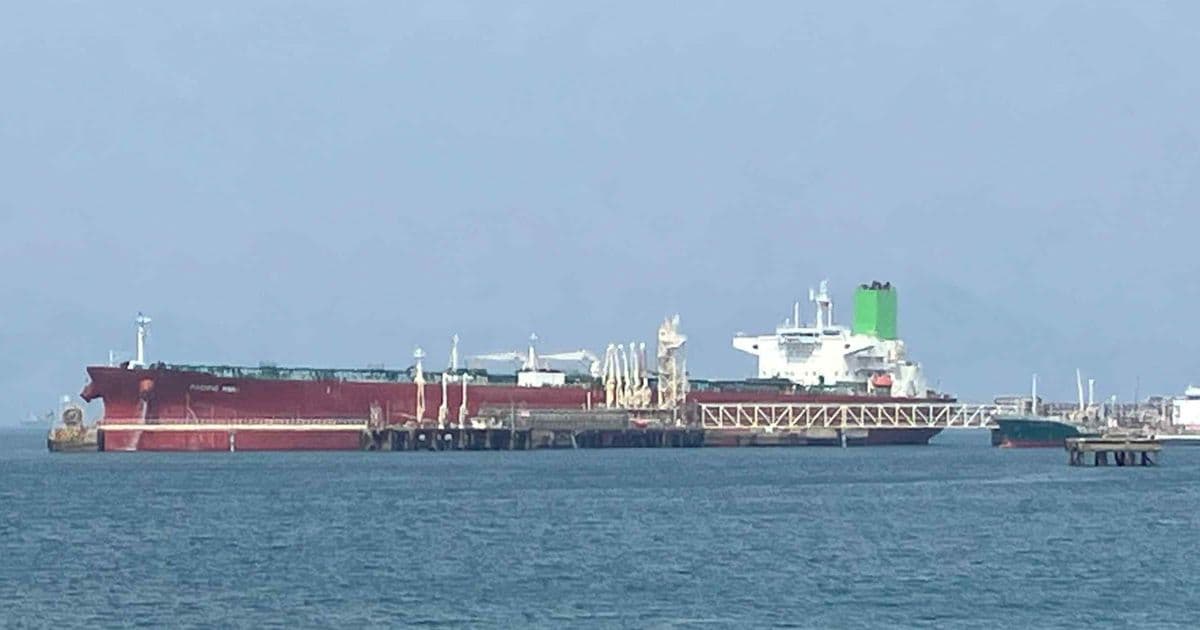
Japanese oil wholesalers increasingly rely on ship-to-ship transfers to secure Middle Eastern crude, with approximately half of imports using this method between March and May, reflecting both cost considerations and geopolitical risks.
Japan's energy security landscape is undergoing a significant transformation as oil wholesalers increasingly turn to ship-to-ship transfers to secure Middle Eastern crude oil. A Nikkei analysis reveals that roughly half of all tankers carrying Middle Eastern crude to Japan between March and 2026 utilized this unconventional method, primarily off the coasts of Malaysia and India, with foreign operators facilitating the transfers for substantial fees.
Ship-to-ship transfers involve the transfer of crude oil from one vessel to another while both are stationary at sea. This method, typically more expensive than direct shipping routes, has become increasingly attractive to Japanese importers facing multiple challenges in traditional supply chains.
The financial implications of this shift are substantial. Industry sources indicate that ship-to-ship transfers can add $0.50-$1.50 per barrel to transportation costs, depending on location and complexity. For Japan, which imports approximately 3.5 million barrels of crude daily, this represents an additional $1.75-$5.25 million in daily transportation expenses.
Several factors are driving this strategic shift:
Geopolitical Risks: Heightened tensions in the Middle East, particularly around the Strait of Hormuz, have made direct routes more perilous and expensive to insure.
Insurance Premiums: Traditional shipping routes through sensitive regions now carry significantly higher insurance costs, sometimes increasing by 300-500% compared to pre-tension periods.
Flexibility: Ship-to-ship transfers allow Japanese companies to bypass high-risk areas while maintaining access to Middle Eastern crude, which remains a critical component of Japan's energy mix.
Market Adaptation: This approach represents the Japanese energy sector's adaptation to the "new normal" of volatile Middle Eastern relations, where traditional supply chain assumptions no longer hold.
The impact extends beyond transportation costs. Japanese refiners like Taiyo Oil, which was photographed receiving crude off Malaysia's coast, must now factor in additional logistical complexities. The transfers require specialized vessels, skilled personnel, and coordination between multiple parties, introducing new points of failure in the supply chain.
From a market perspective, this trend has several implications:
Regional Shipping Markets: Increased demand for transfer services has boosted rates for specialized vessels capable of facilitating ship-to-ship operations.
Alternative Crude Sources: Japanese companies are diversifying their supply chains, with increased interest in African and Latin American crude that can be accessed through less politically sensitive routes.
Strategic Partnerships: Japanese energy firms are forming new alliances with foreign operators who specialize in transfer operations, creating a new ecosystem of service providers in the energy sector.
The Japanese government is monitoring this development closely. While acknowledging the increased costs, officials note that maintaining access to Middle Eastern crude remains a national security priority. The Ministry of Economy, Trade and Industry has indicated that it may provide additional support for importers facing extraordinary transportation costs due to geopolitical tensions.
Looking ahead, industry analysts expect ship-to-ship transfers to remain a fixture of Japan's energy import strategy for the foreseeable future. As one Tokyo-based energy economist noted, "This represents not just a temporary adjustment but a fundamental rethinking of how Japan secures its energy supplies in an increasingly uncertain geopolitical environment."
The trend also reflects broader shifts in global energy markets, where traditional supply chain assumptions are being challenged by new realities. For Japan, which imports over 90% of its crude oil, developing flexible, resilient supply mechanisms has become essential in maintaining economic stability amid regional tensions.
Comments
Please log in or register to join the discussion