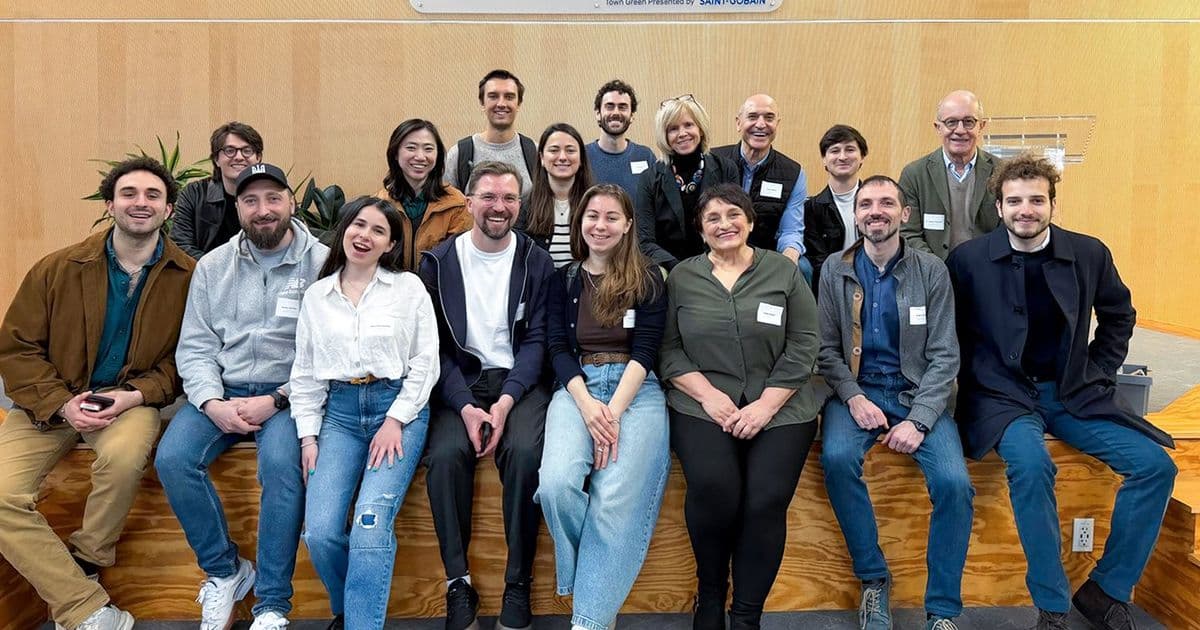
MIT's Department of Urban Studies and Planning partners with Vinnytsia, Ukraine, to develop innovative economic development strategies during wartime conditions, bringing together graduate students and Ukrainian city leaders to explore innovation ecosystems, infrastructure, and workforce development.
In a remarkable display of academic resilience and international collaboration, MIT's Department of Urban Studies and Planning (DUSP) has established a practicum that connects graduate students with city leaders from Vinnytsia, Ukraine. This unique initiative, formally known as course 11.S941 (Innovating in Ukraine), represents a sophisticated approach to urban planning education that simultaneously addresses real-world challenges while providing students with hands-on experience in complex geopolitical environments.
The program, taught by professor of the practice Elisabeth Reynolds, brings together 13 graduate students from MIT's School of Architecture and Planning, MIT Sloan School of Management, Harvard University's Kennedy School, and Harvard's Graduate School of Design. These students collaborate directly with Ukrainian officials and academics from Vinnytsia—a city region of 400,000 people located approximately 280 kilometers from Kyiv—on projects that will directly influence the city's economic development trajectory during wartime conditions.
Technical Approach to Urban Innovation Under Constraint
The practicum employs a systematic methodology for urban innovation assessment and development. Students follow a structured framework that begins with comprehensive analysis of existing conditions, followed by strategic planning, implementation design, and sustainability assessment. This technical approach is particularly valuable in conflict zones where traditional development models may not apply.
The projects underway demonstrate the technical sophistication of this approach:
- Agro-food cluster development: Creating a comprehensive value chain analysis to facilitate Ukraine's integration into the European Union market
- Transportation and logistics optimization: Developing multimodal transportation systems to enhance Vinnytsia's role as a regional economic hub
- Electronic waste management: Designing circular economy models for e-waste that account for wartime supply chain disruptions
- Talent retention and attraction: Creating strategic frameworks for developing creative and entrepreneurial talent in challenging conditions
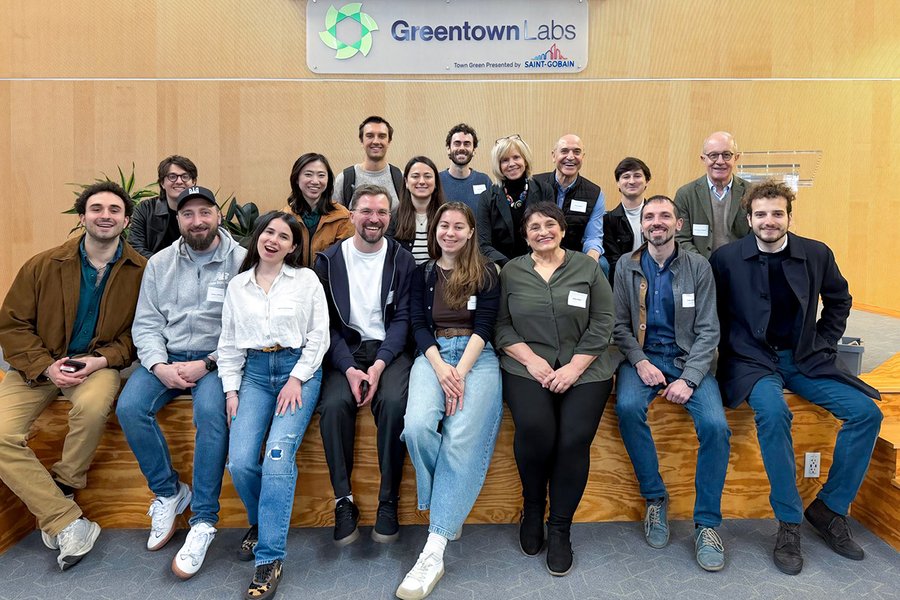 Visitors from Vinnytsia, Ukraine, and students in MIT's Department of Urban Studies and Planning gather during a tour of Greentown Labs in Somerville, Massachusetts, as part of a practicum exploring innovation ecosystems and economic development.
Real-World Applications in Conflict Zones
The collaboration with Vinnytsia represents a significant advancement in urban planning methodologies for conflict-affected areas. The Ukrainian city has accelerated its long-standing expertise in information technology, applying it to both civilian and military contexts. This includes the digitalization of government services through the e-governance app Diia, as well as the development of a rapidly evolving drone industry.
"We are very interested in partnering with some of these organizations," said Dmitry Sofyna, CEO and co-founder of WINSTARS.AI, an R&D center in Ukraine focused on AI applications. "We want to transform Ukraine from a major player in engineering and scientific outsourcing into a hub for creating large-scale tech companies in defense, medicine, and energy."
Vinnytsia's development of Crystal Technology Park—one of the largest technology parks in Ukraine—exemplifies this strategic approach. The park represents a technical infrastructure investment designed to position the city as an innovation hub despite ongoing security challenges.
Adaptations for Wartime Conditions
The practicum demonstrates remarkable adaptability to extraordinary circumstances. Typically, students would travel to the host location during Independent Activities Period (IAP) or spring break for immersive fieldwork. However, due to the war in Ukraine, the program innovatively brought the Ukrainian delegation to Cambridge instead.
"It's been an amazing trip," said Yanna Chaikovska, director of Vinnytsia's Institute for Urban Development. "We are planning for the future because that is what we must do. Ukraine has faced many challenges in the past and always worked in small and big ways to move forward. MIT is helping us do this."
 17 people pose in two rows for a group photo during the MIT-Ukraine hackathon, demonstrating the collaborative nature of these academic partnerships.
Technical Site Visits and Knowledge Transfer
During their week in Cambridge, the Ukrainian delegation and MIT students visited several innovation hubs that provide technical models and inspiration:
- Boston City Hall, meeting with Kairos Shen, Boston's chief city planner and former MIT professor
- Cambridge Innovation Center in Kendall Square
- Greentown Labs in Somerville
- MassChallenge in Boston
These visits exposed Ukrainian leaders to various models of innovation support, including shared workspace environments, incubators, and network development strategies. The technical knowledge transfer focused on practical implementation considerations that could be adapted to Vinnytsia's specific context.
Broader Implications for Urban Resilience
The collaboration reflects a broader effort within DUSP to engage with cities facing complex economic and geopolitical challenges through applied, practice-based research. Hashim Sarkis, dean of the School of Architecture and Planning, emphasized this approach during a panel discussion with the Ukrainian visitors, noting that "with so much conflict in the world today, SA+P must create new ways to help cities rebuild, whether in Ukraine or elsewhere."
Nick Durham, a joint DUSP/MIT Sloan master's student, highlighted the human dimension of this technical work: "I am continually inspired by the resilience of the Ukrainian people and how they are finding creative ways to build a better future. In many ways, Ukrainian innovation is serving as a model for reimagining industries and complex economic systems."
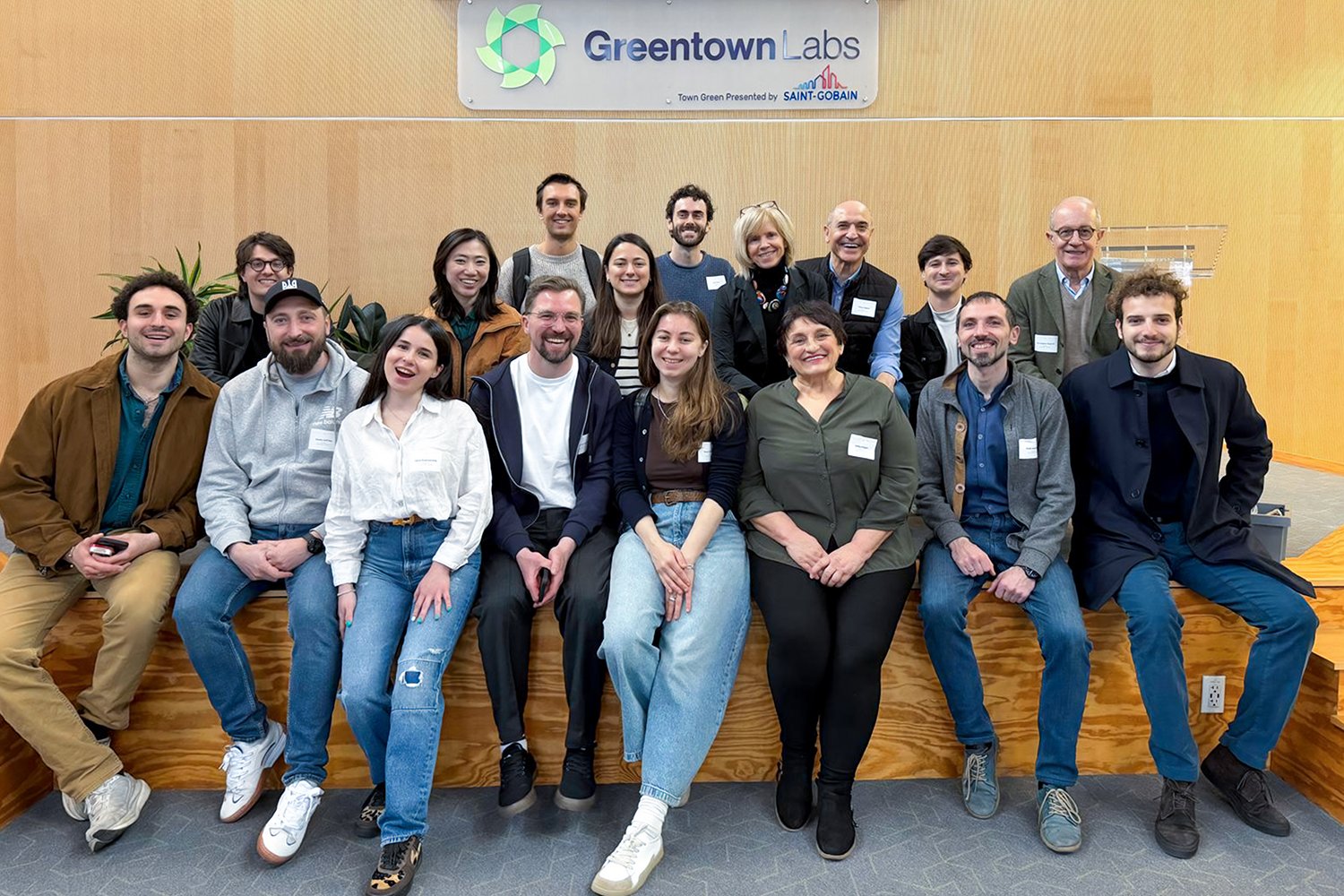 The featured image shows the collaborative nature of the MIT-DUSP practicum with Ukrainian city leaders.
Technical Limitations and Future Directions
Despite the program's successes, several technical limitations must be acknowledged. The inability to conduct fieldwork in Vinnytsia itself creates challenges in data collection and contextual understanding. Additionally, the rapid evolution of wartime conditions requires continuous adaptation of development strategies.
The practicum's technical framework could be enhanced by incorporating real-time data analysis capabilities and remote sensing technologies to monitor urban development progress despite physical access limitations. Future iterations might also explore blockchain-based systems for transparent resource allocation in unstable environments.
This MIT-DUSP practicum represents a significant advancement in urban planning education and practice, demonstrating how academic institutions can contribute to real-world problem-solving in conflict zones. By connecting theoretical knowledge with practical application, and by adapting methodologies to extraordinary circumstances, the program offers a model for international academic collaboration that addresses both immediate needs and long-term development goals.
For more information about the MIT Department of Urban Studies and Planning's work in Ukraine, visit the official DUSP page or the Ukraine Community Recovery Academy.
Comments
Please log in or register to join the discussion