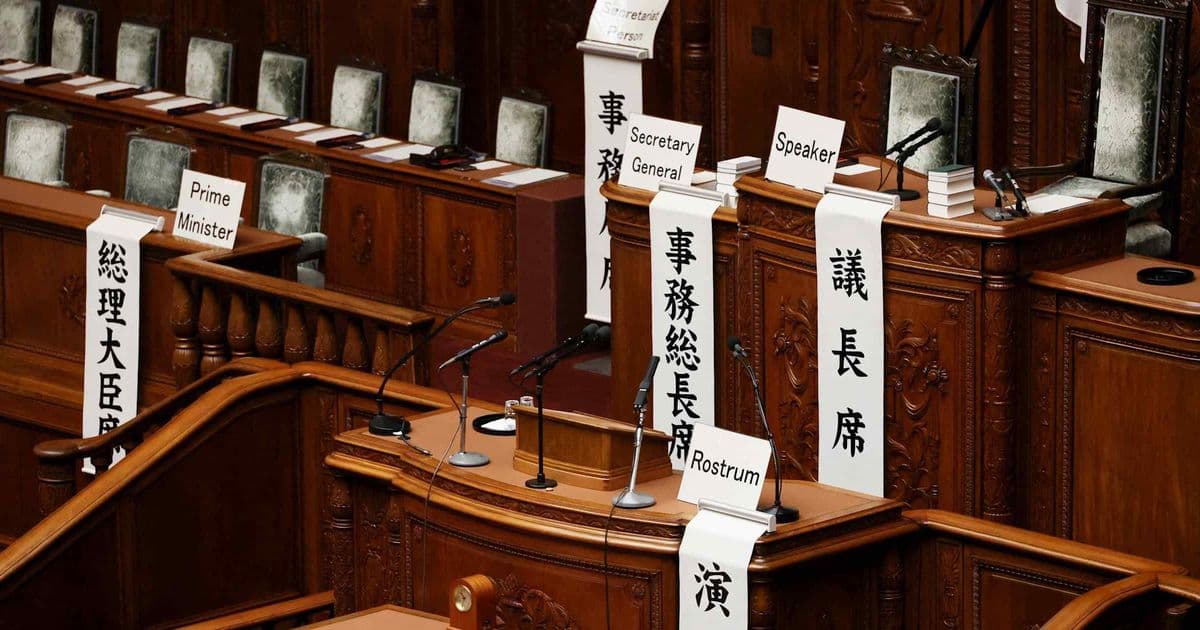
Political leaders in Japan convene for their first debate ahead of the February 8 lower house election, while India prepares a budget focused on infrastructure and export resilience. The week also features an ASEAN foreign ministers meeting and key corporate earnings.
The political landscape in Japan enters a decisive phase this week as party leaders prepare for their first televised debate ahead of the February 8 lower house election. Prime Minister Sanae Takaichi, who dissolved the lower house last week, is banking on her high approval ratings to secure a majority for her ruling coalition. The debate offers the newly formed Centrist Reform Alliance a critical platform to present its case to voters before official campaigning begins on Tuesday.
The election comes at a pivotal moment for Japan's economy. With the Nikkei 225 hitting historic highs on the back of the snap election announcement, investors are closely watching for policy continuity and potential reforms. The market rally reflects optimism about Takaichi's pro-business stance, but the election outcome will determine the pace of structural reforms needed to address Japan's demographic challenges and fiscal pressures.
Meanwhile, in New Delhi, all eyes turn to the annual budget presentation on Sunday. Prime Minister Narendra Modi's government faces the dual challenge of boosting economic growth while building resilience against U.S. President Donald Trump's punishing 50% tariffs on Indian goods. The budget is expected to prioritize infrastructure development, green energy initiatives, and measures to enhance export competitiveness. Tax reforms aimed at bolstering investor confidence will also be closely scrutinized by domestic and international markets.
The timing is critical. India's economy has shown resilience, but trade headwinds from U.S. tariffs and global economic uncertainty require careful fiscal calibration. Infrastructure spending has been a consistent theme in recent budgets, but the scale and focus areas this year will signal the government's priorities for the coming fiscal year starting in April.
Across Southeast Asia, the ASEAN foreign ministers' meeting in the Philippines on Thursday will address regional stability concerns. Discussions will cover the ongoing South China Sea negotiations, the Thailand-Cambodia border crisis, and the political chaos in Myanmar, which marks five years since the military takeover on February 1, 2021. The regime is preparing to finalize election results and convene parliament, though international legitimacy remains questionable given the non-inclusive electoral process.
Corporate earnings will also shape market sentiment this week. South Korea's memory chip giants Samsung and SK Hynix report fourth-quarter results on Thursday, with investors watching for confirmation of the memory chip "supercycle" driven by AI hardware demand. Samsung's recent guidance indicated fourth-quarter profit more than tripled year-on-year, reflecting the booming demand for AI-related components.
In the aviation sector, India's Wings India air show in Hyderabad from Wednesday to Friday highlights the country's position as the world's third-largest aviation market. With plans to expand from approximately 160 airports to 350 by 2047, India represents a massive growth opportunity for aircraft manufacturers. The show follows a turbulent 2025 marked by one of the nation's worst air crashes and operational disruptions at IndiGo, underscoring the challenges of rapid expansion.
The Asian Financial Forum in Hong Kong on Monday and Tuesday provides a platform for regional business and government leaders to discuss global economic trends. With tariffs, artificial intelligence, and geopolitical friction dominating the agenda, the forum offers insights into how Asian economies are navigating trade tensions and technological shifts.
In other regional developments, the UK Prime Minister Keir Starmer is scheduled to visit Japan on Saturday for talks with Takaichi, marking the first such visit by a British leader in three years. The visit follows Starmer's planned trip to China with a British business delegation, highlighting Tokyo's efforts to coordinate its China policy with London.
The week's events underscore the interconnected nature of Asia's political and economic landscapes. Japan's election could reshape regional dynamics, India's budget will signal its economic strategy amid trade pressures, and ASEAN's diplomatic efforts will address critical regional stability issues. Corporate earnings from technology and manufacturing sectors will provide further insight into the health of Asia's export-driven economies.
As markets react to these developments, the focus will be on policy continuity in Japan, fiscal prudence in India, and regional cooperation in Southeast Asia. The outcomes will influence investment decisions, trade flows, and strategic partnerships across the region in the months ahead.
Comments
Please log in or register to join the discussion