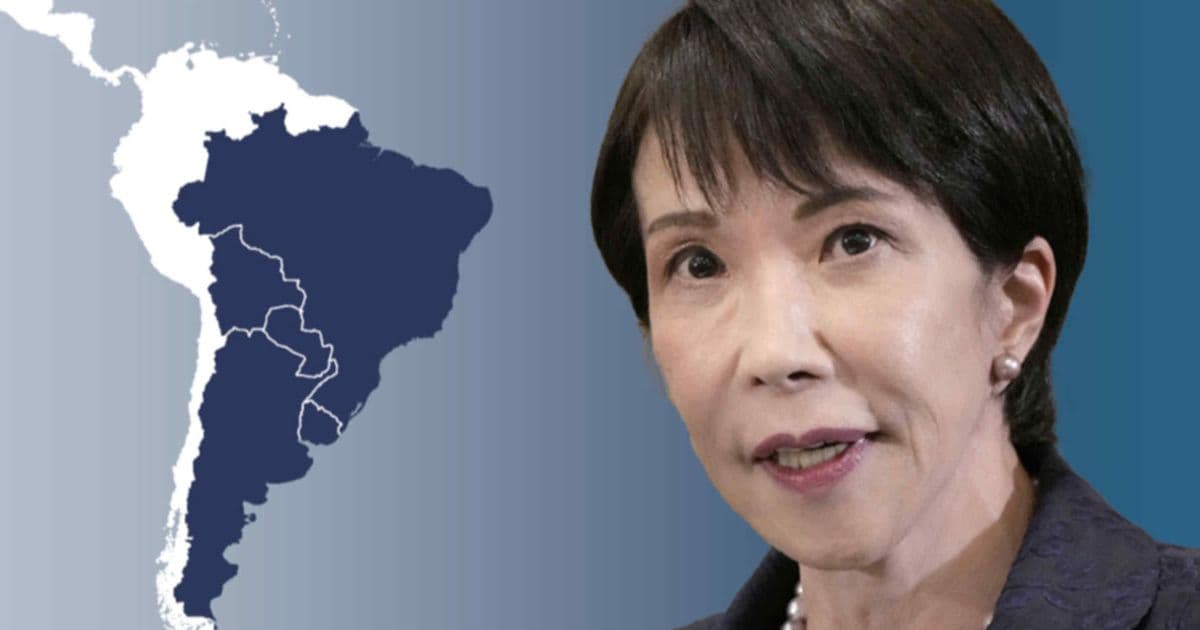
Tokyo plans to launch negotiations for a Japan‑Mercosur Economic Partnership Agreement by summer 2026, aiming to tap South America’s energy resources and diversify exports to a market of nearly 300 million people. The move reflects Japan’s broader strategy to reduce reliance on Middle‑East oil, secure critical minerals, and offset slowing growth in traditional Asian markets.
Japan Targets Mercosur for Energy Security and Trade Expansion
Japan’s Ministry of Economy, Trade and Industry (METI) announced on May 10 that it will seek to start formal talks with the Mercosur bloc—Argentina, Brazil, Paraguay, Uruguay and Venezuela—by the summer. The goal is a comprehensive Economic Partnership Agreement (EPA) that would give Japanese firms preferential access to a combined market of ≈ 298 million consumers and, crucially, a reliable supply of oil, natural gas and critical minerals.
Market context
Energy import dependence – In 2025 Japan imported ≈ 93 % of its oil and ≈ 78 % of its natural gas. The pandemic‑era slowdown in Chinese demand and geopolitical volatility in the Middle East have pushed spot oil prices above $95 bbl, tightening Japan’s trade balance, which posted a ¥2.3 trillion deficit in the latest quarter.
Mercosur’s resource base – Brazil alone produced 3.8 million barrels per day (bpd) of crude in 2025, while Argentina’s Vaca Muerta shale field is projected to deliver 2.5 billion cubic metres of gas annually by 2028. Paraguay and Uruguay add modest hydro‑electric capacity, and all five nations are rich in lithium, nickel and rare‑earths needed for next‑generation batteries.
Trade volumes – Japan’s total merchandise trade with Mercosur stood at ¥1.1 trillion in 2025, up 12 % year‑on‑year, driven mainly by automotive parts and machinery exports. Imports from the bloc were ¥680 billion, dominated by agricultural commodities and crude oil.
Competitive pressure – The United States, the EU and China have all signed or are negotiating EPAs with Mercosur. The EU‑Mercosur deal, though stalled in ratification, signals that Tokyo risks being left out of a high‑value supply chain if it does not act swiftly.
What it means for Japan’s strategy
Diversifying energy supply – An EPA could lower tariffs on Brazilian crude and Argentine gas, allowing Japanese refiners to lock in multi‑year contracts at more predictable prices. METI estimates that a 10 % reduction in import cost could shave ¥150 billion off Japan’s annual energy bill.
Securing critical minerals – By granting Japanese firms “investment‑friendly” status, the pact would ease joint‑venture approvals for lithium‑ion battery plants in Brazil’s Minas Gerais and nickel projects in Argentina’s Patagonia. Analysts at Nomura project that such investments could add ≈ ¥300 billion in annual export revenue for Japan by 2030.
Expanding market access for high‑tech goods – Under the proposed EPA, Japanese electronics, robotics and precision‑machinery exporters would benefit from a zero‑tariff schedule, potentially boosting exports to the bloc by ¥200 billion within five years. The agreement would also include a rules‑of‑origin clause that recognises components assembled in third‑party ASEAN factories, a concession that mirrors the EU‑Japan EPA.
Agricultural negotiations – Brazil’s beef and soy imports have historically faced Japanese phytosanitary barriers. The EPA will likely require Japan to streamline inspections, a move that could raise Japanese beef imports from Brazil by ≈ 30 %, satisfying domestic demand for higher‑quality meat while providing Brazilian producers with a stable outlet.
Geopolitical leverage – Securing a foothold in South America offers Tokyo an alternative diplomatic channel amid strained US‑China relations. By positioning itself as a reliable partner for energy and technology, Japan can reinforce its “free‑and‑open Indo‑Pacific” narrative while cultivating goodwill in a region where China’s Belt‑and‑Road investments have surged.
Strategic timeline
| Milestone | Target | Implication |
|---|---|---|
| Summer 2026 | Launch formal EPA negotiations | Sets a clear calendar, signalling commitment to investors |
| Late 2027 | Conclude tariff‑reduction schedule for energy commodities | Enables long‑term contracts for Japanese refiners |
| 2028‑2030 | Operational joint‑venture projects in lithium and nickel | Positions Japan in the global battery supply chain |
| 2031 | Full market access for Japanese high‑tech goods | Expected 15 % uplift in EP‑related exports |
Risks and challenges
- Domestic opposition – Japanese agricultural lobbies have historically resisted increased meat imports. The government will need to balance consumer price benefits against political pushback.
- Regulatory alignment – Mercosur’s fragmented standards on environmental sustainability could complicate joint‑venture approvals, especially for mining projects.
- Currency volatility – The yen’s recent depreciation (‑7 % against the USD in the past six months) could inflate the cost of capital for Japanese firms investing in South America.
Bottom line
Japan’s push for a Mercosur EPA reflects a pragmatic shift from pure market‑size considerations to a resource‑security agenda. By securing lower‑cost energy, diversifying critical‑mineral supplies, and opening a near‑300‑million‑consumer market to its high‑tech exports, Tokyo aims to cushion its economy against external shocks and sustain growth beyond the 2025 fiscal year. The success of the initiative will hinge on diplomatic finesse, domestic consensus, and the ability to translate tariff concessions into tangible investment pipelines.
For further reading on Japan’s energy import statistics, see the METI annual report 2025.
Comments
Please log in or register to join the discussion