
A photo essay chronicling the life and activism of Jesse Jackson, from his early days with Martin Luther King Jr. to his presidential campaigns and global humanitarian work.
A crowd of children gathers around Jesse Jackson, center, with African National Congress activist Walter Sisulu (white hair) and other dignitaries in Soweto, Johannesburg, South Africa, Feb. 8, 1990. Photo: Peter Turnley/Corbis/VCG via Getty Images
The Making of a Movement Leader
Jesse Louis Jackson Sr., born in 1941 in Greenville, South Carolina, emerged from the crucible of the Jim Crow South to become one of America's most prominent civil rights leaders. His journey from a young activist to a national figure spans over five decades of social justice work, political campaigns, and international diplomacy.
Jackson's civil rights career began in earnest when he joined the Southern Christian Leadership Conference (SCLC) in 1965. Working alongside Dr. Martin Luther King Jr., Jackson quickly became known for his charisma and organizational skills. He played a crucial role in the Chicago Freedom Movement and later founded Operation PUSH (People United to Save Humanity) in 1971, which focused on economic empowerment for African Americans.
Political Trailblazer
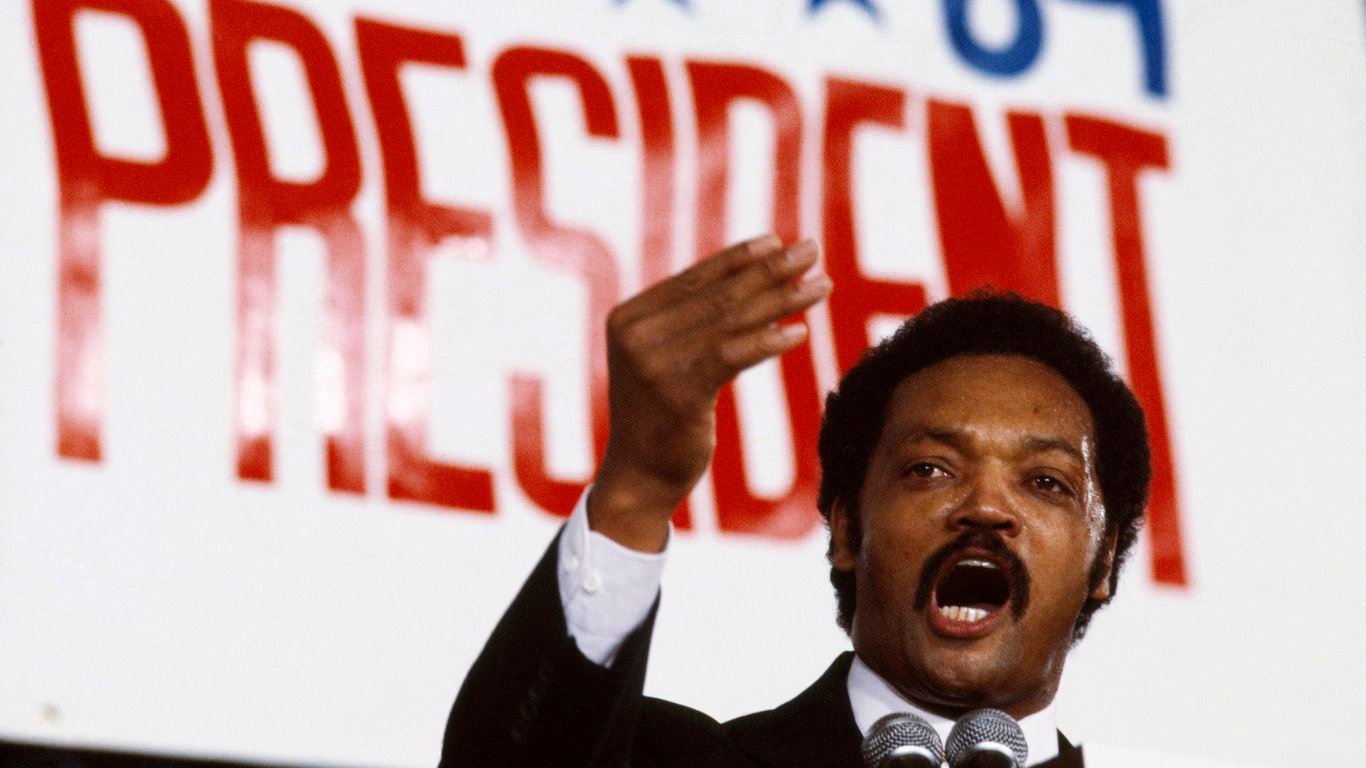
Perhaps Jackson's most significant political achievement came with his presidential campaigns in 1984 and 1988. As the first viable African American presidential candidate, Jackson won 3.5 million votes in 1984 and 7 million in 1988, fundamentally reshaping the Democratic Party's approach to race and representation. His campaigns brought issues of economic inequality, voting rights, and social justice to the forefront of national political discourse.
Global Humanitarian Work
The Soweto photograph from 1990 captures Jackson at the height of his international influence. Just months after Nelson Mandela's release from prison, Jackson stood alongside ANC leaders in the heart of South Africa's anti-apartheid struggle. This moment exemplified Jackson's ability to bridge domestic civil rights work with global human rights advocacy.
Throughout the 1980s and 1990s, Jackson became known as a "shadow secretary of state," negotiating the release of hostages and prisoners in Syria, Cuba, Iraq, and Yugoslavia. His diplomatic missions, while sometimes controversial, demonstrated his commitment to peace and human rights beyond American borders.
Legacy and Continuing Impact
Today, at 82, Jackson continues his activism through the Rainbow PUSH Coalition, addressing issues from voting rights to economic justice. His son, Jesse Jackson Jr., served as a U.S. Representative, extending the family's political legacy.
Jackson's life work represents a bridge between the classical civil rights era and contemporary social justice movements. His strategies of economic boycotts, voter registration drives, and coalition building continue to influence modern activists and political organizers.
Historical Context
The timing of Jackson's rise coincided with America's post-civil rights era transformation. As the nation grappled with desegregation, affirmative action, and economic inequality, Jackson provided both a moral voice and practical solutions. His ability to translate grassroots organizing into national political influence helped shape the modern Democratic Party's approach to diversity and inclusion.
Cultural Impact
Beyond politics, Jackson's influence extended to popular culture. His 1971 "I Am Somebody" poem became an anthem of black pride and self-determination. His coining of the term "African American" in the 1980s helped standardize language around racial identity in the United States.
Challenges and Controversies
Jackson's career hasn't been without controversy. His personal life, including the revelation of an extramarital affair and child in 2001, tested his public standing. Additionally, his sometimes confrontational tactics and rhetoric drew criticism from both conservatives and moderates. Yet, these controversies never fully overshadowed his contributions to civil rights and social justice.
The Contemporary Relevance
In an era of renewed civil rights activism, Jackson's strategies and experiences offer valuable lessons. His emphasis on economic empowerment alongside social justice, his ability to build multi-racial coalitions, and his understanding of the intersection between domestic and international human rights remain relevant to today's activists and policymakers.
Looking Forward
As America continues to grapple with issues of racial justice, economic inequality, and political representation, Jackson's life work provides both a historical foundation and a roadmap for future progress. His transition from street protests to political power, from domestic activism to international diplomacy, illustrates the evolution of civil rights leadership in the modern era.
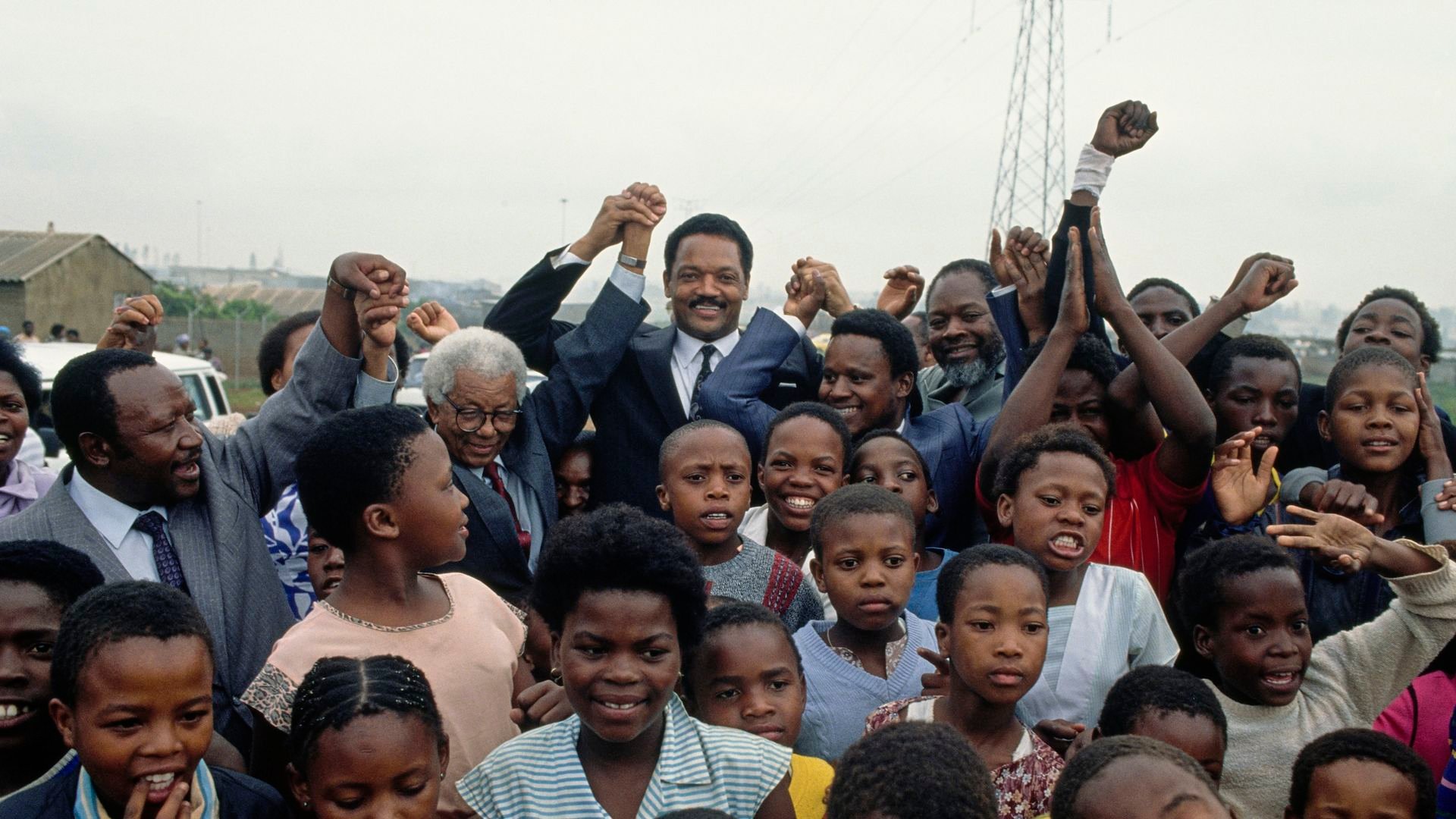
The photograph of Jackson in Soweto, surrounded by children and freedom fighters, encapsulates his life's work: a commitment to justice that transcends borders and generations. As new movements emerge and old struggles continue, the legacy of Jesse Jackson reminds us that the fight for equality requires both moral courage and practical strategy, both local action and global vision.
Comments
Please log in or register to join the discussion