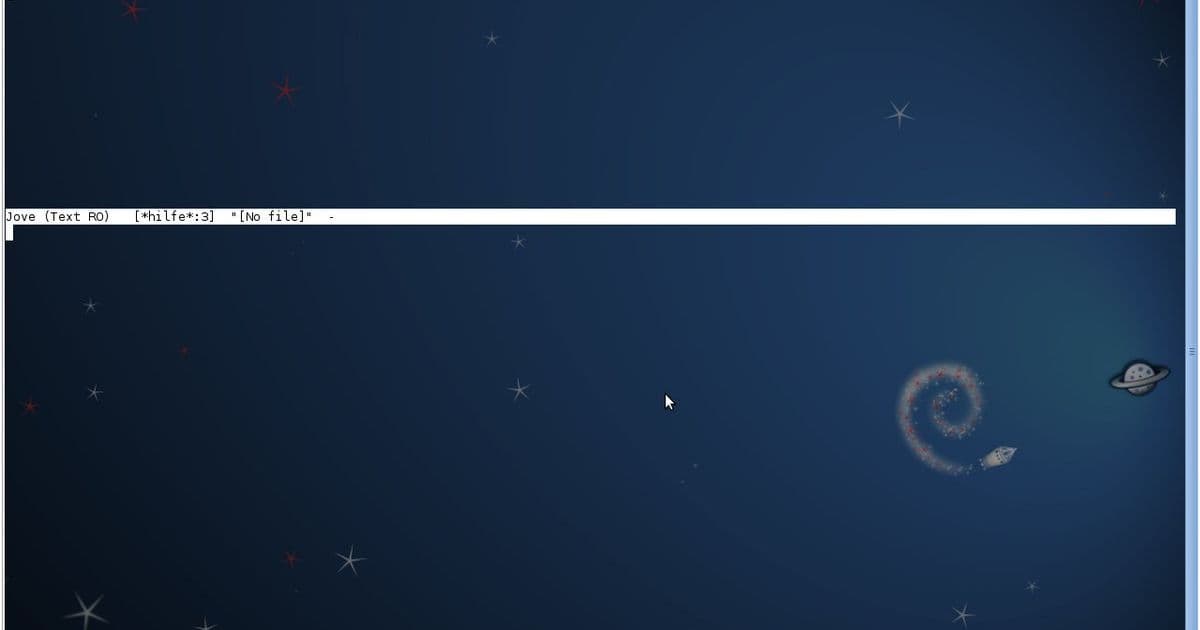
Explore JOVE (Jonathan's Own Version of Emacs), the compact text editor created by a high school student in 1983. Discover how this minimalist Emacs variant became integral to BSD Unix distributions and why its legacy endures despite modern limitations.
JOVE: The Minimalist Emacs Variant That Powered Early Unix Systems
In the pantheon of Unix text editors, JOVE (Jonathan's Own Version of Emacs) stands as a fascinating case study in minimalist software design. Created in 1983 by Jonathan Payne while still in high school, JOVE emerged as a lightweight alternative to resource-intensive editors like Gosling Emacs. Its core philosophy prioritized efficiency and simplicity over feature bloat, deliberately excluding complex components like Mocklisp that characterized its predecessors.
Technical Architecture and Design Philosophy
JOVE's architecture reflects several deliberate technical choices:
- PDP-11 Origins: Originally developed on Digital Equipment Corporation's PDP-11 minicomputer, JOVE was optimized for hardware constraints of early Unix systems
- Emacs Compatibility: Maintained core Emacs keybindings and editing paradigms while stripping non-essential functionality
- Extension Mechanism: Implemented a simpler customization system compared to Emacs Lisp, reducing learning curve and resource requirements
- Cross-Platform Support: Ported to Unix-like systems, MS-DOS, and Microsoft Windows through native C implementations
"JOVE proved that powerful editing capabilities could exist in constrained environments," observes a veteran Unix developer. "Its inclusion in BSD distributions made it the first Emacs-like experience for an entire generation of programmers."
Historical Significance in Unix Evolution
JOVE's technical merits led to its bundling with major BSD releases:
- 2.9BSD (1983)
- 4.3BSD-Reno (1990)
- 4.4BSD-Lite2 (1994)
This integration cemented JOVE's role in Unix history, providing a standardized editing environment during Unix's formative years. Unlike GNU Emacs, JOVE required significantly fewer system resources, making it ideal for academic institutions and early workstation environments.
Modern Status and Technical Limitations
Despite its historical significance, JOVE faces contemporary challenges:
- UTF-8 Gap: Lacks Unicode support, limiting usability in modern multilingual development environments
- Version Disparity: Stable version (4.16) dates to 1996, though development releases like 4.17.5.3 emerged as recently as March 2023
- Feature Stagnation: Absence of modern editor features like deep language server protocol integration
The GitHub repository shows ongoing maintenance activity, suggesting persistent niche interest despite these limitations. Recent commits focus primarily on build system updates and minor bug fixes rather than major feature expansion.
Why JOVE Still Matters
JOVE's legacy extends beyond its current utility:
- Educational Artifact: Demonstrates efficient C-based editor design principles
- Embedded Systems Utility: Minimal footprint (under 200KB) maintains relevance in resource-constrained environments
- Historical Benchmark: Provides reference point for evaluating modern editor evolution
Source: Wikipedia
Comments
Please log in or register to join the discussion