KDE's KWin compositor merges initial Vulkan infrastructure, marking the first step toward replacing OpenGL with Vulkan for improved multi-GPU performance.
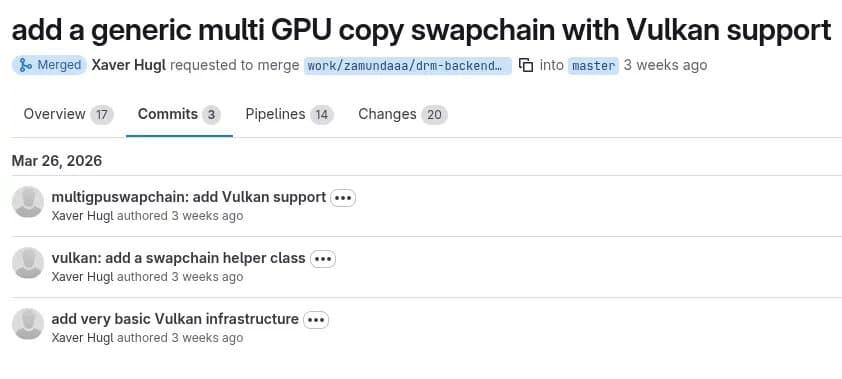
KDE's KWin compositor has taken its first concrete step toward implementing Vulkan support as an alternative to OpenGL rendering. The merge, which landed in the mainline codebase on March 26, 2026, introduces basic Vulkan infrastructure and swapchain functionality that could eventually replace OpenGL for window composition on Linux systems.
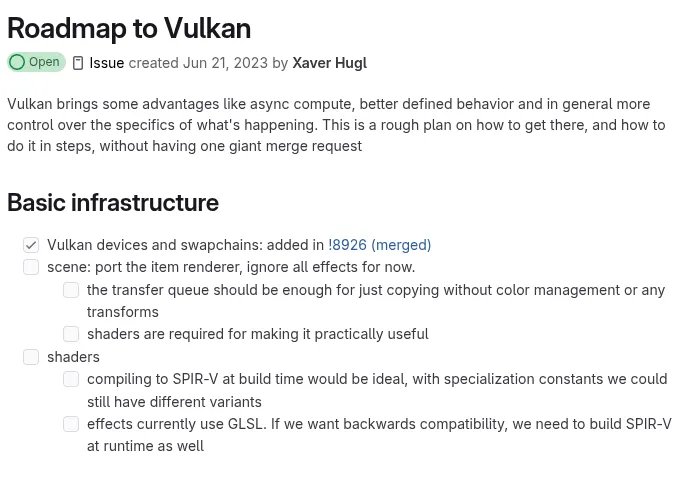
The development represents years of discussion finally materializing into actual code. For context, the KWin Wayland compositor has been exploring Vulkan support for several years, with community interest growing around the potential performance benefits and modern graphics API features that Vulkan offers over traditional OpenGL.
Xaver Hugl, the author of the merged code, described the implementation in detail. The merge request introduces a generic multi-GPU copy swapchain with Vulkan support, specifically targeting the DRM (Direct Rendering Manager) backend. According to Hugl's testing, performance with the current implementation matches OpenGL when using combinations like AMD integrated GPU with AMD discrete GPU, or Intel integrated GPU with Nvidia discrete GPU.
However, the merge request notes an interesting limitation with Nvidia configurations. When Nvidia serves as the primary GPU, Vulkan theoretically enables certain performance improvements that aren't yet unlocked by this initial implementation. Hugl explains that with EGL rendering, two copy operations are currently required: first to an intermediary linear buffer, then to the scanout buffer. This suggests that while the foundation is being laid, optimization opportunities remain for future development.

The merged code represents the first milestone in KWin's Vulkan roadmap, which was initially outlined in 2023. That roadmap laid out a phased approach to Vulkan integration, starting with basic infrastructure before moving on to more complex features like Vulkan-enabled KWin effects, plugins, and support for additional backends beyond DRM.
This initial merge focuses specifically on establishing the core Vulkan infrastructure and swapchain components. The swapchain implementation is particularly noteworthy for its multi-GPU awareness, which is crucial for Linux users who frequently employ hybrid graphics configurations. The ability to handle multiple GPUs efficiently could be one of Vulkan's key advantages over OpenGL in the compositor context.
While this represents significant progress, the merge request itself acknowledges that substantial work remains. The current implementation provides the foundation but doesn't yet deliver the performance benefits that Vulkan could potentially offer. Future work will need to address Vulkan support for KWin's various effects and plugins, expand backend compatibility, and optimize the rendering pipeline to take full advantage of Vulkan's capabilities.
For KDE users and Linux enthusiasts, this development signals an important transition in the project's graphics rendering strategy. OpenGL has served as the primary rendering API for KWin for many years, but Vulkan's modern architecture offers advantages in terms of explicit control over GPU resources, potentially better multi-GPU support, and alignment with contemporary graphics development practices.
The merge comes at a time when many graphics-intensive Linux applications are increasingly adopting Vulkan, making it a logical progression for the desktop compositor to follow suit. As the code matures and additional features are implemented, users can expect to see performance improvements and new capabilities that leverage Vulkan's strengths.
Community response to the merge has been positive, with developers expressing enthusiasm about seeing the long-discussed Vulkan support finally taking shape in the mainline codebase. The incremental approach taken by the KWin developers suggests a careful, measured transition that will allow for thorough testing and optimization at each stage.
For now, users running KDE with the DRM backend can expect to see this initial Vulkan implementation available in upcoming releases, though it will likely remain behind configuration options or feature flags until the broader Vulkan integration is complete. The journey toward full Vulkan support in KWin has officially begun, marking an exciting chapter in KDE's graphics rendering evolution.
Comments
Please log in or register to join the discussion