Industry analyst warns mainstream laptops could jump from $900 to over $1,200 as memory, storage, and CPU shortages driven by AI demand squeeze the PC supply chain.
The PC market is facing a perfect storm of declining sales and surging component costs, with industry analyst TrendForce warning that laptop prices could increase by approximately 40% in the coming months. This dramatic price hike would push mainstream models currently priced at $900 to around $1,260, as manufacturers, distributors, and retailers maintain their margins amid unprecedented supply chain pressures.
The Component Cost Crisis
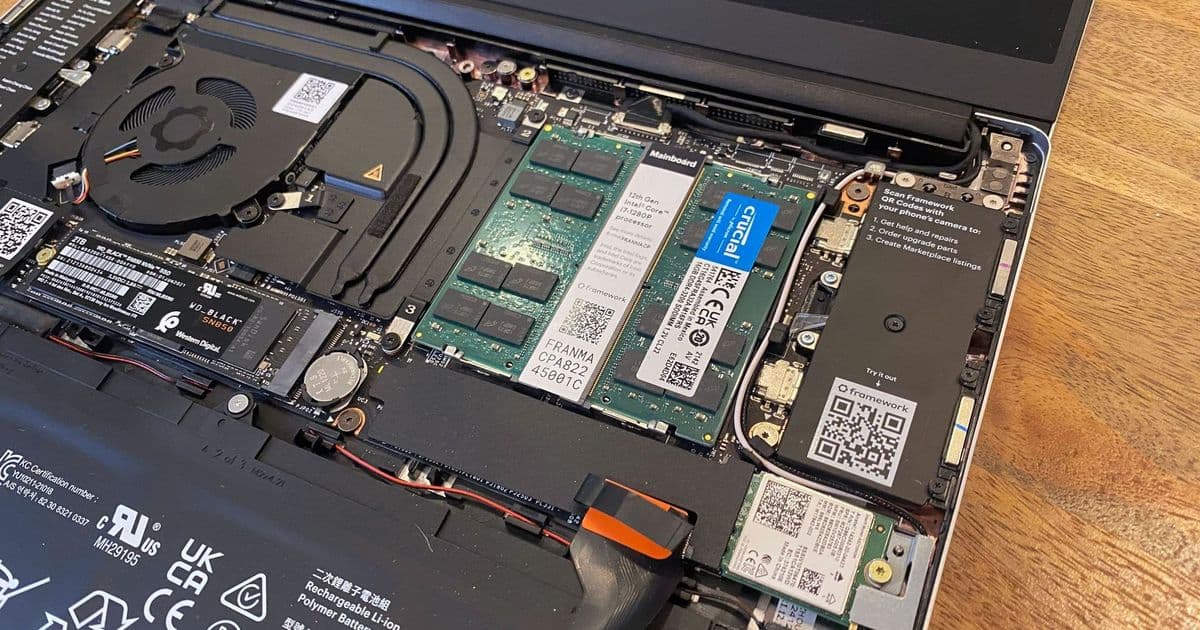
The root of this price surge lies in the continued memory and storage chip shortage that has been building since late 2025. According to TrendForce's analysis, before these shortages, RAM modules and SSDs accounted for about 15% of a mainstream laptop's bill-of-materials, while the CPU made up another 30%. Together, these three critical components represented 45% of the total cost.
However, recent market conditions have dramatically altered this equation. The combined cost of memory, storage, and CPU components has now climbed to approximately 58% of the total bill-of-materials—a 13 percentage point increase that doesn't even account for the profit margins required by the entire supply chain.
AI Demand Driving the Shortage
This shortage isn't occurring in a vacuum. The massive demand from AI hyperscalers and data centers for high-bandwidth memory and fast storage has created a supply crunch that's rippling through the entire technology ecosystem. These enterprise customers are willing to pay premium prices for components, causing suppliers to prioritize manufacturing capacity for these more lucrative products over consumer-grade hardware.
What makes this situation particularly challenging is that the AI boom is now affecting CPUs as well. Both Intel and AMD have reported spikes in demand and server CPU shortages in China, driven largely by agentic AI workloads. These advanced AI applications require a combination of CPUs, GPUs, NPUs, and other specialized processors to support their complex workflows.
Consumer Market Impact
The effects are already visible in the consumer market. Enthusiasts experimenting with OpenClaw technology are experiencing extended delivery timelines for high-end Apple Mac units with massive Unified Memory configurations. This suggests that even premium segments are feeling the strain of component shortages.
For Microsoft and Windows laptop manufacturers, this price increase poses a significant challenge. Many entry-level and mid-range buyers specifically choose Windows laptops for their sub-$1,000 price points. If TrendForce's 40% price increase estimate proves accurate, these models would no longer be priced attractively compared to Apple's offerings.
The Apple Advantage
Apple's position in this shifting market is particularly interesting. The new M5 MacBook Air starts at $1,099 and comes with 16GB of Unified Memory and 512GB of storage—specifications that would be difficult to match at a similar price point in the Windows ecosystem if component costs continue to rise.
More significantly, Apple's just-released MacBook Neo is providing entry-level customers with an affordable device that comes in a premium package. This could give Apple a competitive advantage as Windows laptop prices climb, potentially accelerating market share shifts that were already underway.
Industry-Wide Implications
The 40% price increase projection represents more than just a temporary market fluctuation—it signals a fundamental shift in the economics of PC manufacturing. With component costs now representing a larger share of the total bill-of-materials, manufacturers have less flexibility to absorb price increases without impacting their margins.
This situation creates a challenging environment for the entire PC ecosystem. Retailers may struggle to maintain sales volumes as prices rise, while consumers face difficult choices between upgrading their hardware and maintaining their budgets. The timing is particularly problematic as many businesses and consumers were hoping for more affordable computing options in 2026.
Looking Ahead
Unless the supply chain can adapt quickly to meet the surging demand for memory, storage, and CPU components, the PC market may be entering a period of sustained higher prices. This could have long-term implications for PC adoption rates, replacement cycles, and the competitive dynamics between different computing platforms.
The AI boom that's driving these shortages shows no signs of slowing down, suggesting that component scarcity may persist well into 2026 and potentially beyond. For consumers and businesses planning technology purchases, this analysis suggests that acting sooner rather than later might be the prudent strategy, as prices are likely to continue their upward trajectory in the near term.
Comments
Please log in or register to join the discussion