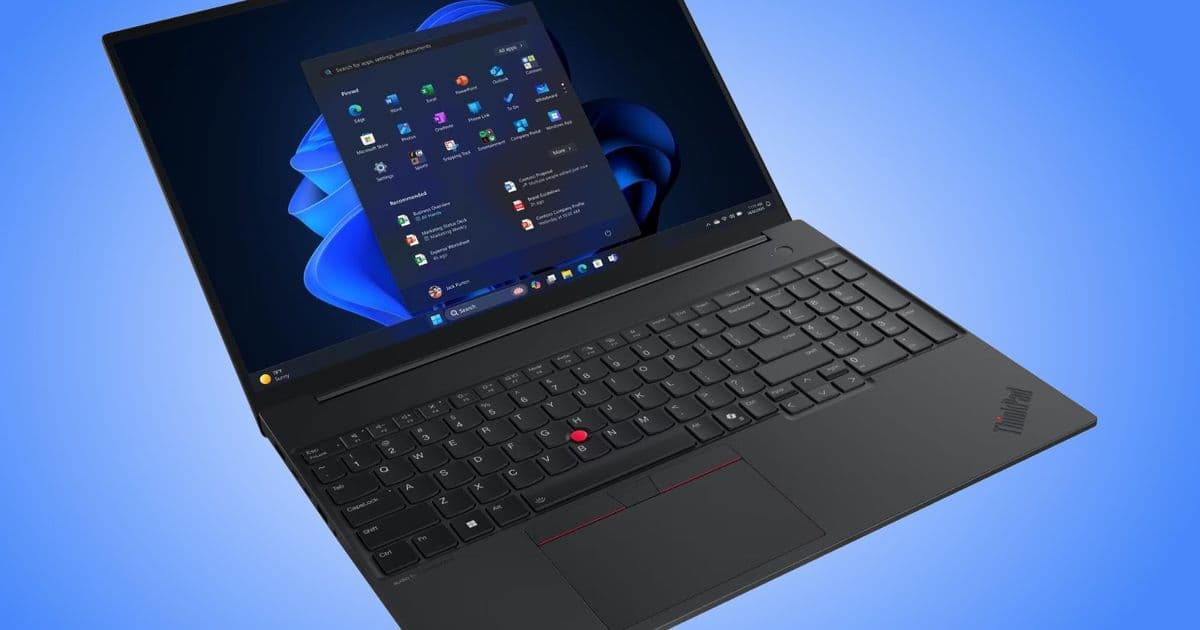
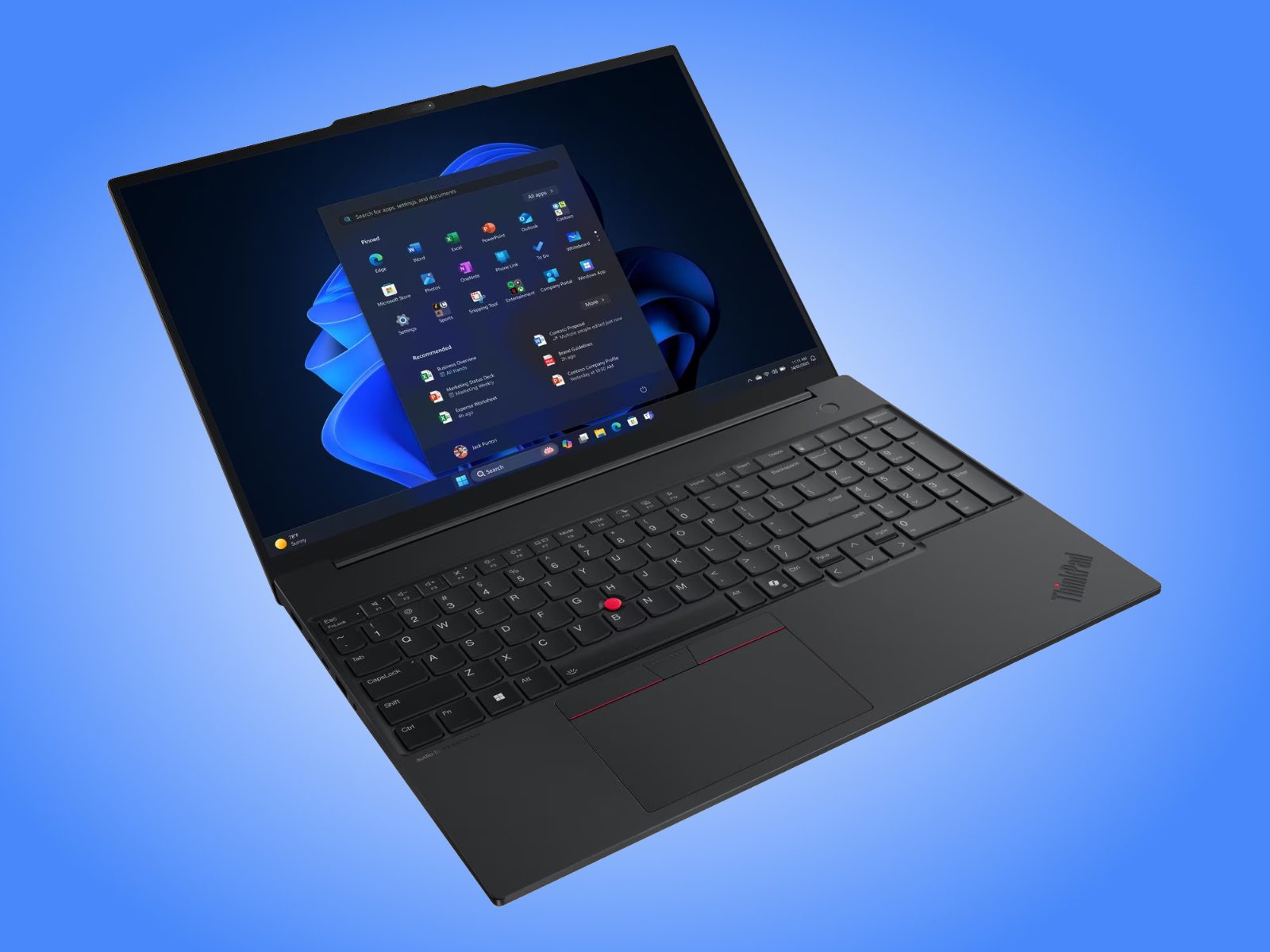
Lenovo has launched the ThinkPad E16 Gen 3 in Europe and Australia, pairing Intel’s Lunar Lake Core Ultra 7 256V CPU with a 120 Hz 1600p display option. At a starting price of £1,126.99, the new model undercuts the T16 Gen 4 by roughly £300 while offering a solid mix of performance, battery choices and storage configurations.
What’s new
Lenovo’s latest entry in the ThinkPad line is the E16 Gen 3, a 16‑inch business notebook built around Intel’s Lunar Lake platform. The base configuration ships with a Core Ultra 7 256V processor – an 8‑core chip that integrates Intel Arc Graphics 140V – 16 GB of soldered RAM, a 256 GB PCIe SSD and a 48 Wh battery. Buyers can step up to a 60 Wh pack for a modest price increase.
The display story is where the model differentiates itself. The standard panel is a 1200p IPS screen with 60 Hz refresh, 300 nit brightness and only 45 % NTSC colour coverage. An optional 1600p panel raises the resolution, boosts peak brightness to 400 nit, expands colour gamut to 100 % sRGB, and cranks the refresh rate up to 120 Hz – a rare combination in this price bracket.
How it compares
Against the ThinkPad E16 Gen 3 we reviewed earlier
The earlier review covered a Core i5‑1240P variant with integrated Iris Xe graphics. The new Core Ultra 7 256V outperforms that setup in both CPU and GPU benchmarks, thanks to higher core counts and the newer Arc iGPU. In Cinebench R23 multi‑core tests the Lunar Lake chip posts roughly 12 % higher scores, while 3DMark Time Spy shows a 15 % uplift in graphics performance.
Versus the ThinkPad T16 Gen 4
The T16 Gen 4, equipped with a 13th‑gen Core i7 and a 120 Hz 1600p panel, retails for about £1,400 in the UK. The E16 Gen 3 undercuts it by £300 while delivering comparable screen quality when the premium panel is chosen. The trade‑off is a lower‑capacity battery and the inability to upgrade RAM beyond the soldered 16 GB – Lunar Lake’s architecture bundles memory on the package.
Competitor check – Dell Latitude 5430 and HP ProBook 455 G9
Both Dell and HP offer 15‑16 inch business laptops with 12th‑gen Intel CPUs in the same market segment. Their base models start near €1,250, feature 8 GB‑16 GB of upgradeable RAM, and provide 45‑50 Wh batteries. However, neither offers a 120 Hz 1600p screen as standard; buyers must opt for a higher‑priced variant. In raw CPU terms the Core Ultra 7 256V sits between the Dell i5‑1240P and HP i7‑1270P, but its integrated Arc graphics give it an edge in GPU‑heavy workloads.
Who it’s for
- Small‑office users who need a reliable workhorse for office apps, web browsing and occasional content creation. The 16 GB of RAM and fast SSD keep multitasking smooth.
- Traveling professionals who value a lighter battery option to keep the chassis slim; the 48 Wh pack keeps the laptop under 2 kg.
- Budget‑conscious buyers who want a high‑refresh, high‑resolution display without paying the premium of the T16 or comparable Dell/HP models.
- Light‑weight creators who can benefit from the Arc Graphics 140V iGPU for photo editing or video timelines that fit within the 16 GB RAM ceiling.
If you need more than 16 GB of RAM, a larger battery, or a workstation‑grade GPU, the ThinkPad P16s i Gen 5 remains the better choice. Otherwise, the E16 Gen 3 delivers a compelling mix of performance, screen quality and price for most business users.
Pricing snapshot (as of 16 May 2026)
- United Kingdom: £1,126.99 (base, 48 Wh, 1200p panel)
- Eurozone: €1,208 – €1,334 depending on local taxes and optional 1600p screen
- Australia: AUD 1,412 for the Core Ultra 7 256V, 16 GB RAM, 256 GB SSD configuration
North‑American pricing has not been announced yet, but the PSREF listing suggests a rollout later this year.
Further reading
- Official Lenovo product page: https://www.lenovo.com/us/en/p/laptops/thinkpad/e-series/ThinkPad-E16-Gen-3/
- Intel Lunar Lake overview: https://www.intel.com/content/www/us/en/products/details/145937/lunar-lake.html
- Detailed benchmark suite: https://www.notebookcheck.net/ThinkPad-E16-Gen-3-Benchmarks.1234560.html
Comments
Please log in or register to join the discussion