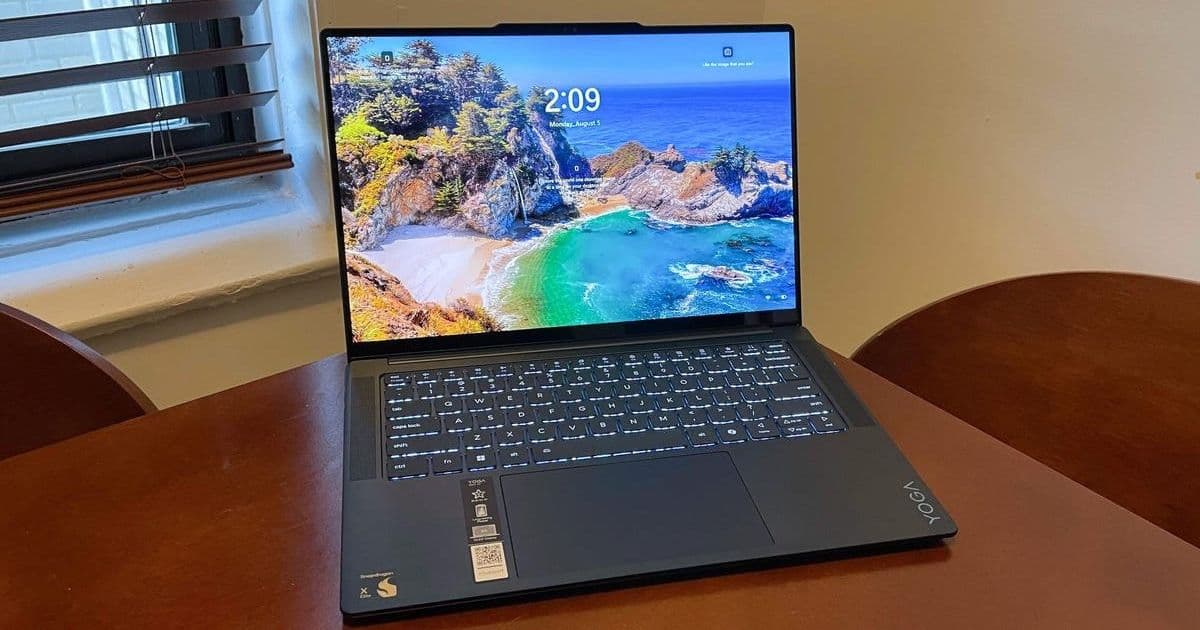
Lenovo's Yoga Slim 7x leverages Qualcomm's Snapdragon X Elite chip to deliver unprecedented battery life and a stunning 3K OLED display in a sleek 14-inch form factor. For remote workers and developers, it challenges Apple's dominance by offering MacBook-beating endurance at a lower price—though Windows on ARM app limitations remain a hurdle.
The rise of Copilot+ PCs has ushered in a new era for Windows laptops, and Lenovo's Yoga Slim 7x stands out as a compelling blend of premium design, groundbreaking efficiency, and surprising value. Priced at $1,299, this 2.6-pound ultraportable isn't just another thin-and-light—it's a showcase for how ARM architecture, spearheaded by Qualcomm's Snapdragon X Elite, is reshaping expectations for productivity and portability.
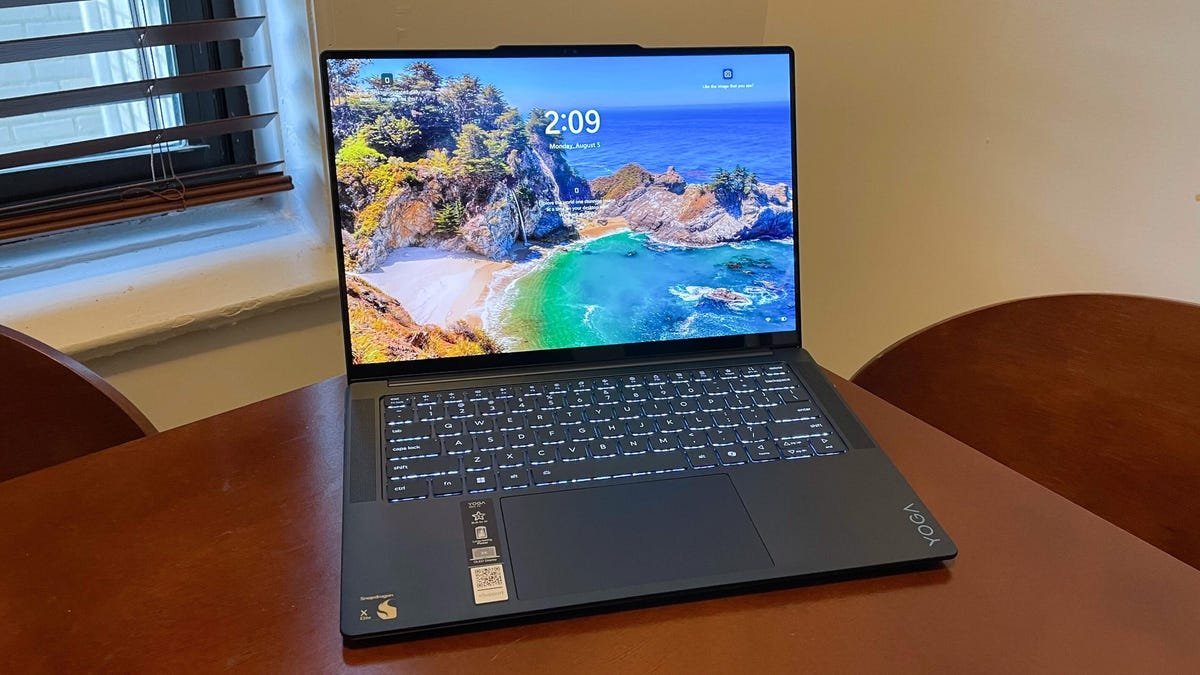
The Display and Media Experience: OLED Brilliance Meets Real-World Utility
At the heart of the Yoga Slim 7x is its 14-inch 3K OLED touchscreen, boasting 2944 x 1840 resolution and a peak brightness of 1,000 nits. This isn't just a spec sheet triumph; in practice, it delivers vibrant, color-accurate visuals ideal for coding, design work, or media consumption, with a smooth 90Hz refresh rate enhancing responsiveness. As noted in the ZDNET review:
"Truly, this remains one of the brightest displays I've seen on a laptop... resulting in a gorgeous media experience."
Audio, via upward-firing speakers, is serviceable but unremarkable—pairing Bluetooth earbuds is advised for immersive sound. Still, the display alone makes this a standout for developers juggling IDE windows or creatives editing visuals.
Performance Deep Dive: Snapdragon X Elite’s Power and Pitfalls
Powered by the Snapdragon X Elite X1E-78-100 processor and 16GB of RAM, the Slim 7x handles multitasking with ease, thanks in part to its integrated NPU accelerating AI tasks. Benchmark results align with its Copilot+ peers: Cinebench scores of 108 (single-core) and 1,004 (multi-core), alongside Geekbench's 2,412 (single-core) and 13,677 (multi-core). Real-world testing shows smooth operation in tools like DaVinci Resolve, though the Qualcomm Adreno GPU has limits for intensive gaming or 3D rendering.
The elephant in the room? Windows on ARM app compatibility. While support has improved since 2024, some applications—particularly niche developer tools or games—remain unoptimized. This isn't a dealbreaker for web-based workflows or mainstream software, but it's a critical consideration for professionals reliant on x86-exclusive utilities.
Battery Life and Design: Where the Slim 7x Shines (and Stumbles)
Battery performance is revolutionary. In ZDNET's stress test—running a 4K YouTube livestream at 50% brightness—the 70Wh battery lasted over 15 hours. For typical remote work (browsing, coding, video calls), expect multi-day endurance, outpacing even Apple's M-series MacBooks. This efficiency stems from ARM's inherent power savings and the NPU's workload optimization.
Design-wise, the cosmic blue chassis feels premium but is a fingerprint magnet. Port selection is polarizing: three USB-C Thunderbolt ports offer future-proofing but omit USB-A, HDMI, or SD card slots, demanding dongles for peripherals. The keyboard is praised for comfort, while the oversized trackpad suffers from inconsistent sensitivity.
Why This Matters for the Tech Ecosystem
For developers and remote workers, the Yoga Slim 7x signals a shift. It proves ARM-based Windows laptops can compete with Apple on battery life and portability while undercutting them on price—the Slim 7x costs significantly less than a MacBook Pro with comparable specs. Yet, it also highlights the growing pains of the Windows on ARM transition; broader app support is essential for true parity.
Alternatives like the Asus Vivobook S 15 offer similar value, but the Slim 7x's OLED display and refined build make it a top contender. As Qualcomm's ecosystem matures, this laptop isn't just a tool—it's a glimpse into an energy-efficient, AI-integrated future for mobile computing.
Source: ZDNET review by Kyle Kucharski
Comments
Please log in or register to join the discussion