Meet Leptosis—an open-source Bluetooth keyboard boasting a remarkable 7.5mm profile and year-long battery life. Built on ZMK firmware and Nordic's nRF52, this split design challenges conventional ergonomic keyboards with its extreme portability and DIY-friendly architecture.
For keyboard enthusiasts craving minimalism without compromise, Leptosis delivers radical thinness paired with engineering ingenuity. This open-source split keyboard project, hosted on GitHub, achieves a mere 7.5mm thickness—thinner than most smartphones—while maintaining full Bluetooth functionality and an astonishing 1-year battery life for its peripheral module.
Engineering the Impossible Flat
Leptosis (from Greek leptos for "flat") uses a compact Miryoku layout to fit into a 13.2x9.2cm footprint. Its ultra-low profile demands meticulous hardware design:
- nRF52840 MCU: Handles Bluetooth LE connectivity with extreme power efficiency
- Custom Power Management: Enables ~4 months of central unit runtime and 1 year for peripherals
- 1.2mm PCB Stackup: Requires precise impedance tuning for USB and antenna traces
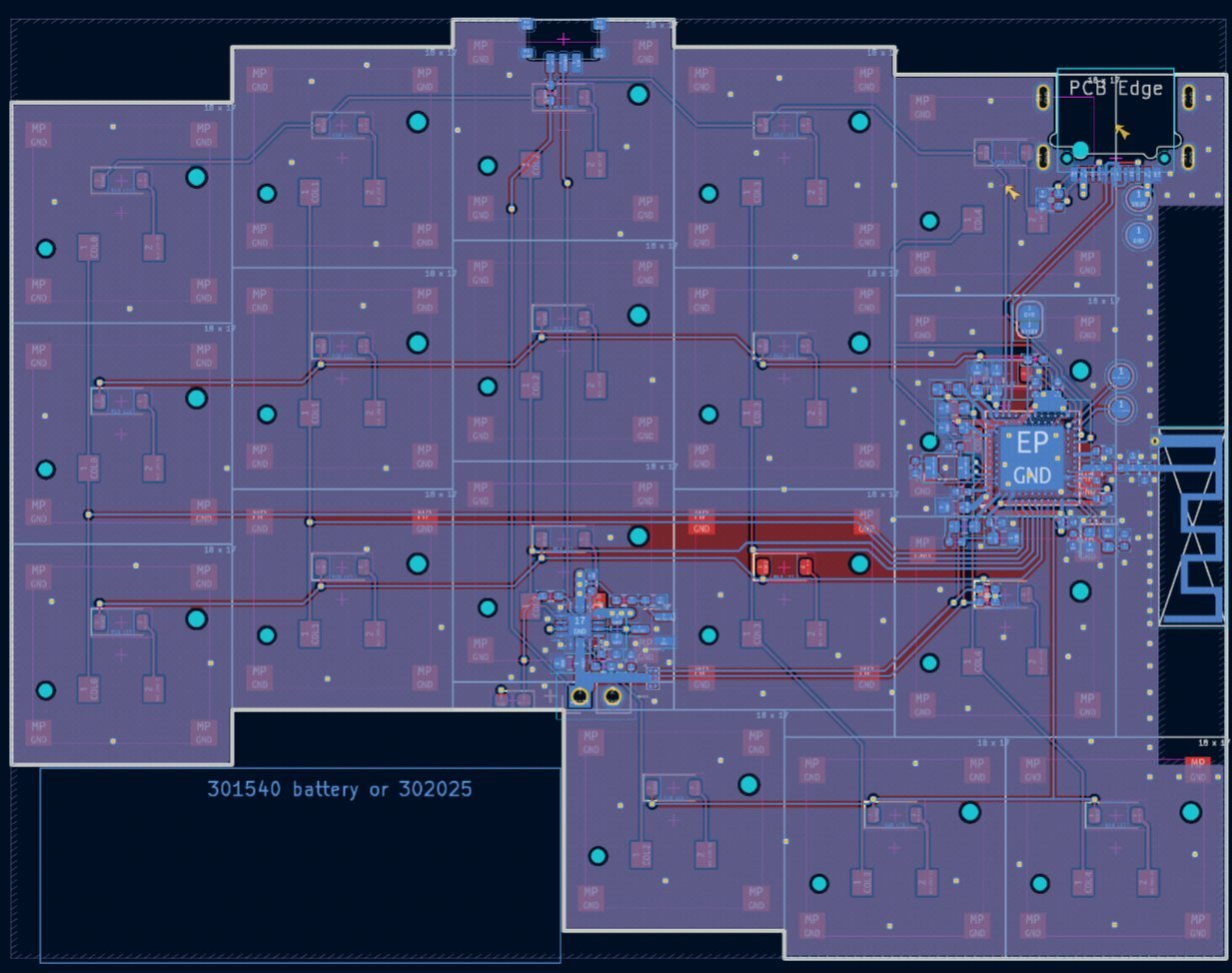 The PCB layout shows densely packed components enabling Leptosis' slim form factor.
DIY With Caveats
Creator cheyao provides complete design files but warns about fabrication hurdles:
"I highly discourage you to reflow [the aQFN package] yourself if you haven’t reflowed one before—it’s a nightmare."
The project leverages JLCPCB’s JLC04121H-7628 stackup, with panelized V-Cut versions available. Assembly requires:
- Soldering JTAG jumpers for initial programming
- Flashing a custom bootloader via OpenOCD
- Loading ZMK firmware via USB mass storage
# Bootloader flash command
openocd -f interface/stlink.cfg -f target/nrf52.cfg \
-c 'program bootloader.hex verify reset; shutdown;'
Why ZMK Firmware Matters
Leptosis uses ZMK, an open-source wireless keyboard firmware, which enables:
- Ultra-low power consumption via Bluetooth LE
- Real-time key remapping
- Cross-platform compatibility
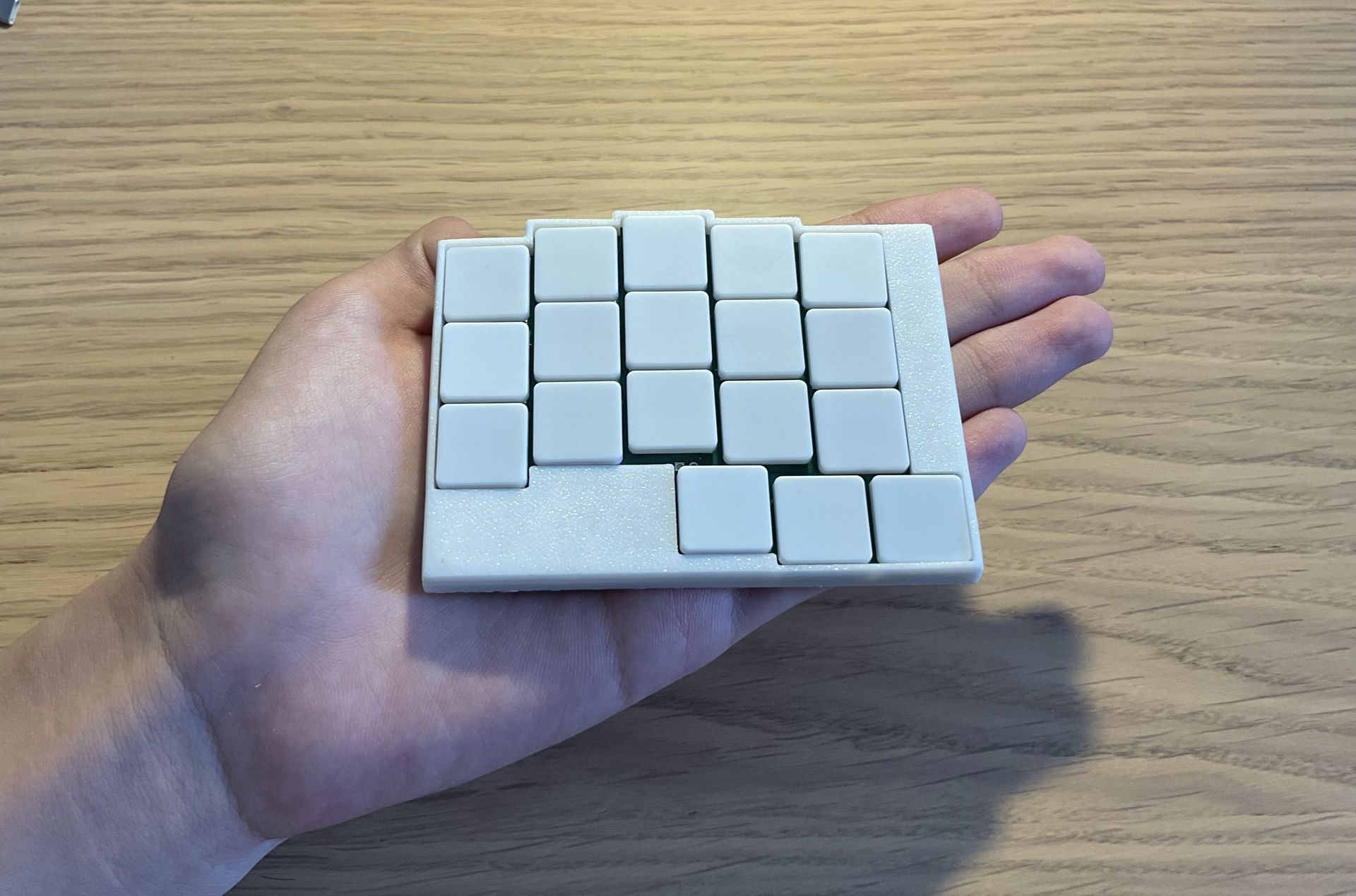 The finished keyboard demonstrates ergonomic split design in a remarkably slim package.
The DIY Hardware Renaissance
Leptosis exemplifies a growing trend of open-source hardware pushing boundaries that commercial products often ignore. Its extreme thinness challenges assumptions about keyboard ergonomics, while the year-long battery life showcases the nRF52’s capabilities when optimized rigorously. For developers, it’s both a functional tool and a masterclass in power-constrained embedded design—proving that sometimes, flat really is revolutionary.
Source: Leptosis GitHub Repository
Comments
Please log in or register to join the discussion