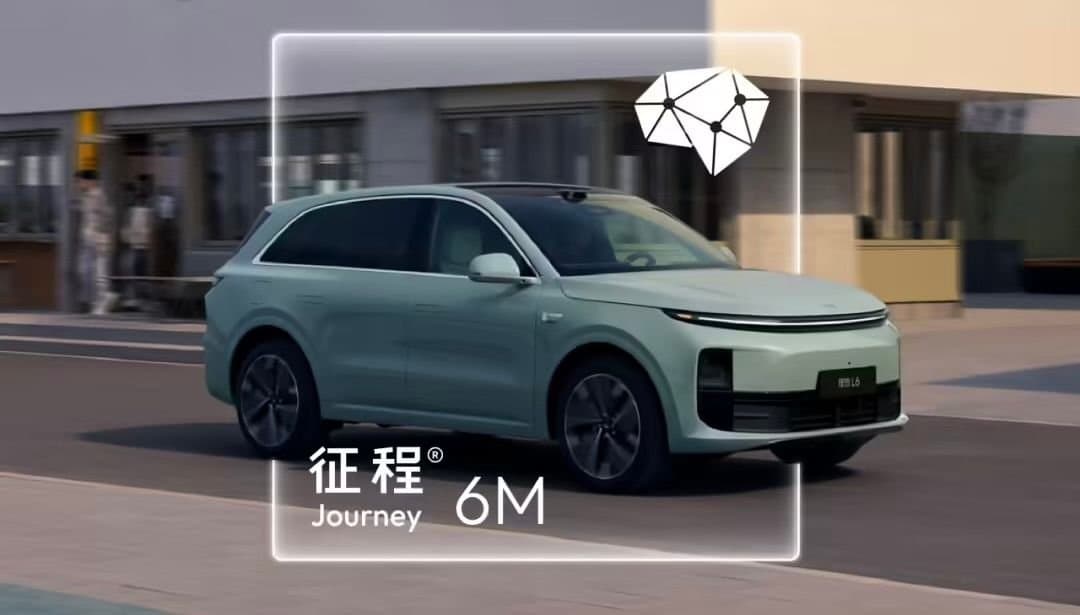
Li Auto is deploying an end-to-end urban NOA system powered by a single Horizon Journey 6M chip, bringing advanced driver assistance to its mid-tier models. This move highlights a trend toward more efficient, cost-effective hardware for complex autonomous driving tasks.
Li Auto has begun rolling out its AD Pro 4.0 software update, a significant step in its autonomous driving strategy. The update delivers an end-to-end urban Navigate on Autopilot (NOA) solution to its mass-produced vehicles, a capability typically reserved for higher-end systems with more expensive hardware. The key enabler is a single Horizon Robotics Journey 6M system-on-a-chip, which provides 128 TOPS (trillions of operations per second) of computing power.
This development is notable because it demonstrates that advanced urban autonomous driving features—navigating complex city streets, handling intersections, and managing traffic flow—can be achieved with a single, relatively modest AI accelerator. The AD Pro 4.0 system is being deployed on the AD Pro variants of Li Auto's refreshed L Series models (L6, L7, L8, L9), bringing these capabilities to a broader segment of the market.
The Hardware: Horizon's Journey 6M
The Horizon Robotics Journey 6 series, introduced in April 2024, includes several variants (6B, 6L, 6E, 6M, 6H, 6P) tailored for different performance and cost points. The Journey 6E, for context, offers around 80 TOPS and is designed for passively cooled domain controllers. The Journey 6M, used by Li Auto, is a step up in performance.
The Journey 6M is built on Horizon's next-generation Nash BPU (Brain Processing Unit) architecture. This architecture is designed for efficient processing of complex AI models, particularly those used in autonomous driving. It supports multimodal sensor fusion, integrating data from cameras, LiDAR, and millimeter-wave radar—a critical requirement for robust environmental perception. The chip's high bandwidth-to-compute ratio is a key technical feature, enabling it to handle advanced algorithms like Transformer-based models, which are essential for understanding and predicting the behavior of other road users and planning vehicle trajectories.
This single-chip approach for urban NOA is a departure from earlier systems that often required multiple chips or more powerful (and expensive) hardware. It suggests a maturation of both the hardware (more efficient compute) and the software (more optimized algorithms).
What's Claimed vs. What's Actually New
Li Auto and its partner, Light Boat Intelligence, claim this is the "industry's first end-to-end urban NOA solution based on a single Horizon Journey 6M chip in mass-produced vehicles." The "end-to-end" aspect is significant. It implies a more integrated software architecture where perception, prediction, and planning are handled by a unified neural network model, potentially reducing latency and improving system coherence compared to modular, pipeline-based approaches.
The "new" part is the specific combination of hardware (Journey 6M) and software (AD Pro 4.0) achieving this capability in a production vehicle aimed at the mid-tier segment. While other companies have demonstrated urban NOA, Li Auto's move is to democratize it across its model line using a cost-effective chip.
Limitations and Context
It's important to maintain a skeptical perspective. The term "urban NOA" can encompass a wide range of capabilities. The actual performance—how well the system handles edge cases, adverse weather, or poorly marked roads—will determine its real-world utility. The 128 TOPS figure is a raw compute metric; the efficiency of the software in utilizing that compute is what ultimately matters.
Furthermore, this system is a Level 2+ driver assistance feature, not a fully autonomous system. It requires driver supervision at all times. The update is a software rollout to existing AD Pro hardware, which means the underlying sensor suite (cameras, radar, possibly LiDAR) must be capable enough to support the new algorithms. Li Auto has standardized its AD Pro hardware on the Journey 6M, suggesting a strategic alignment with Horizon's roadmap.
This rollout also underscores the competitive landscape in China's EV market, where advanced driver-assistance systems (ADAS) are a key battleground. By bringing a capable urban NOA to its mid-tier models, Li Auto is likely aiming to maintain its competitive edge against rivals like Xpeng, Nio, and Tesla's Full Self-Driving (FSD) beta, which is also being deployed in China.
For those interested in the technical details of Horizon's Journey 6 series, more information can be found on their official website. Li Auto's announcements and updates are typically posted on their corporate news page.
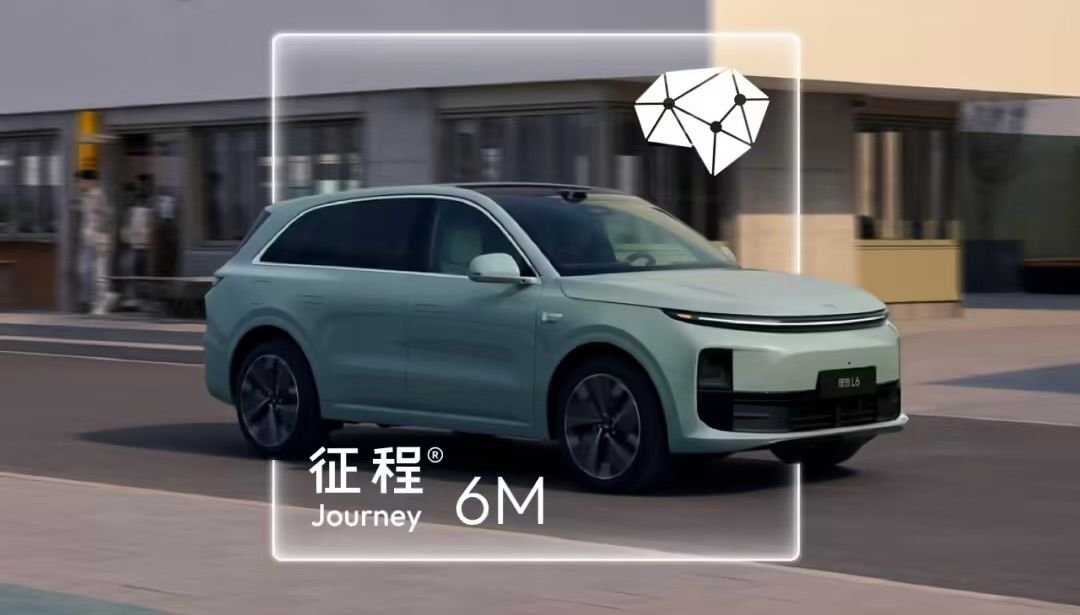
The deployment of AD Pro 4.0 is a practical example of how AI chip advancements are enabling more sophisticated autonomous features without necessarily requiring prohibitively expensive hardware. It reflects a broader industry trend toward optimizing both silicon and software to achieve specific, high-value driving tasks like urban navigation. The success of this update will be measured not just by its rollout, but by user adoption and real-world performance data in the coming months.
Comments
Please log in or register to join the discussion