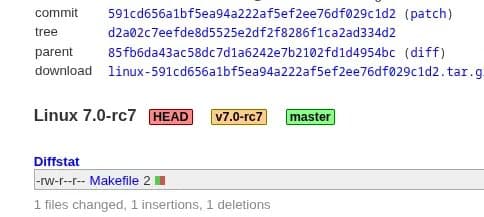
The seventh release candidate for Linux 7.0 arrives with enhanced security documentation for AI agents, controller support additions, and a critical WiFi driver performance fix.
Linux 7.0-rc7 Released With Improved Docs For AI Agents, WiFi Driver Performance Fix

The seventh release candidate for the Linux 7.0 kernel has arrived just in time for Easter, bringing with it a mix of security improvements, hardware support additions, and critical performance fixes. Linus Torvalds has expressed optimism about meeting the April 12th release target, though an additional release candidate remains possible if issues arise during the final testing week.
AI Security Documentation Enhancement
One of the more intriguing additions in Linux 7.0-rc7 is improved security documentation specifically designed to help AI agents generate better security and bug reports. This forward-looking feature acknowledges the growing role of AI systems in software development and security analysis.
"The improved security documentation is focused on helping AI agents produce better security/bug reports," notes the release announcement.
This enhancement could significantly improve the quality of automated security analysis and vulnerability reporting, making it easier for AI systems to understand and document security issues in a standardized, comprehensive manner.
Hardware Support Expansions
Linux 7.0-rc7 adds support for several new gaming controllers, including the Razer Wolverine V3 Pro and Betop KP50. These additions simply required new device IDs to be added to the existing XPad driver, demonstrating the kernel's mature approach to hardware support.
Critical WiFi Driver Performance Fix
The release addresses a significant performance issue affecting Atheros/Qualcomm Ath11k and Ath12k drivers. This fix resolves a problem that has persisted since these drivers were initially introduced, potentially improving WiFi performance for affected users.
Release Status and Testing
Linus Torvalds' Easter message for the rc7 release was characteristically straightforward:
"No big surprises this week - rc7 continues the trend of being somewhat larger than usual, but without anything that really stands out or looks worrisome. About half the patch is drivers - gpu, networking, usb and sound are probably the biggest contributors, and that all looks very normal. The rest looks pretty regular too: with core networking and kernel fixes, some filesystem work, and various other bits and pieces: selftests, arch fixes, documentation and crypto. Things look set for a final release next weekend, but please keep testing. The Easter bunny is watching."
Technical Breakdown
The release candidate includes contributions across multiple subsystems:
- GPU drivers: Various fixes and improvements
- Networking: Core networking fixes and driver updates
- USB: Multiple USB-related fixes
- Sound: Audio driver improvements
- Filesystem: Various filesystem work
- Selftests: Additional testing infrastructure
- Architecture: Architecture-specific fixes
- Documentation: Enhanced security documentation
- Crypto: Cryptographic subsystem updates
Looking Ahead
With Linux 7.0-rc7 now available, the kernel development team is on track for an April 12th stable release, though the possibility of an rc8 release on April 19th remains if testing reveals critical issues. The development cycle has been characterized by Torvalds as "rather heavy with fixes," but the overall trajectory remains positive.
For those interested in the full scope of changes coming in Linux 7.0, the comprehensive features and changes list provides detailed information about all the improvements and additions planned for this major kernel release.
Testing and Feedback
The Linux community is encouraged to continue testing the release candidate, particularly focusing on the newly added hardware support and the WiFi driver performance improvements. Feedback from users with Ath11k and Ath12k hardware will be especially valuable in confirming the effectiveness of the performance fix.
As the Easter release arrives, the Linux kernel development process continues to demonstrate its robustness and adaptability, incorporating new technologies like AI-assisted development while maintaining the stability and performance that enterprise users depend upon.
Comments
Please log in or register to join the discussion