
Intel's low-power Wildcat Lake processors appear in Advantech's MIO-5356 SBC datasheet, confirming Core 7 350, Core 5 320, and Core 3 305 specs ahead of launch.
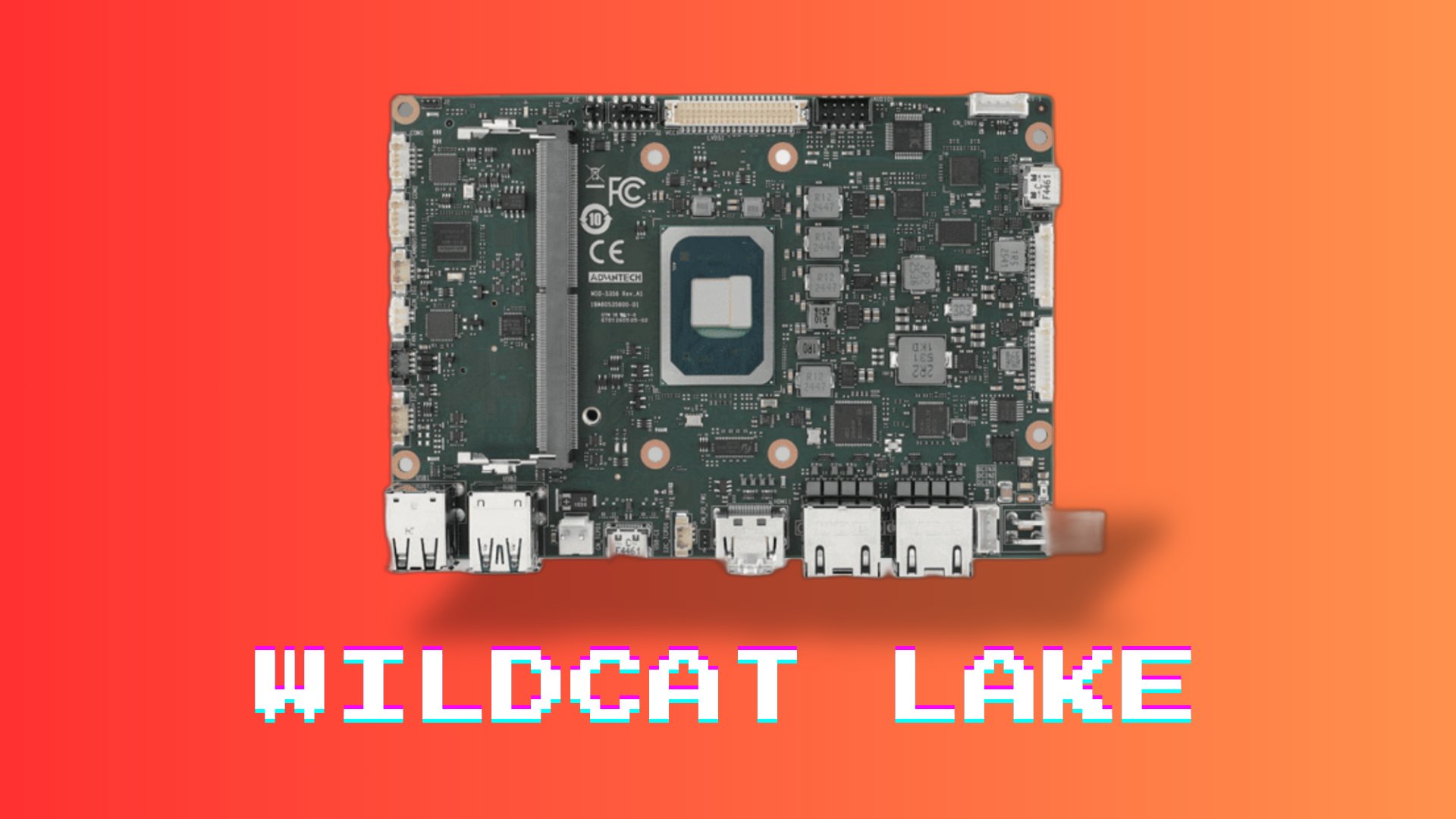
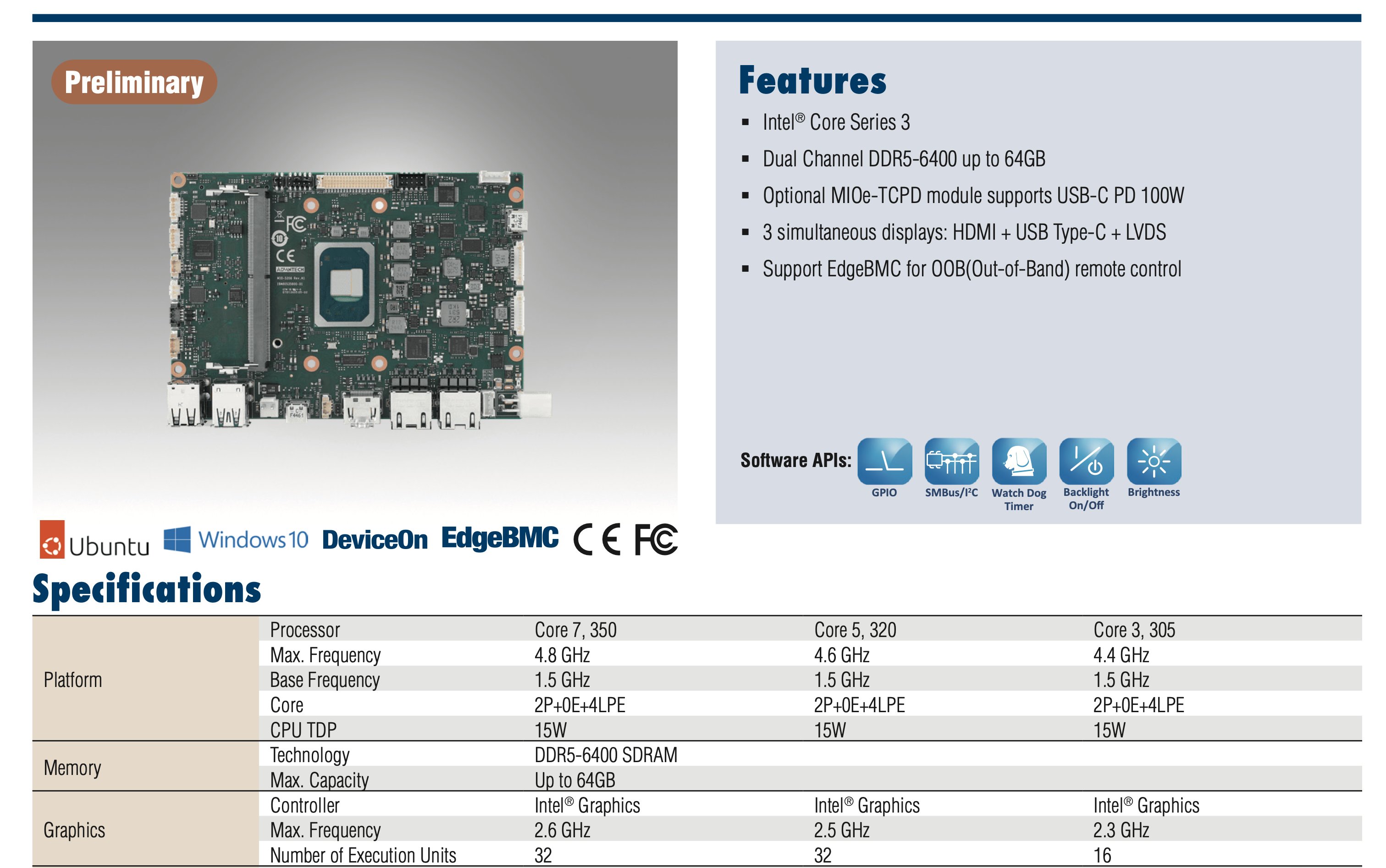
Intel's upcoming Wildcat Lake processor family has surfaced once again, this time through an official datasheet from embedded computing specialist Advantech. The Taiwanese OEM has listed three Wildcat Lake SKUs—Core 7 350, Core 5 320, and Core 3 305—as options for its MIO-5356 single-board computer, marking the first time these chips have appeared in a retail product specification.
(Image credit: Advantech)
The MIO-5356 is designed for embedded and edge computing applications, featuring a robust set of connectivity options including dual Intel i210 and i226 LAN controllers, CAN-FD communication protocol support, GPIO pins, and LVDS display interfaces. The board also includes EdgeBMC remote management capabilities and supports up to 64GB of dual-channel DDR5-6400 memory, though the block diagram indicates single-channel operation—a detail that aligns with previous leaks about the platform.
Core Architecture and Specifications
All three confirmed Wildcat Lake SKUs share an identical 2P+4LP-E core configuration, combining two performance cores with four low-power efficiency cores. This arrangement mirrors Intel's hybrid architecture approach, though Wildcat Lake appears to be taking it in a different direction than previous generations.
The chips operate at a 15W TDP, with rumors suggesting they can boost up to 25W under PL2 conditions. This power envelope positions them squarely in the efficient computing segment, targeting applications where thermal constraints and power efficiency are paramount.
GPU configurations differ between the models: the Core 7 350 and Core 5 320 feature 32 execution units (EUs) for their integrated graphics, while the Core 3 305 scales back to 16 EUs. This tiered approach allows Intel to address different market segments within the embedded and low-power computing space.
Architectural Evolution
Wildcat Lake represents a significant architectural shift from its predecessors. While Twin Lake and Alder Lake-N relied solely on Gracemont cores for efficiency processing, Wildcat Lake introduces Cougar Cove architecture for performance cores and Darkmont for efficiency cores. This brings the platform to feature parity with Intel's higher-end Panther Lake family, though without the "Ultra" branding that typically denotes premium offerings.
This architectural alignment suggests Intel is attempting to create a more cohesive product stack across its portfolio, allowing for better software optimization and potentially improved performance per watt ratios across different market segments.
Market Positioning and Competition
The emergence of these specifications in a commercial product signals that Intel is preparing for a near-term launch. The MIO-5356 datasheet carries a "preliminary" designation, indicating that specifications could still change before official release, but the presence of these chips in a shipping product strongly suggests the platform is nearing completion.
Wildcat Lake's positioning appears to target the same market segment as Apple's M-series chips in fanless devices, particularly the MacBook Air and iPad Pro lines. The combination of efficient performance cores, capable integrated graphics, and low power consumption makes these processors ideal candidates for thin-and-light laptops, tablets, and other portable computing devices where thermal design power is a critical constraint.
The Broader Context
Intel's focus on efficient computing comes at a crucial time in the semiconductor industry. As mobile and edge computing continue to grow in importance, the ability to deliver high performance within strict power envelopes has become increasingly valuable. Wildcat Lake represents Intel's attempt to compete more effectively in this space, where ARM-based designs have traditionally held an advantage.
The leak also provides insight into Intel's product strategy. By introducing a new architecture for low-power parts while maintaining feature parity with higher-end offerings, Intel appears to be attempting to create a more unified ecosystem across its product lines. This could simplify software development and potentially improve the overall user experience across different device categories.
Looking Ahead
While the datasheet confirms only three SKUs, previous reports have suggested a total of six Wildcat Lake processors are planned. The remaining SKUs likely fill out the product stack with different core counts, clock speeds, and power configurations to address various market segments within the embedded and mobile computing space.
The timing of this leak is particularly interesting given the current competitive landscape. With ARM-based Windows laptops gaining traction and Apple's silicon continuing to set performance benchmarks in the mobile space, Intel's ability to deliver competitive low-power solutions could be crucial for maintaining market share in these growing segments.
(Image credit: Advantech)
As the industry awaits official confirmation and launch details, the appearance of Wildcat Lake in a commercial product provides the clearest indication yet that Intel's efficient computing strategy is moving from development to deployment. For embedded system designers, edge computing developers, and manufacturers of portable devices, these processors could offer a compelling combination of performance, efficiency, and integration that addresses the evolving demands of modern computing applications.
The semiconductor industry will be watching closely to see how these chips perform in real-world applications and whether they can help Intel regain ground in the efficient computing segment where it has faced increasing pressure from both ARM competitors and its own internal challenges in recent years.
Comments
Please log in or register to join the discussion