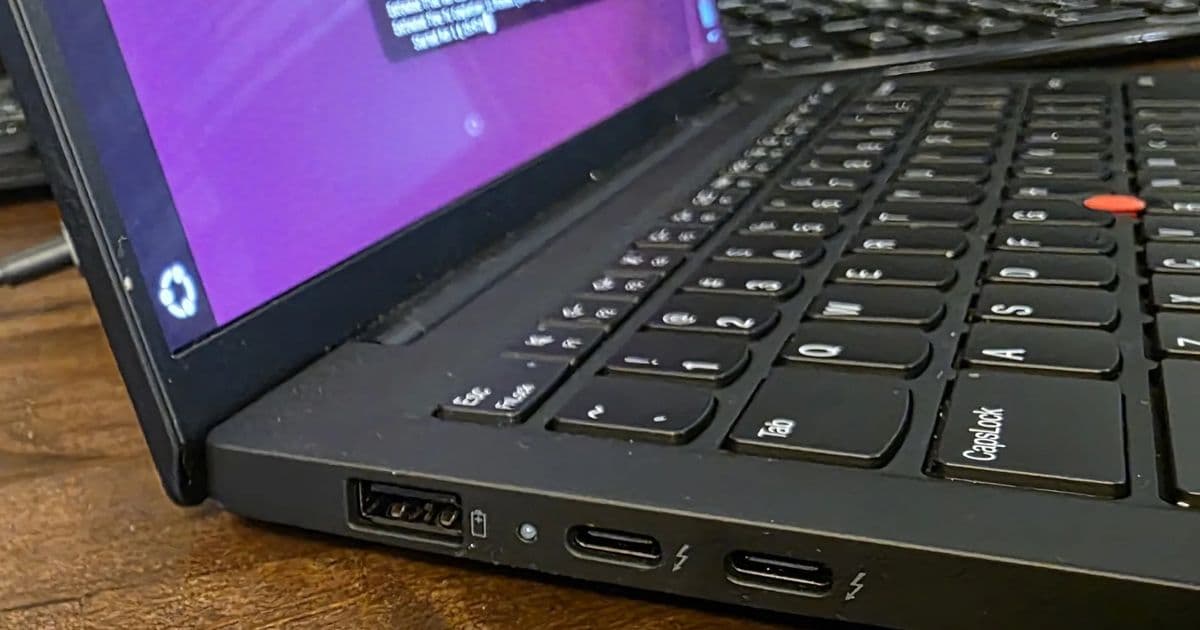
New patches queued for the Linux kernel will allow ThinkPad laptops to report hardware damage, starting with USB-C port failures. The driver exposes damage status through sysfs, providing specific location details for damaged ports.
The Linux kernel's platform driver for Lenovo ThinkPad laptops is preparing to add a new capability: reporting hardware damage directly to users. Patches for the thinkpad_acpi driver have been queued into the platform-drivers-x86.git repository's "for-next" branch, making them candidates for the upcoming Linux 6.20 or 7.0 kernel cycle.
This development builds on functionality that has been baked into newer ThinkPad models. The driver will initially focus on detecting and reporting damage to USB-C ports, which are replaceable connectors on many modern laptops. The core of this feature is the introduction of two new sysfs entries:
/sys/devices/platform/thinkpad_acpi/hwdd_status: Reports the overall hardware damage status as either "damaged" or "not damaged."/sys/devices/platform/thinkpad_acpi/hwdd_detail: Provides specific details about the damage, such as the physical location of a damaged USB-C port. For example, it might report "TYPE-C: Base, Right side, Center port."
This level of detail is particularly useful for damage that may not be visually apparent to the user. A USB-C port might fail internally due to wear or manufacturing defects without showing obvious external signs. The driver can pinpoint the exact port, helping users and technicians diagnose issues more efficiently.
The patches are a follow-up to earlier work reviewed last month, which laid the groundwork for hardware damage detection under Linux. The current implementation is more refined, moving from a simple binary status to providing actionable details. This incremental approach suggests that Lenovo and the Linux kernel community plan to expand the feature to other components over time, such as internal connectors or other replaceable parts.
For system administrators and developers, this means better hardware health monitoring. Scripts can poll these sysfs entries to log damage events, trigger alerts, or integrate with larger management systems. The data could also inform warranty claims or repair workflows, reducing downtime for affected devices.
The inclusion in the "for-next" branch indicates that the patches have passed initial review and are stable enough for broader testing. Once merged into a mainline kernel, ThinkPad users will need to update their kernel and ensure the thinkpad_acpi module is loaded. The feature will likely be enabled by default on supported models, but users can check the sysfs entries to confirm availability.
This update underscores the ongoing collaboration between hardware vendors like Lenovo and the open-source community. By exposing hardware diagnostics through standard Linux interfaces, ThinkPads become more manageable in enterprise and personal environments. It also highlights the kernel's evolving role in hardware lifecycle management, moving beyond basic functionality to include predictive maintenance and detailed error reporting.
As the kernel evolves, expect further refinements to the damage detection system. Future iterations might include more granular metrics, such as the number of insertion cycles for a port or voltage irregularities, offering deeper insights into hardware health. For now, the focus on USB-C ports provides a practical starting point for a feature that could become a standard for diagnosing hardware issues across the Linux ecosystem.
Comments
Please log in or register to join the discussion