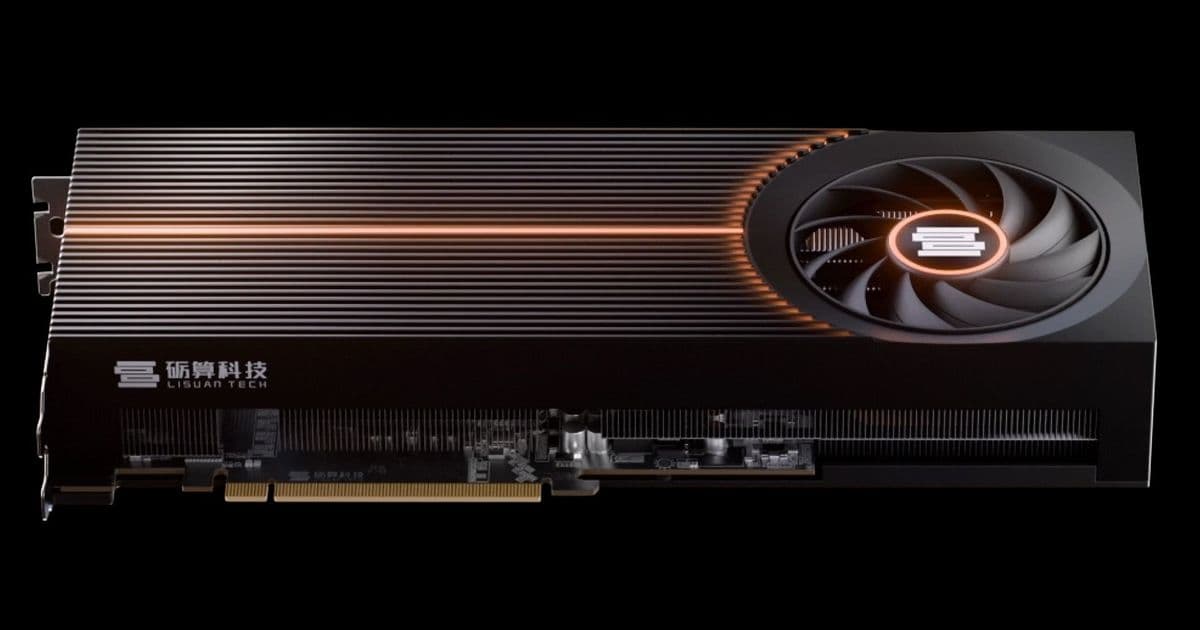
China’s first serious gaming GPU, the LX 7G100, delivers 20‑70% lower frame rates than an RTX 4060 while costing $485, making it uncompetitive against established AMD, Intel and Nvidia cards.
Lisuan Tech’s LX 7G100 Falters Against Nvidia’s RTX 4060 on Performance and Price
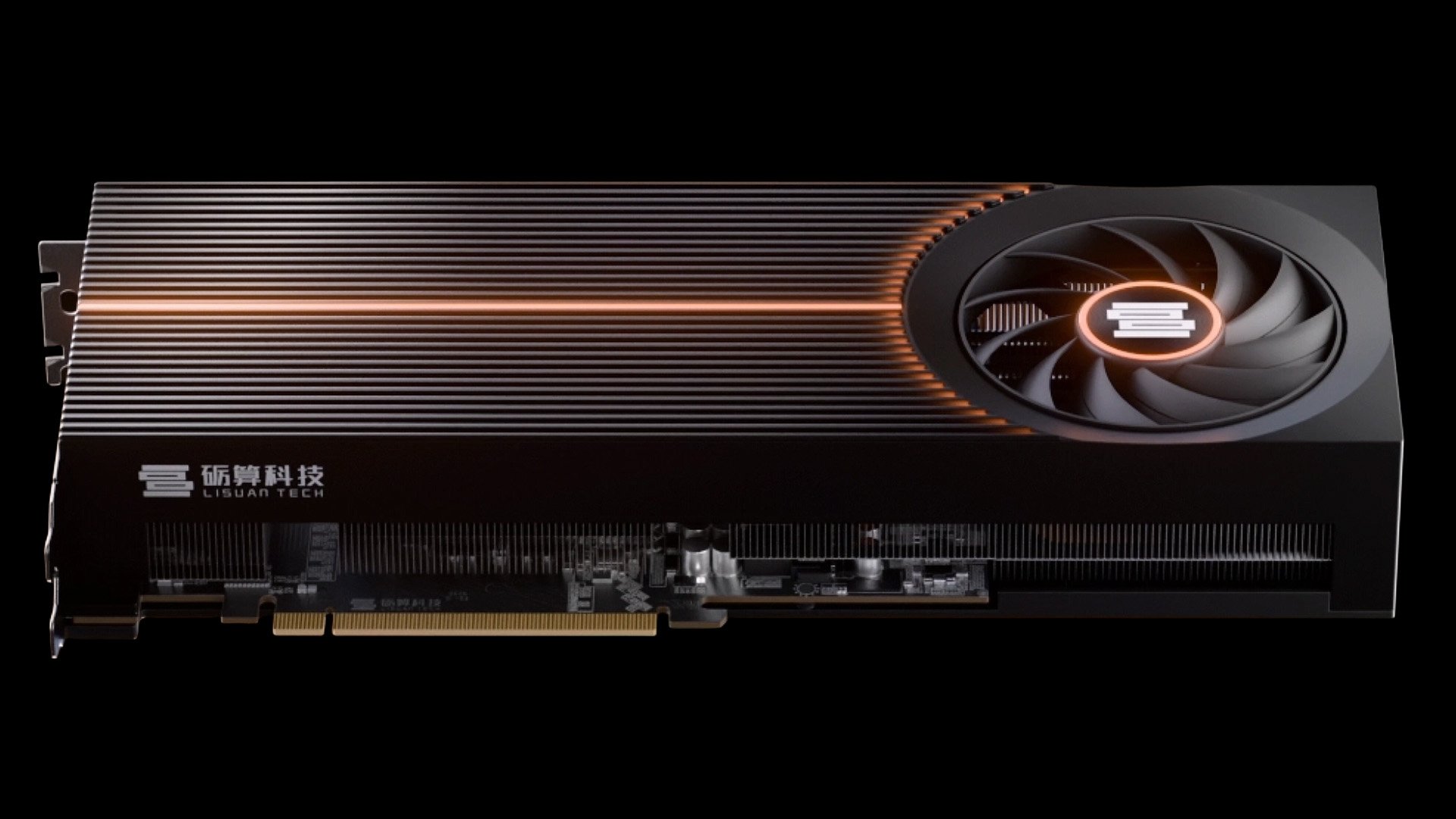
Lisuan Tech unveiled the LX 7G100 as China’s flagship gaming graphics card, positioning it as a domestic alternative to the Nvidia and AMD ecosystems. The card ships with a 12 nm GPU, 8 GB of GDDR6 memory, a 256‑bit bus, and a claimed 12 TFLOPs of FP32 throughput. On paper the specifications look respectable for a 1080p‑focused part, but real‑world testing by Chinese reviewer 潮玩客 (Chaowan Ke) tells a different story.
Technical specifications and benchmark methodology
| Specification | LX 7G100 | RTX 4060 (12 GB) |
|---|---|---|
| Process node | 12 nm | 8 nm |
| CUDA/Stream cores | 2,560 (Lisuan’s own ISA) | 3,072 CUDA cores |
| Base clock | 1,560 MHz | 1,830 MHz |
| Boost clock | 1,845 MHz | 2,445 MHz |
| Memory | 8 GB GDDR6, 256‑bit, 14 Gbps | 8 GB GDDR6, 128‑bit, 15 Gbps |
| TDP | 150 W | 115 W |
| Release price | $485 | $399 (MSRP) |
The reviewer built a “bottleneck‑free” platform using an AMD Ryzen 7 9800X3D, MSI MPG X870E Edge Ti Wi‑Fi motherboard, 32 GB DDR5‑6000, and a 2 TB PCIe 5.0 SSD. All benchmarks were run at native 1920×1080 resolution, with game settings ranging from low to high, and where supported FSR 3 and frame‑generation were enabled to simulate the best possible experience.
Benchmark results (average FPS / 1 % low FPS)
| Game | LX 7G100 | RTX 4060 |
|---|---|---|
| Cyberpunk 2077 | 88 / 70 | 232 / 164 |
| Horizon Zero Dawn | 56 / 41 | 115 / 94 |
| Marvel’s Spider‑Man: Remake | 48 / 18 | 228 / 189 |
| Hogwarts Legacy | 71 / 46 | 176 / 137 |
| Forza Horizon 5 | 37 / 30 | 135 / 111 |
| Assassin’s Creed: Shadows | 150 / 109 | 314 / 116 |
| Red Dead Redemption 2 | 57 / 46 | 107 / 93 |
Across the board the RTX 4060 posted 20 % to 70 % higher frame rates. Even the Intel Arc B580, a lower‑tier card, outperformed the LX 7G100 in most titles, while the Radeon RX 6600 XT delivered comparable or better numbers in several tests.
Why the performance gap?
- Process node and transistor density – The 12 nm process used by Lisuan yields a lower transistor density than Nvidia’s 8 nm, limiting how many compute units can be packed into the die.
- Core architecture – Nvidia’s CUDA cores benefit from a mature scheduler, shared memory architecture, and hardware‑accelerated ray tracing. Lisuan’s ISA lacks dedicated RT cores and relies on software‑based ray‑tracing approximations, which adds latency.
- Memory bandwidth – Although the bus width is double that of the RTX 4060, the effective bandwidth is lower because the memory clock (14 Gbps) trails Nvidia’s 15 Gbps and the controller efficiency is lower.
- Power envelope – A 150 W TDP forces the GPU to stay at lower boost clocks to stay within thermal limits, capping peak performance.
Market implications
The LX 7G100’s $485 price tag places it just above the RTX 4060’s launch price and essentially equal to the RTX 5060 Ti 16 GB, a card that delivers roughly 30 % higher performance in the same resolution band. For Chinese consumers who value domestic products, the price‑to‑performance ratio is a major hurdle.
- Domestic supply chain – Lisuan’s ability to ship a fully WHQL‑certified card shows progress in driver maturity and compatibility, a historically weak point for Chinese GPU vendors. However, without a compelling performance advantage, the supply chain improvements alone won’t drive adoption.
- Export potential – At $485 the card is unlikely to find a niche outside China where price sensitivity is even higher. Competing against the RTX 4060 in Southeast Asian markets would require a price cut of at least 30 %.
- Strategic positioning – The LX 7G100 may serve as a reference platform for future Lisuan silicon. Learning from this generation’s bottlenecks could enable a 7 nm or 5 nm successor that finally narrows the gap with mainstream GPUs.
Bottom line
Lisuan Tech’s LX 7G100 demonstrates that China can produce a gaming‑ready GPU with acceptable driver stability, but the card falls short on the two metrics that matter most to gamers: raw performance and price. Until a future iteration can deliver at least parity with the RTX 4060 at a comparable cost, the LX 7G100 will remain a niche product for enthusiasts willing to support a domestic brand despite the performance penalty.
For the full benchmark video, see the original review on Bilibili: https://www.bilibili.com/video/xxxxx
Comments
Please log in or register to join the discussion