
Omdia’s Q1 2026 report shows iPhone shipments in Latin America rose 31% year‑over‑year, driven by a strong iPhone 17 launch and an 80% surge in Mexico. The article breaks down the market shift, its impact on iOS and cross‑platform development, and practical steps for teams maintaining apps in the region.
Latin America iPhone Shipments Jump 31% in Q1 2026 – What It Means for Mobile Developers

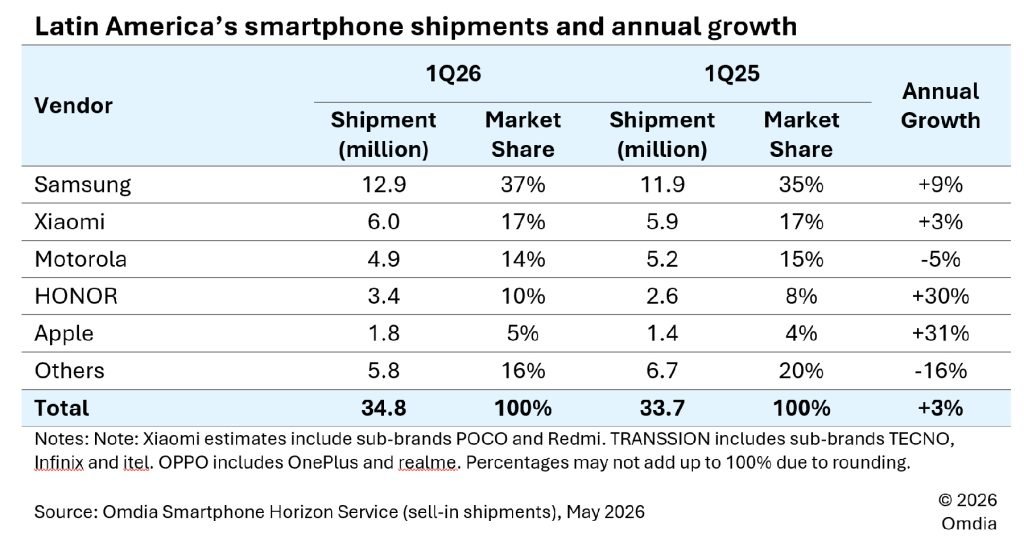
Apple’s latest iPhone 17 series has turned the Latin American market into a growth hotspot. According to the Omdia Q1 2026 smartphone report, iPhone shipments in the region rose 31 % YoY, with Mexico delivering an 80 % jump in units shipped. Samsung still dominates with 12.9 M units, but Apple’s share climbed to 5 % overall and 16 % in Mexico, moving the company into the top three in that market.
1. Market numbers at a glance
| Rank | Brand | Units shipped (M) | Share % |
|---|---|---|---|
| 1 | Samsung | 12.9 | 37 |
| 2 | Xiaomi | 6.0 | 17 |
| 3 | Motorola | 4.9 | 14 |
| 4 | HONOR | 3.4 | 10 |
| 5 | Apple | 1.8 | 5 |
- Brazil and Mexico are the only countries where Apple appears in the top‑five. In Brazil Apple holds a 5 % share, while in Mexico it ranks third behind Samsung and Xiaomi.*
The overall market shipped 34.8 M devices, a modest 3 % increase. Omdia attributes the limited growth to memory‑chip shortages that have pushed the price of sub‑$300 phones higher.
2. Why developers should care
a. iOS SDK 17.0 becomes the de‑facto baseline in the region
Apple’s iPhone 17 line ships with iOS 17 and the Xcode 15.2 toolchain (SDK 17.0). The surge in shipments means a larger user base will be on the latest OS version within months of launch. For teams that still target iOS 15 or earlier, the shift will surface two practical concerns:
- App Store compliance – Apple now requires new submissions to be built with the iOS 17 SDK. Existing apps that haven’t been updated risk rejection.
- Feature parity – Users in Mexico and Brazil will start expecting native features like Live Activities, Stage Manager, and the new SharePlay APIs. Ignoring these can lead to lower engagement metrics.
b. Memory‑price pressure amplifies the premium‑segment advantage
Omdia warns that memory cost hikes will affect devices priced under $300. iPhone 17 models start at $799, keeping Apple largely insulated from the price squeeze. This reinforces the strategy of focusing on high‑value experiences (ARKit, Core ML, App Clips) rather than trying to compete on low‑cost hardware.
c. Cross‑platform implications
The growth of iPhone users in a region still dominated by Android changes the calculus for Flutter, React Native, and Kotlin Multiplatform Mobile (KMM) teams:
- Flutter: The stable channel now supports iOS 17 out of the box (Flutter 3.19). Developers should test the iOS 17 simulator regularly to catch regressions in the Cupertino widgets.
- React Native: Version 0.74 introduced the iOS 17 native module bridge. Upgrading is essential to avoid crashes on the new hardware.
- KMM: The latest Kotlin 2.0 release includes iOS 17 SDK bindings. Sharing business logic across Android and iOS remains viable, but UI layers will still need platform‑specific updates to leverage new iOS features.
3. Migration checklist for teams targeting Latin America
- Update build environment
- Install Xcode 15.2 or later.
- Set
IPHONEOS_DEPLOYMENT_TARGETto 17.0 for new builds; keep a separate branch for legacy support if needed.
- Audit third‑party SDKs
- Verify that analytics, ad‑networks, and crash‑reporting libraries have iOS 17 compatible binaries.
- Replace any that are no longer maintained (e.g., older versions of Firebase or Adjust).
- Enable new iOS 17 APIs
- Add Live Activities for order‑tracking or fitness apps.
- Integrate Stage Manager support for iPad‑centric experiences.
- Update App Store Connect metadata to highlight iOS 17 features.
- Test on real devices
- Acquire at least one iPhone 17 (or use the Apple‑provided Device Farm) for functional testing.
- Run performance benchmarks focusing on Core ML and Metal to ensure the app takes advantage of the A‑series GPU.
- Cross‑platform adjustments
- For Flutter, run
flutter upgradeandflutter doctorto confirm iOS 17 toolchain detection. - For React Native, bump to 0.74 and run
npx react-native upgrade. - For KMM, update the Gradle plugin to 2.0.0 and regenerate the iOS framework.
- For Flutter, run
- Localize and market
- Add Spanish (Mexico) and Portuguese (Brazil) translations for any new UI strings introduced by iOS 17 features.
- Consider A/B testing a Mexico‑specific onboarding flow that highlights iPhone 17 camera capabilities.
4. Looking ahead – memory costs and pricing tiers
Omdia predicts that memory‑component price pressure will start reflecting in retail prices for devices under $300 by late Q2 2026. For developers, this signals two trends:
- Premium‑tier focus: Continue building experiences that justify a higher price point (AR, advanced AI, secure enclave usage).
- Hybrid pricing strategies: Offer a lite version of your app (or a subscription tier) that runs well on mid‑range Android devices while keeping the full‑feature iOS version for iPhone 17 users.
5. Resources
- Full Omdia report: Omdia Latin America Q1 2026 Smartphone Market
- Apple’s iOS 17 SDK documentation: Apple Developer – iOS 17
- Flutter iOS 17 support guide: Flutter 3.19 Release Notes
- React Native iOS 17 bridge details: React Native 0.74 Release Blog
- Kotlin Multiplatform iOS bindings: Kotlin 2.0 Docs
6. Bottom line for dev teams
The 31 % shipment surge is more than a sales statistic; it reshapes the device composition of Latin American users. Teams that promptly adopt the iOS 17 SDK, update their cross‑platform toolchains, and tailor experiences for the premium iPhone 17 segment will capture the new growth wave while staying resilient against the upcoming memory‑price squeeze.
Comments
Please log in or register to join the discussion