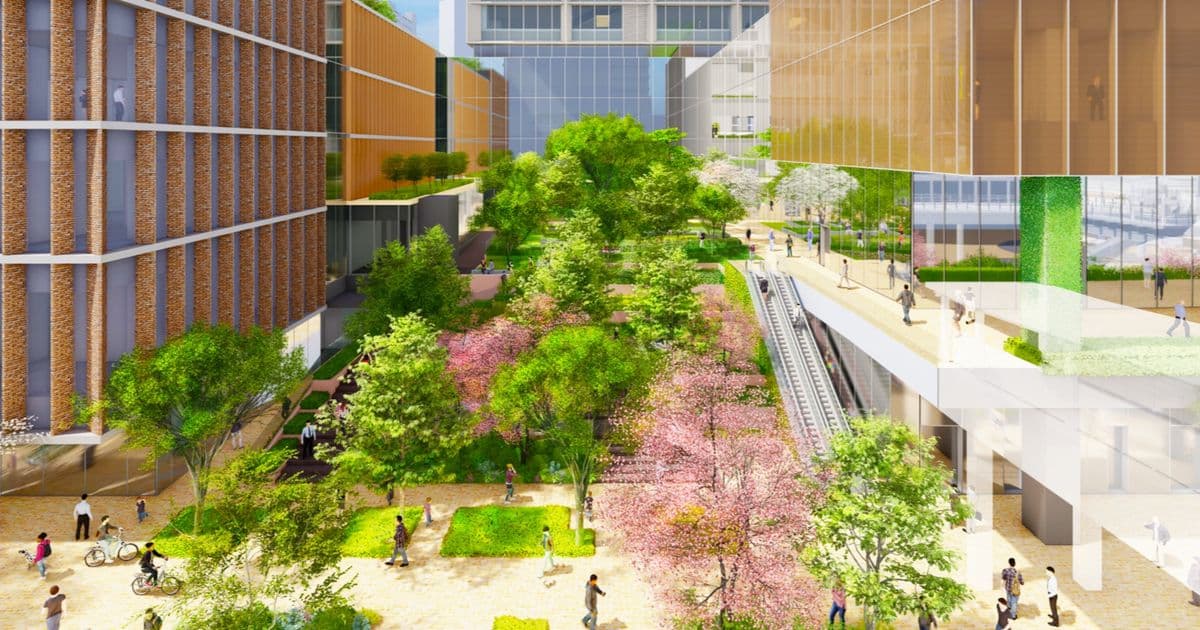
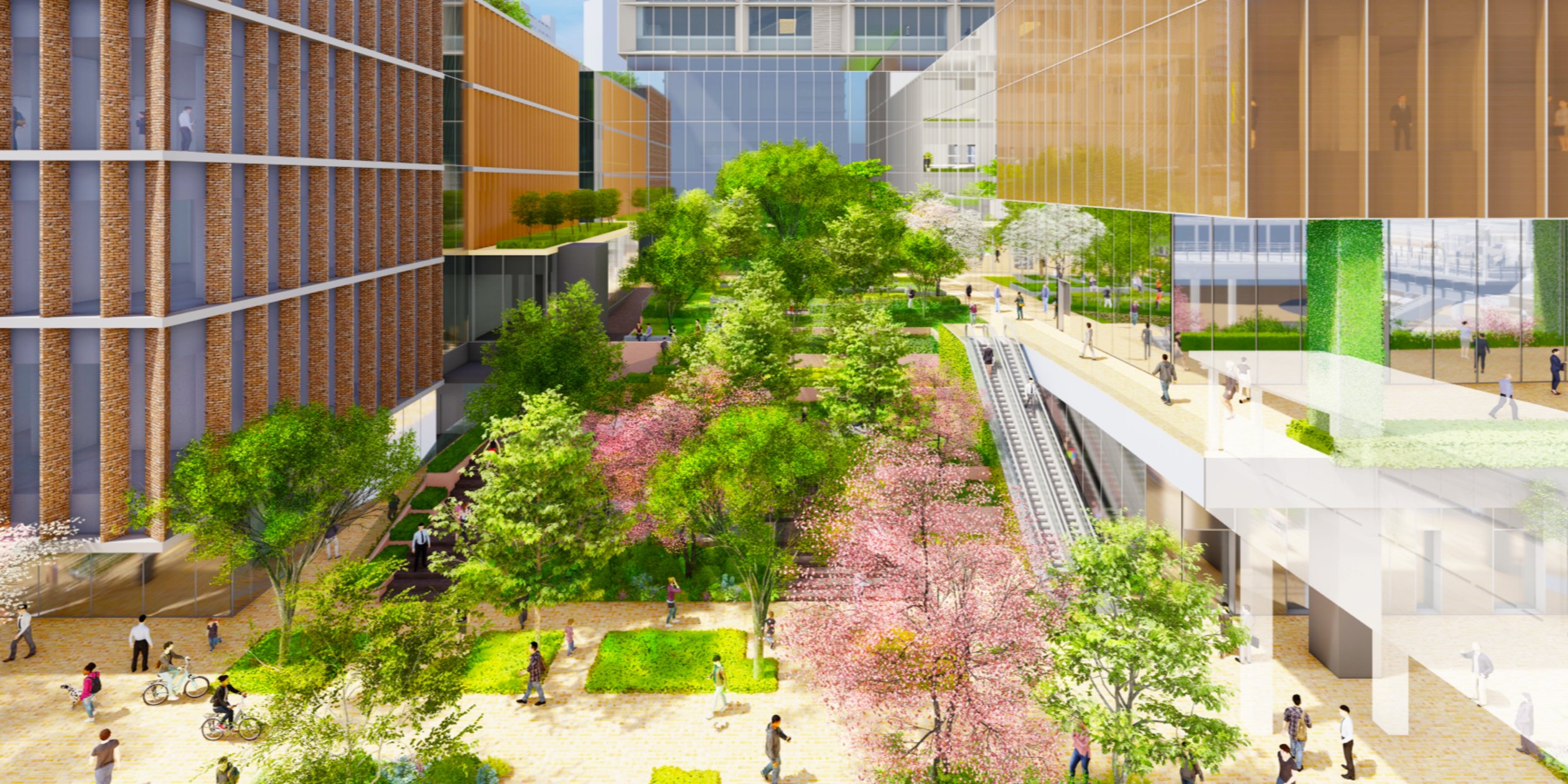
A Tokyo university, backed by NTT, Hitachi and 70 other partners, will construct a mixed‑use district that integrates artificial‑intelligence services and robotics into everyday infrastructure. The development, slated to open in fiscal 2031, is positioned as a testbed for commercializing smart‑city technologies and could attract up to ¥120 billion in private investment, while offering a data‑rich environment for Japan’s aging society and its push for automation.
Business news
A private university in Tokyo’s Koto Ward announced plans for Science Tokyo, a 12‑hectare “city within a city” that will embed AI platforms and autonomous robots into residential, commercial and public spaces. The project, expected to break ground in early 2026, targets a phased opening in fiscal 2031. Over 70 corporations—including telecom giant NTT, industrial heavyweight Hitachi, and robotics specialist Preferred Networks—have signed memorandums of understanding to supply hardware, cloud services and data‑analytics tools.
The university will retain ownership of the land and core infrastructure, while partners will finance the installation of AI‑driven utilities, such as predictive energy management, autonomous delivery drones, and robot‑assisted elder‑care stations. Preliminary budgets suggest ¥120 billion (≈ US$770 million) in private capital, on top of a projected ¥30 billion public grant from the Ministry of Education, Culture, Sports, Science and Technology (MEXT).
Market context
Japan’s smart‑city market is projected to reach ¥2.1 trillion by 2030, driven by a combination of demographic pressure—over 28 % of the population is 65 or older—and government incentives for automation. The country’s AI spending has risen at a compound annual growth rate (CAGR) of 14 % since 2020, outpacing the global average of 11 %.
Recent initiatives, such as Toyota’s Woven City and the Osaka‑based Kansai Innovation District, have demonstrated demand for real‑world test environments, yet many remain limited to pilot phases. Science Tokyo differentiates itself by integrating a full suite of services—energy, mobility, health and education—under a single data‑governance framework, allowing partners to scale solutions beyond isolated labs.
The involvement of NTT and Hitachi signals confidence in the commercial viability of edge‑AI and 5G‑enabled robotics. NTT’s Future 5G platform, slated for nationwide rollout by 2028, will provide the low‑latency connectivity essential for real‑time robot coordination. Hitachi’s Lumada IoT suite will manage sensor data from streetlights, waste bins and building management systems, creating a unified digital twin of the district.
What it means
- Revenue pipeline for partners – Companies that secure early contracts for AI services or robot fleets could lock in multi‑year revenue streams worth ¥10‑15 billion per partner, based on comparable deals in Singapore’s Jurong Innovation District.
- Policy implications – The project aligns with Japan’s “Society 5.0” roadmap, offering a concrete example of how AI can mitigate labor shortages in elder‑care and logistics. Successful outcomes may accelerate the inclusion of AI‑enabled services in national standards for urban planning.
- Data‑access opportunities – With an estimated 1.2 million data points per day generated by sensors and user interactions, Science Tokyo will become a valuable source of anonymized datasets for AI model training, potentially attracting foreign research collaborations.
- Risk considerations – The enclave’s reliance on high‑speed connectivity makes it vulnerable to cyber‑threats; a single breach could compromise both public services and private partner operations. Stakeholders are expected to adopt the upcoming Mythos‑class cybersecurity AI framework, which promises automated threat detection and response.
Overall, Science Tokyo represents a strategic convergence of academia, industry and government aimed at turning Japan’s aging challenge into a catalyst for next‑generation urban tech. If the timeline holds, the district could become a reference model for other megacities seeking to embed AI and robotics into everyday life.
Comments
Please log in or register to join the discussion