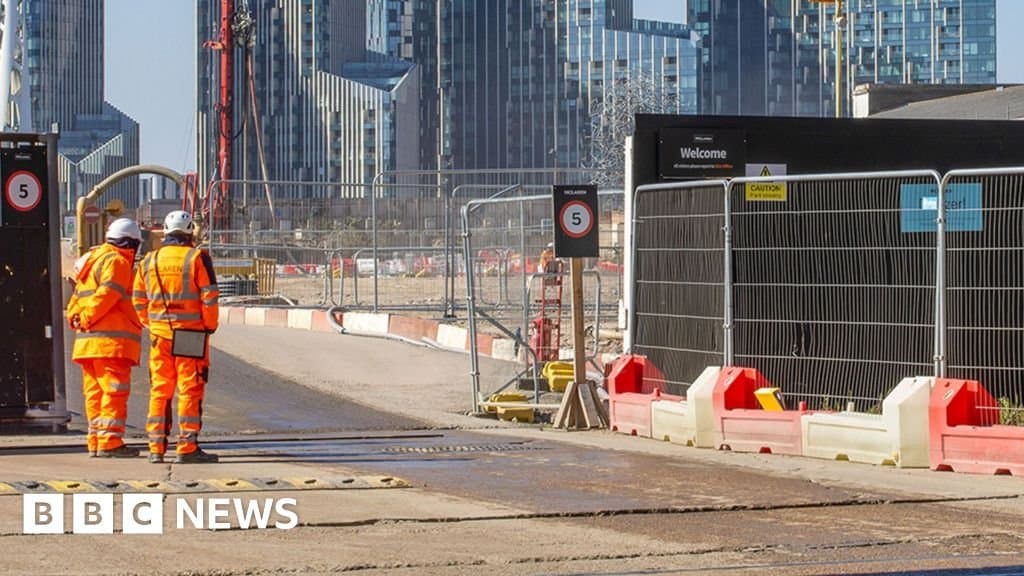
As London's housing crisis reaches its peak, the exponential growth of energy-hungry data centers is creating an unexpected bottleneck—power grid capacity that can't keep pace with both digital and residential demands.
London's worsening housing crisis has collided head-on with the explosive growth of data centers, creating an unprecedented infrastructure challenge that has temporarily halted new home developments in the west of the city. A new report from the London Assembly Planning and Regeneration Committee reveals that completed housing projects have been told they must wait until 2037 for electricity connections, as the National Grid reaches full capacity due to the insatiable energy demands of the digital economy.
The conflict highlights a critical tension in modern urban planning: how to balance the infrastructure needs of both a growing population and an expanding digital ecosystem. Data centers—those giant warehouses filled with powerful computers that stream our entertainment, process our cloud applications, and train artificial intelligence models—require massive amounts of electricity to keep their servers cool and running.
According to the committee's investigation, boroughs including Ealing, Hillingdon, and Hounslow faced the prospect of "pausing new housing altogether" until the energy capacity issue could be resolved. While short-term fixes with the National Grid and energy regulator Ofgem prevented the worst-case scenario, several projects were still significantly delayed.
"The energy capacity has become a real constraint on housing and economic growth in the city," said James Small-Edwards, chair of the London Assembly Planning and Regeneration Committee. "This situation highlights the need for longer term planning around grid capacity in the future."
The scale of the challenge is staggering. While data centers currently account for less than 10% of the UK's total electricity demand, that figure is projected to rise by up to 600% between 2025 and 2050. The report estimates that a typical data center consumes energy equivalent to approximately 100,000 households—a staggering figure when considering that the UK currently hosts an estimated 447 data centers, with plans to add another 100 in the coming years.
More than half of these new data centers are planned in and around London, creating a perfect storm of demand in one of the country's most densely populated areas. "At the moment National Grid are looking to try and get 7 GW of additional power into west London by 2037," explained Andrew Dakers, chief executive of industry body West London Business. "Our ask is that needs to happen faster... 12 years is just too far. The demand is here and now."
The implications extend beyond London's housing crisis. For developers and engineers building the next generation of cloud services, AI applications, and digital infrastructure, this represents a fundamental constraint on where and how quickly they can scale. The energy requirements of data centers are no longer a secondary consideration but a primary factor in location decisions and capacity planning.
"The government must make sure there is adequate investment into the supply network to support housing developments," stated Rhodri Williams, technical director of the Home Builders Federation. His words underscore the dual challenge: meeting the energy needs of both our digital and physical infrastructure simultaneously.
The committee's recommendations include introducing a separate planning category for data centers to ensure better energy coordination and calling on Mayor of London Sir Sadiq Khan to include a dedicated data center policy in the next London Plan. A government spokesperson confirmed they are exploring "bespoke options," including through the AI Energy Council, to support both sectors.
As artificial intelligence continues to drive exponential growth in computing demand, the energy requirements of data centers will only increase. This London situation serves as an early warning of a broader challenge facing cities worldwide: how to build the energy infrastructure needed to power both our homes and our digital future. The solutions will require unprecedented coordination between urban planners, energy providers, and the technology sector to avoid a future where our digital and physical development paths remain perpetually at odds.
Comments
Please log in or register to join the discussion