SpaceX's $1.25 trillion merger with xAI has sparked a rush to launch orbital data centers, but fundamental physics and economics make the concept unviable despite investor enthusiasm.
SpaceX's acquisition of xAI last week created a $1.25 trillion behemoth with an ambitious goal: sending data centers into orbit. The company isn't alone in this vision—Google, Lonestar, Axiom, and Nvidia-backed Starcloud are all racing to establish a foothold in what they see as the next frontier for computing infrastructure.
{{IMAGE:1}}
At first glance, the concept seems compelling. Space offers endless solar power, effectively free real estate, and most importantly, access to massive rockets capable of launching enormous payloads. Google's recent study on AI in space envisioned a constellation of 81 satellites operating in close proximity, suggesting that if launch costs dropped to $200/kg for low earth orbit—potentially achievable by 2035 with Starship's success—orbital data centers could compete with terrestrial equivalents.
But this analysis misses several fundamental problems that make the entire concept a fantasy, even under optimistic assumptions about solving radiation, cooling, latency, and launch costs.
The Scale Problem: Millions of Satellites Needed
Training and serving frontier AI models requires staggering computational resources. xAI's Colossus cluster reportedly contains 200,000 GPUs, while OpenAI has announced plans for millions. To compete in this market, companies would need to launch hundreds of thousands or even millions of satellites.
This would dwarf the approximately 15,000 satellites currently orbiting Earth. Such massive deployments would dramatically increase the risk of Kessler syndrome—a cascading chain reaction where satellite collisions create debris that destroys more satellites, potentially crippling humanity's access to space for generations.
The Upgrade Problem: Stuck with Yesterday's Hardware
Today's data centers can roll out new AI hardware generation by generation across their facilities. When NVIDIA releases a new GPU architecture, companies can begin upgrading immediately.
In space, you're locked into your hardware choices. Upgrading means launching an entirely new fleet of satellites—a process that takes years and billions of dollars. Your orbital data center becomes a museum of outdated technology, unable to benefit from the rapid pace of AI hardware improvements.
The Economics Problem: Ground-Based Solar Keeps Getting Cheaper
Orbital data centers only make sense if they're cost-effective relative to terrestrial alternatives. Even if launch costs and specialized satellite hardware become competitive with today's AI servers by 2035, they must remain competitive with 2035-era ground-based data centers—and for as long as data centers exist.
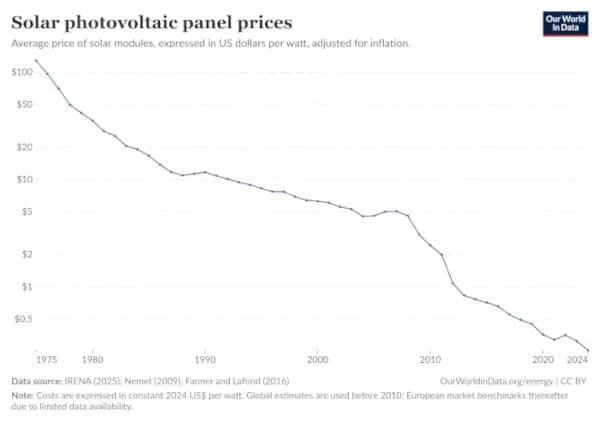
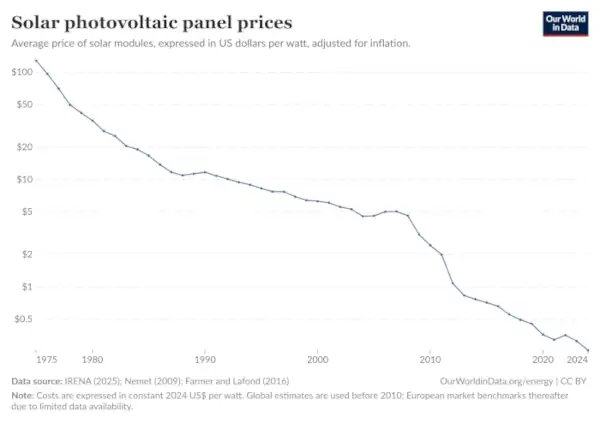
Ground-based solar panels have been steadily improving for decades, with costs per watt dropping dramatically since 1975. This trend shows no signs of slowing, meaning that every improvement in terrestrial energy production makes space-based alternatives less attractive.
The Investor Psychology Problem: Rational Irrationality
If the concept is so clearly flawed, why are serious companies and investors pouring resources into it? The answer lies in the complex dynamics of modern capital markets.
For SpaceX, the timing is particularly suspect. The company is targeting an IPO this year and has every incentive to generate excitement and hype ahead of that event. xAI, meanwhile, burns through enormous amounts of cash daily and needs regular funding infusions to survive.
Investors themselves can be perfectly rational while backing projects they know aren't feasible. Their goal isn't necessarily to see the project succeed—it's to profit by selling to the next investor. With deployment timelines stretching years or decades into the future, there's ample opportunity to ride the hype wave before reality sets in.
The space data center concept represents a perfect storm of technological overreach, financial engineering, and investor psychology. While the vision of AI infrastructure floating among the stars captures our imagination, the fundamental laws of physics and economics remain firmly grounded on Earth.
Comments
Please log in or register to join the discussion