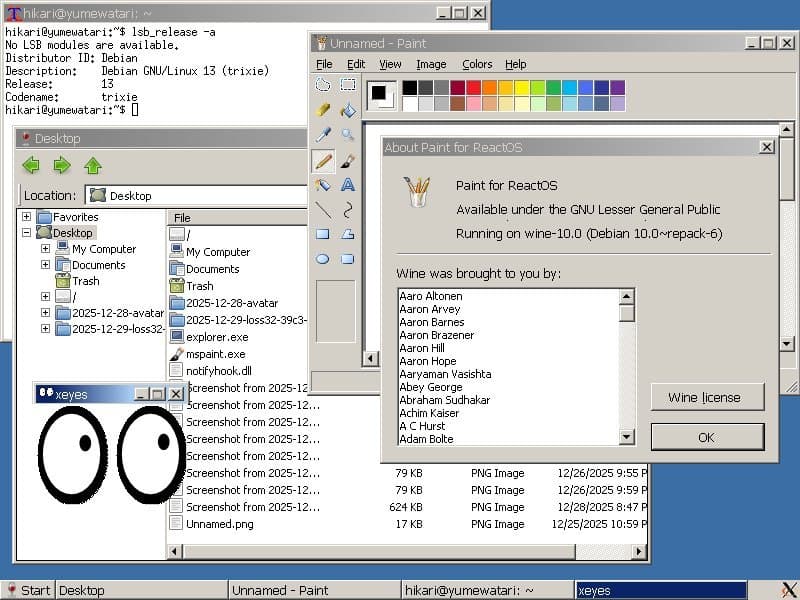
loss32 merges Linux kernel stability with ReactOS userland and WINE compatibility to run Windows applications natively, offering a practical alternative to decades-long ReactOS development.
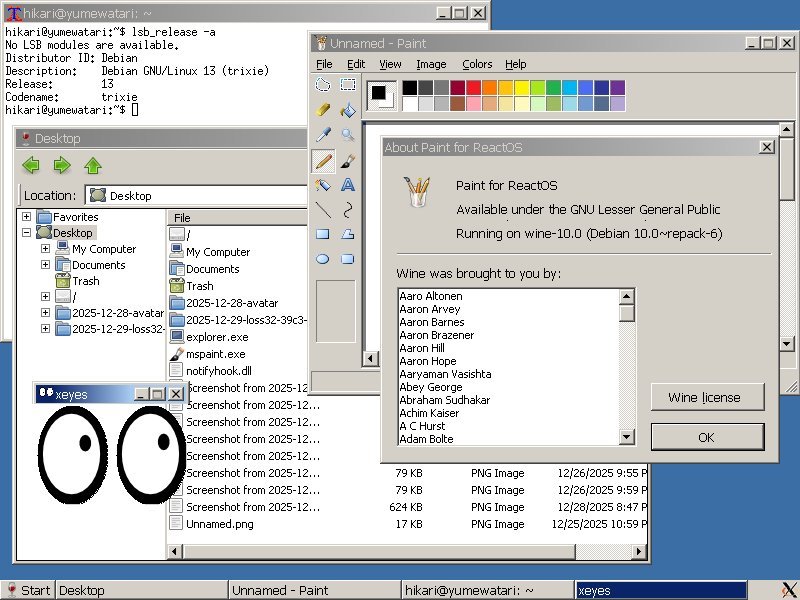
Modern Linux distributions have evolved into robust alternatives to Windows and macOS, yet the gap in proprietary application support persists. Enter loss32 – an experimental operating system that bridges this divide by integrating Windows application compatibility directly into a Linux foundation. Developed by Hikari no Yume, this project combines three critical components:
- Linux Kernel: Provides hardware support and core system stability
- WINE Compatibility Layer: Translates Win32 API calls to POSIX-compliant equivalents
- ReactOS Userland: Delivers the classic Windows UI experience (Start Menu, taskbar, file explorer)

Technical Architecture Breakdown
Unlike ReactOS – which has spent 25+ years rebuilding a Windows NT-compatible kernel from scratch – loss32 leverages existing open-source infrastructure. The Linux kernel handles hardware abstraction and resource management, while WINE (Wine Is Not an Emulator) enables x86 Windows binaries to execute without virtualization. The ReactOS user interface components (source available on GitHub) complete the Windows-like environment.
This layered approach offers tangible advantages:
- Hardware Compatibility: Inherits Linux's extensive driver support
- Application Flexibility: Runs both Win32
.exefiles and native Linux binaries - Development Efficiency: Builds upon mature projects rather than reinventing subsystems
Why Not Pure ReactOS?
While ReactOS remains an impressive technical achievement, its alpha status after decades of development highlights fundamental challenges. Hardware driver compatibility remains limited, and complex applications like Adobe Photoshop or modern games frequently encounter stability issues. ReactOS developers explicitly state their kernel approach differs from Linux, making full Windows driver compatibility theoretically impossible.
loss32 accepts this limitation pragmatically:
"Our goal isn't 100% hardware-level NT compatibility," explains Hikari no Yume. "We're creating a free system where users can run their essential Win32 software on reliable Linux foundations with familiar workflows."
Practical Implementation Challenges
Early builds require manual assembly using Debian 13 as a base. The installation process involves:
- Installing standard Debian Linux
- Integrating customized WINE builds
- Overlaying ReactOS UI components
- Configuring system services for Windows application support
The approach resembles Linux distributions like Crossover but operates at the OS level rather than application layer. Performance benchmarks show near-native execution for simple Win32 apps, though complex applications like Microsoft Office still exhibit rendering glitches.
Availability and Future Roadmap
No downloadable ISO exists yet, but Hikari no Yume plans to release build scripts for creating loss32 systems from Debian installations. The project actively seeks contributors for:
- UI refinement (Win95/XP theme consistency)
- WINE optimization for DirectX 11/12 games
- Hardware acceleration integration
For developers interested in the intersection of Windows compatibility and Linux infrastructure, loss32 presents a fascinating technical playground. Follow progress on the official project page or GitHub repository.
Comments
Please log in or register to join the discussion