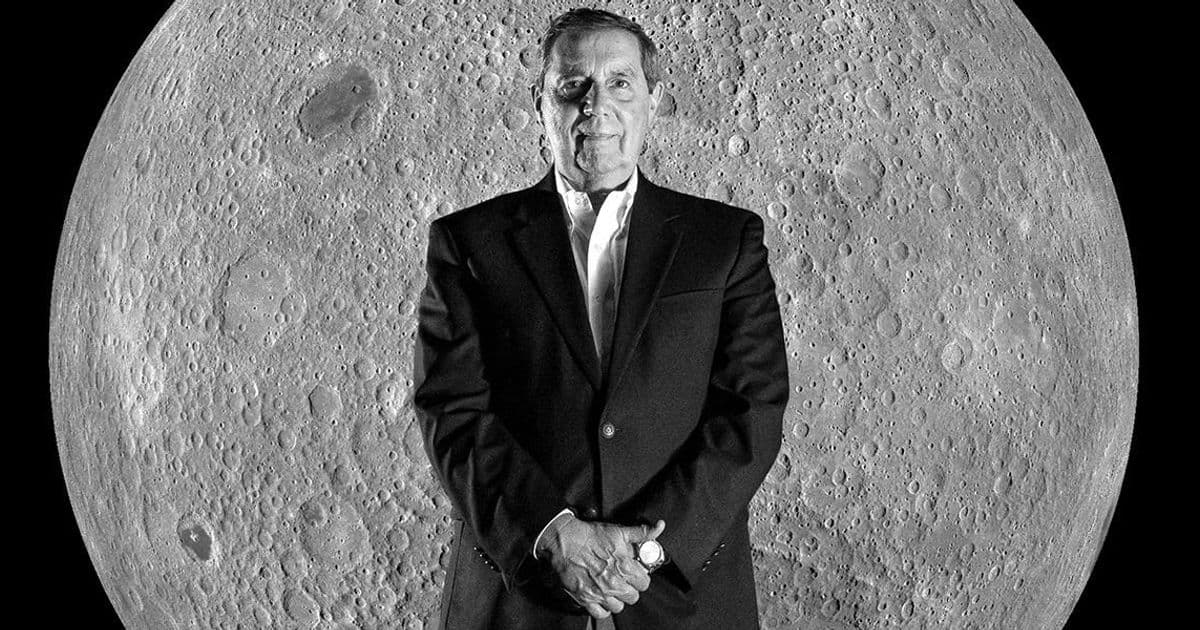
NASA's LuSEE-Night mission, launching in 2027, will deploy a radio telescope on the lunar far side to detect faint signals from the universe's formative era.
For over four decades, University of Colorado astrophysicist Jack Burns championed a radical idea: placing radio telescopes on the moon's far side to listen to the universe's earliest whispers. That vision nears reality as NASA's LuSEE-Night (Lunar Surface Electromagnetics Experiment–Night) prepares for launch aboard Firefly Aerospace's Blue Ghost 2 lander in early 2027. With a $40 million budget, the mission could revolutionize our understanding of cosmic origins by targeting frequencies inaccessible from Earth.
The Silent Frontier
Earth's ionosphere blocks radio frequencies below 50 MHz, obscuring signals from the cosmic dark ages—the period 380,000 years after the Big Bang when neutral hydrogen atoms trapped starlight. These signals, redshifted over billions of years, now manifest as meter-long wavelengths drowned out by terrestrial interference. The lunar far side offers unique isolation: permanently shielded from Earth's radio noise and, during the 14-day lunar night, protected from solar wind.
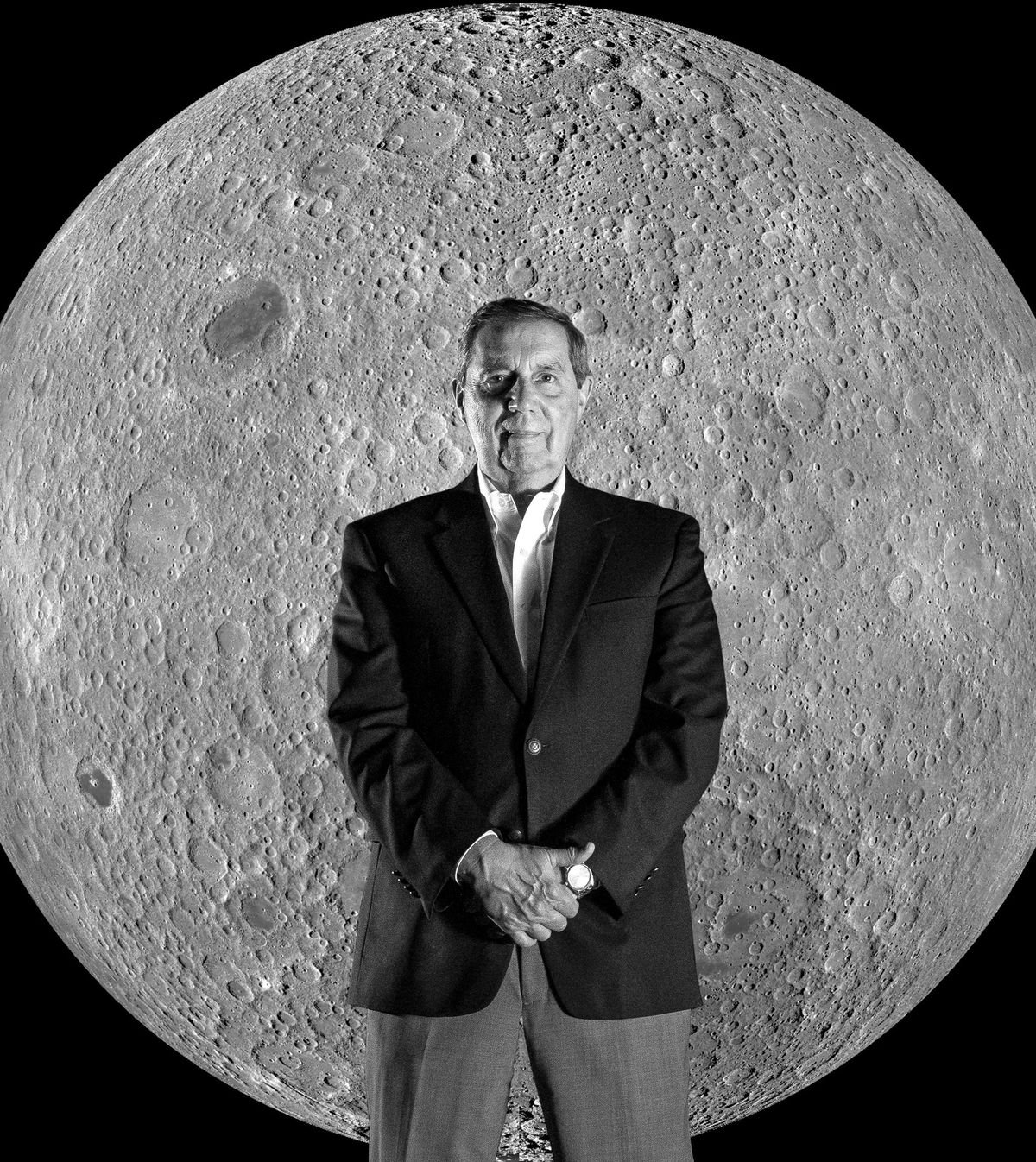 Jack Burns, principal investigator for LuSEE-Night, has advocated for lunar radio astronomy since the 1980s.
David DeBoer, a UC Berkeley astronomer involved in the project, emphasizes the site's uniqueness: "It's the only place in the solar system that never faces Earth, creating an electromagnetic sanctuary." During lunar night, temperatures plunge to -130°C, eliminating solar radio static and enabling detection of faint cosmological signals potentially five orders of magnitude weaker than galactic background noise.
Engineering for Extremes
LuSEE-Night's compact design (108 kg) features two 6-meter beryllium-copper dipole antennas mounted on a turntable, atop a radiation-hardened electronics bay. The system addresses brutal thermal swings (-130°C to 120°C) with multilayer insulation and a 7,160-watt-hour battery that powers heaters during the lunar night. Its spectrometer captures 102.4 million samples per second, seeking subtle dips in cosmic microwave background radiation—potential evidence of dark-age hydrogen absorption.
Stuart Bale, NASA's principal investigator, notes the exploratory nature: "We don't even know what the radio sky looks like at these frequencies without the sun. This instrument could redefine low-frequency astronomy."
Lessons from Failure
Previous attempts underscore the challenges. In 2024, Burns' ROLSES-1 experiment on Intuitive Machines' Odysseus lander collected just two hours of data after a hard landing damaged equipment. Despite this, researchers confirmed Milky Way radio signatures in the fragmentary dataset. LuSEE-Night improves on this with hardened components and a proven lander: Firefly's Blue Ghost 1 successfully touched down on the lunar near side in March 2025.
Beyond a Single Antenna
If successful, LuSEE-Night could catalyze larger projects. Burns and collaborators have proposed FarView—an array of 100,000 antennas spanning 200 square kilometers, fabricated from lunar aluminum. Early NASA funding supports concept studies targeting deployment in the 2030s.
After 40 years of political shifts and technical hurdles, Burns remains focused on the science: "There's no guarantee, but we need to look. This is about hearing the universe's first whispers."
Comments
Please log in or register to join the discussion