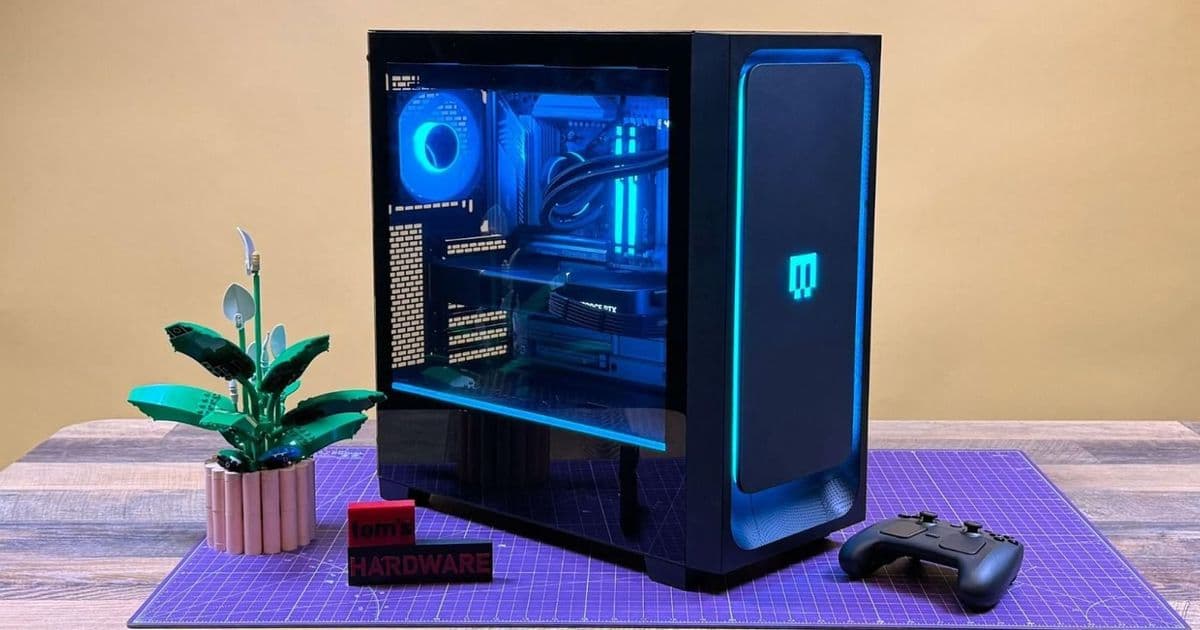
The Maingear MG-1 (2026) combines AMD's latest Ryzen 9 9950X3D2 and Nvidia's RTX 5090 in a well-constructed chassis with exceptional cable management, though at a premium price point.
The Maingear MG-1 (2026) represents the latest evolution in boutique gaming PCs, pairing cutting-edge silicon with a clean, functional design. The system, housed in the new MK.II chassis, offers configuration options ranging from the modest RTX 5060 Ti in the base Ruby model to the ultimate performance with AMD's Ryzen 9950X3D2 and Nvidia's RTX 5090 Founders Edition in the Ultimate configuration.
Processor Architecture: AMD Ryzen 9950X3D2
The heart of our review unit is AMD's Ryzen 9950X3D2, a high-end processor that builds upon the successful X3D line known for its 3D V-Cache technology. This 16-core, 32-thread CPU features AMD's latest Zen 4 architecture with 3D-stacked L3 cache, designed specifically for gaming workloads. In our benchmarks, the 9950X3D2 achieved a Geekbench 6 single-core score of 3,574 and a multi-core score of 23,741, slightly outperforming the standard 9950X3D in the Alienware Area-51.
Interestingly, the reviewer notes that for most gamers, the Ryzen 7 9850X3D offers nearly identical gaming performance at a $400 lower price point in the retail market and $633 less in Maingear's configurator. This highlights the diminishing returns of the highest-end chips for pure gaming scenarios, a critical consideration for consumers evaluating the price-to-performance ratio.
Graphics Powerhouse: Nvidia RTX 5090
The MG-1's top configuration features Nvidia's GeForce RTX 5090 Founders Edition, the current flagship consumer graphics card. This 32GB GDDR7 monster operates with a boost clock of 2,407 MHz and represents the pinnacle of consumer graphics technology. In testing with Resident Evil Requiem at 4K resolution with path tracing and hair strand effects enabled, the system maintained 65-75 FPS, dipping to around 55 FPS during intensive scenes with explosions and fire effects.
The RTX 5090's performance was particularly evident in Metro Exodus at RTX settings, where the MG-1 averaged 188.39 FPS across 15 consecutive runs. The GPU consistently operated at 2,420.25 MHz with temperatures around 68.12°C, demonstrating the effectiveness of the cooling solution. However, the reviewer notes that the GPU's RGB lighting is limited to white only due to Founders Edition design constraints.
Manufacturing and Build Quality
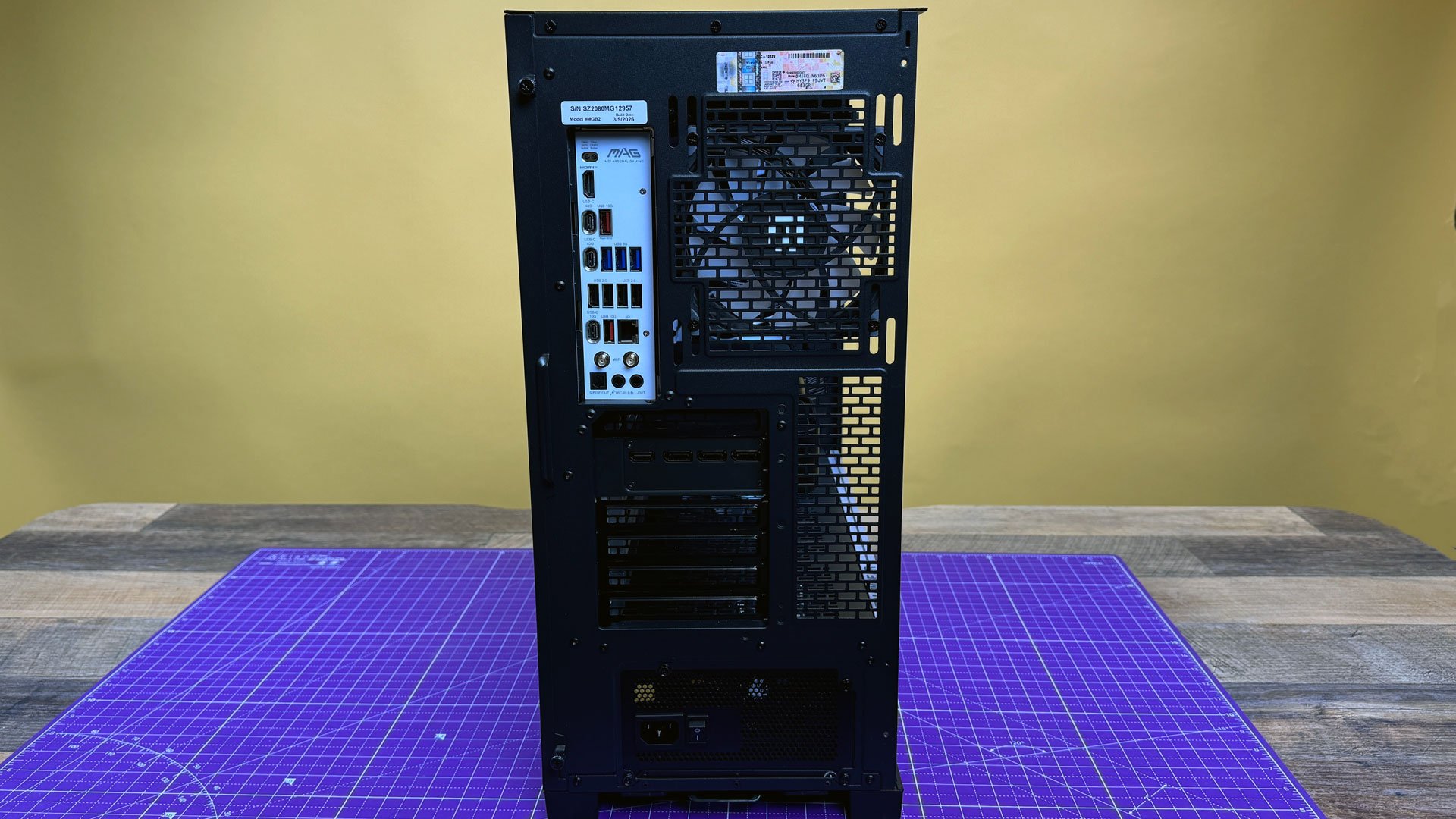
The MK.II chassis represents a significant evolution from its predecessor, growing from 19 x 16.88 x 8.13 inches to 18.78 x 19.65 x 9.06 inches. This larger footprint accommodates improved airflow with three 140mm intake fans at the front and a 360mm CPU liquid cooler serving as exhaust. The case features multiple dust filters, including a convenient handle on the bottom filter beneath the power supply.
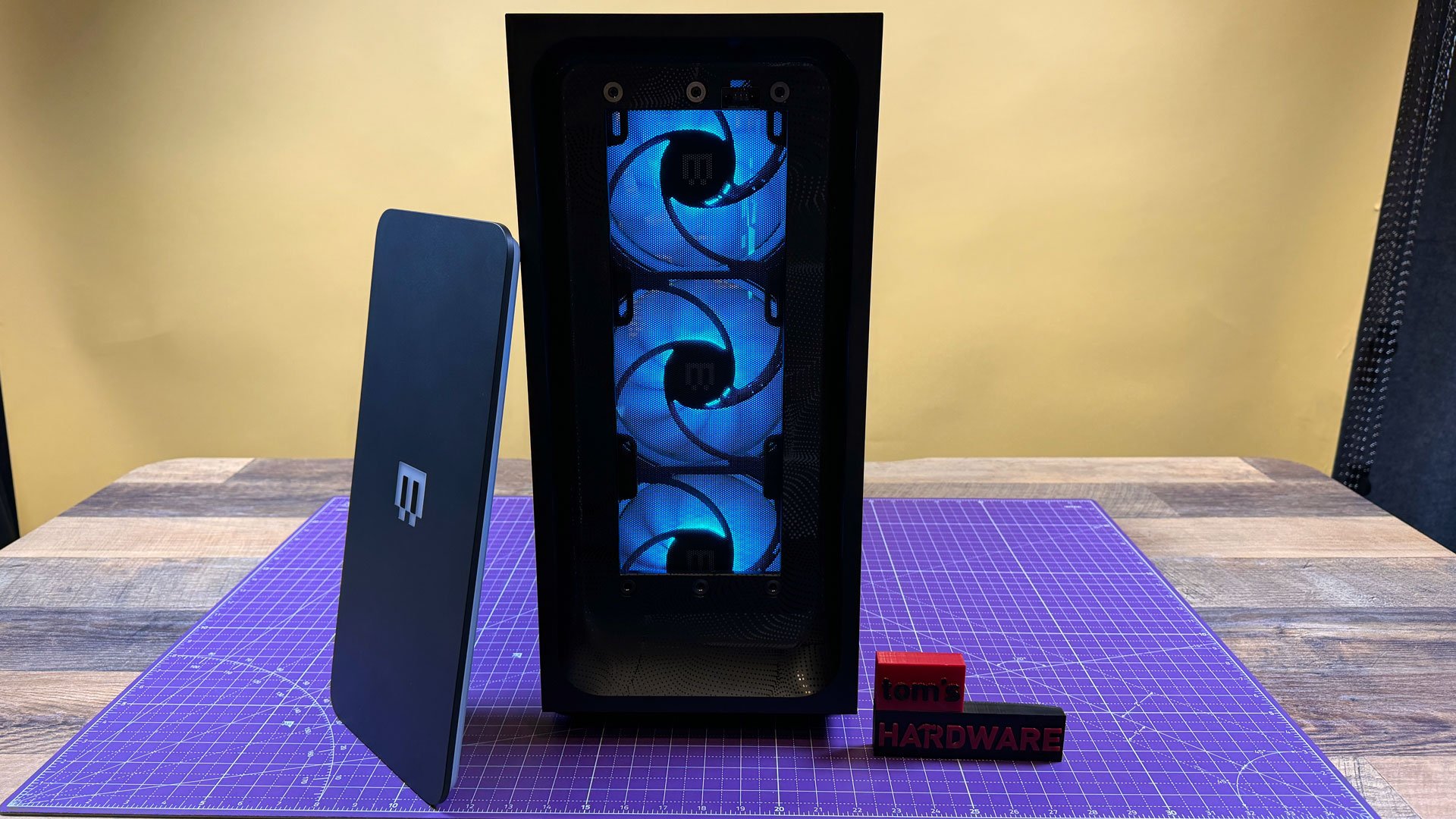
The most notable manufacturing achievement is the cable management system, which utilizes the motherboard's rear-side connectors to create an exceptionally clean build. The reviewer notes that the internal presentation is "immaculate" with minimal visible cables from the glass side panel. This clean aesthetic comes at the cost of some blocked motherboard connectors, though the reviewer admits they couldn't improve upon the cable management themselves.
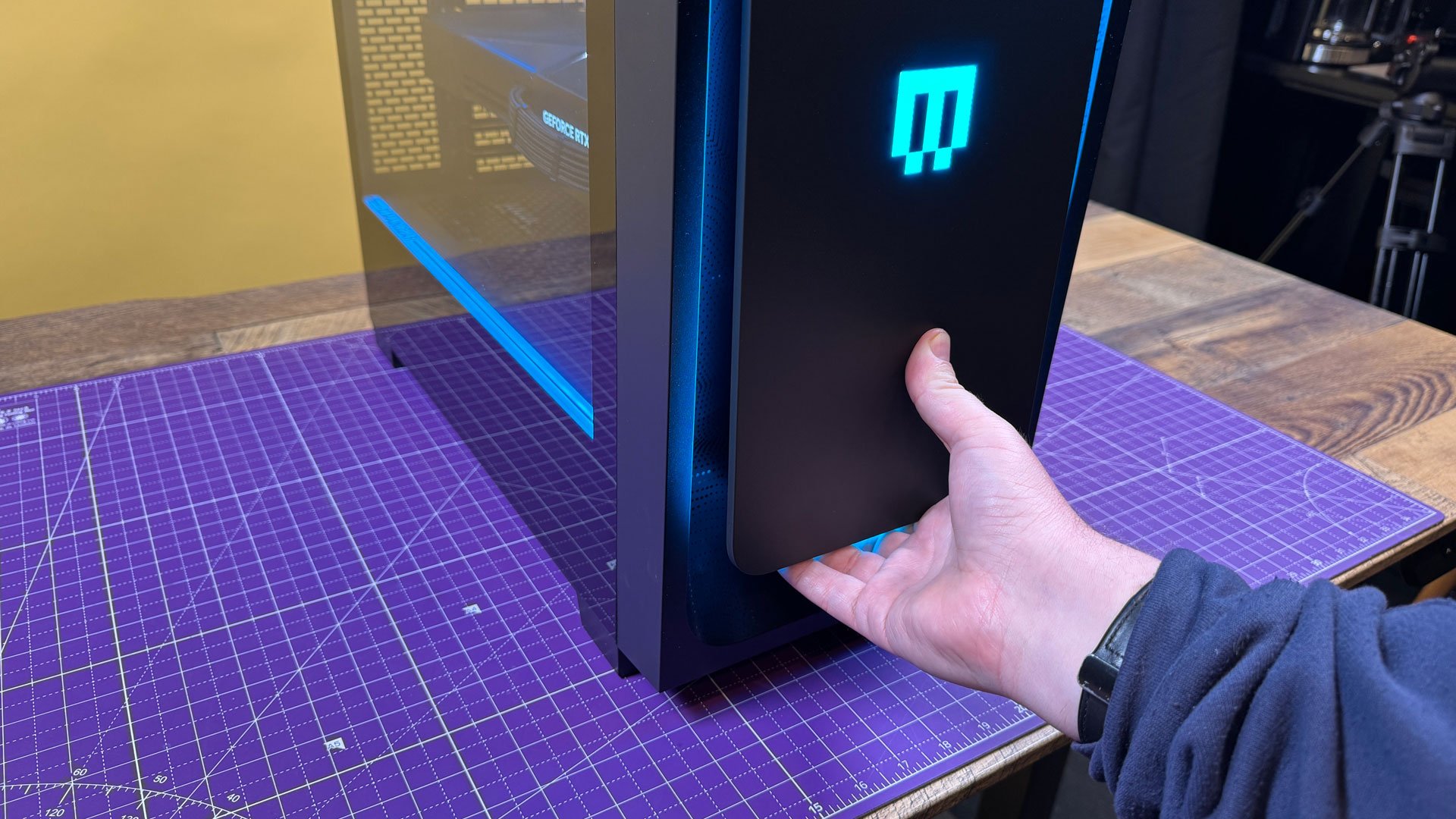
The case also includes a magnetic front panel with a curved scoop that diffuses RGB lighting and allows for easy replacement with custom panels that Maingear offers for sale. This modularity represents a manufacturing compromise between standardization and customization.
Market Positioning and Supply Chain Context
Priced at $2,249 for the base model and reaching over $7,000 for our high-end configuration, the MG-1 occupies the premium segment of the prebuilt market. The reviewer notes that the markup over a DIY build with similar components is relatively modest at approximately $470, representing a premium for the clean build quality and warranty support.
The availability of certain components has become a supply chain consideration, as evidenced by the Samsung 9100 Pro SSD being unavailable in Maingear's configurator due to supply shortages. The company had to substitute with the XPG Mars 980 Pro, demonstrating how component availability continues to impact system builders even in 2026.
The inclusion of Wi-Fi 7 networking via the Qualcomm FastConnect 7800 chipset highlights how connectivity standards evolve with each generation of high-end systems. This forward-looking component selection positions the MG-1 for future-proofing, though the technology remains nascent in consumer devices.
Software and Warranty Experience
Unlike many prebuilt systems that come laden with bloatware, the MG-1 maintains a relatively clean software installation. The only system-specific software is MSI Center for RGB control and performance monitoring. The absence of trial software or unnecessary applications represents a manufacturing philosophy focused on performance rather than monetization through pre-installed software.
Maingear backs the system with a one-year hardware warranty in addition to component manufacturer warranties, with options to extend to two or three years for $99 or $199 respectively. The company also offers lifetime customer support, a value proposition that becomes increasingly important with complex, high-value systems where technical expertise can be difficult to find.
Configuration Flexibility and Value Proposition
The MG-1's configurator offers extensive options, from entry-level Intel Core Ultra 5 processors with RTX 5060 Ti graphics to the top-tier Ryzen 9950X3D2 and RTX 5090 combination. This range allows buyers to scale their investment according to their needs and budget.
The BYO RAM program represents an interesting market adaptation, allowing customers to utilize existing memory modules or take advantage of sales on the open memory market. This flexibility acknowledges the volatility of RAM pricing and the potential for consumers to find better deals outside of system builder channels.
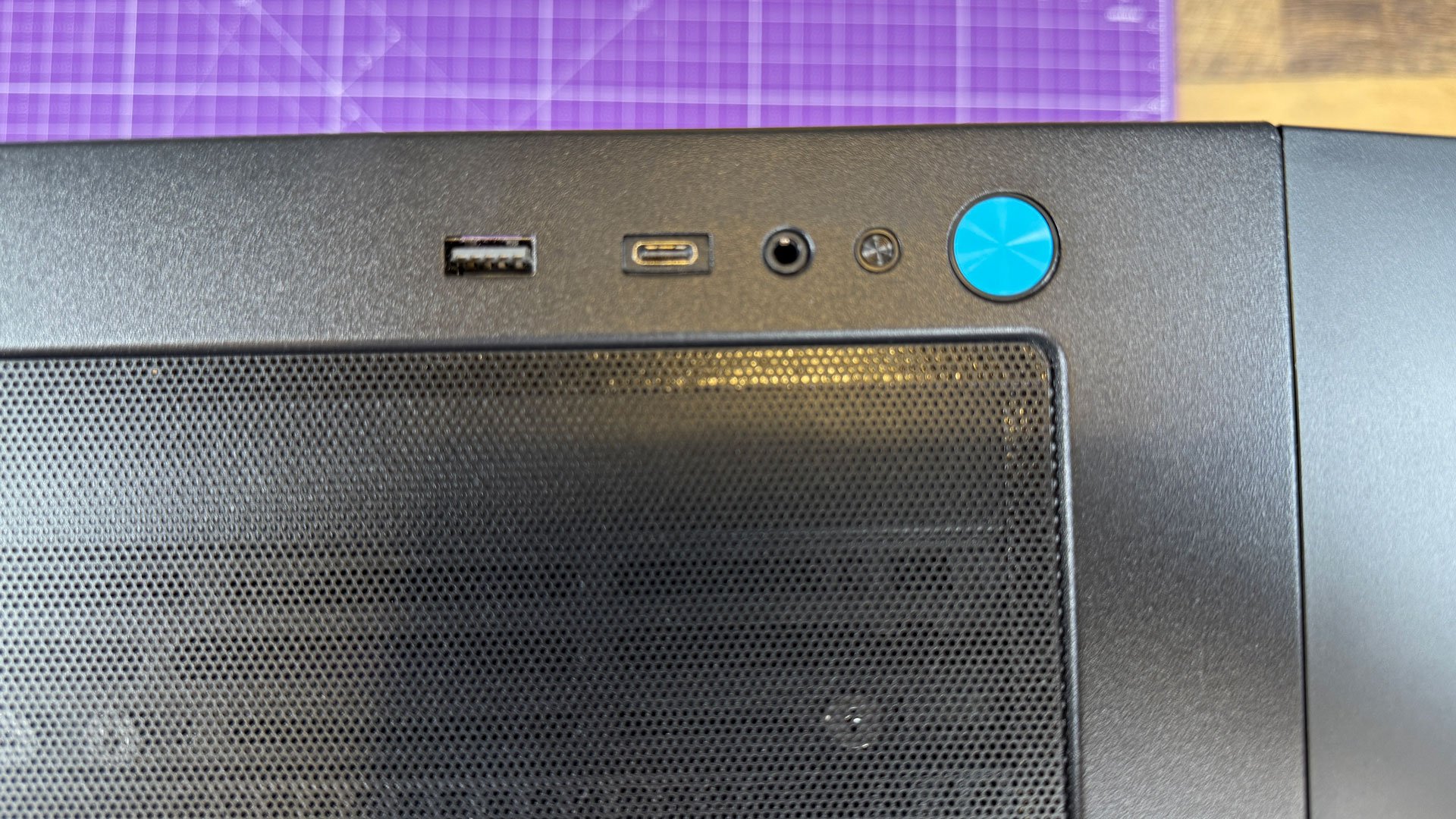
The reviewer ultimately concludes that the MG-1 delivers on the promise of a boutique build that feels like it was constructed by an enthusiast, with cable management surpassing what most DIY builders could achieve. However, the limited front panel port selection remains a notable compromise in an otherwise well-executed system. For consumers prioritizing clean aesthetics and premium components over maximum port connectivity, the MG-1 represents a compelling option in the high-end gaming PC market.
Comments
Please log in or register to join the discussion