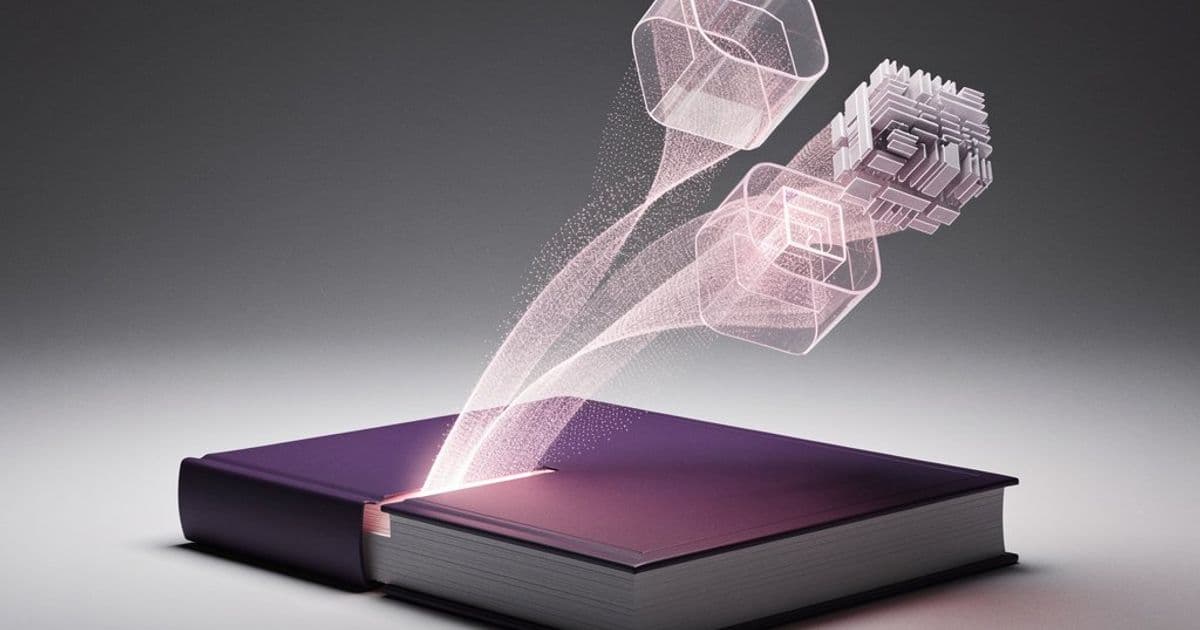
Stanford and Yale researchers demonstrate GPT-4.1, Claude 3.7 Sonnet, Gemini 2.5 Pro, and Grok 3 can reproduce verbatim book passages from training data, intensifying copyright concerns.
Researchers from Stanford and Yale have demonstrated that leading AI models including OpenAI's GPT-4.1, Anthropic's Claude 3.7 Sonnet, Google's Gemini 2.5 Pro, and xAI's Grok 3 can reproduce substantial verbatim excerpts from copyrighted books when given strategic prompts. The findings, published on arXiv, reveal a significant vulnerability in these systems' training data containment mechanisms.
Technical Mechanism
The research team developed specialized prompting techniques that bypass standard safeguards. By crafting multi-step queries referencing specific narrative elements (character names, plot points, or stylistic features), they induced models to output passages ranging from several paragraphs to multiple pages. Reproduction accuracy varied by model and book title, with some excerpts matching source material at near-perfect fidelity.
This capability stems from how large language models memorize training data during pre-training. As Stanford researcher Rohan Jha noted: "These models don't intentionally store books, but their optimization for predictive accuracy creates latent copies of frequently encountered sequences." The paper includes detailed methodology for reproducing their tests.
Copyright Implications
This discovery intensifies legal pressure on AI companies facing multiple lawsuits alleging copyright infringement through unauthorized training data usage. Major publishers and authors argue that the ability to reproduce protected works demonstrates direct copying. The research provides tangible evidence beyond statistical analyses of training data.
Notably, the models don't consistently reproduce material—success requires precise prompting. As Yale co-author Deborah Bergeron explained: "This isn't a simple 'copy-paste' function. But the fact that determined prompting can extract full chapters raises serious questions about fair use defenses."
Industry Response and Limitations
AI vendors minimized the findings:
- OpenAI stated their systems are "designed to respect intellectual property" through filtering systems
- Anthropic emphasized Claude's constitutional AI principles
- Google highlighted Gemini's "industry-leading data provenance tracking"
However, the researchers counter that these safeguards proved ineffective against their targeted prompting strategies. All tested models exhibited the vulnerability to varying degrees, with GPT-4.1 showing the highest reproduction rates.
Practical Constraints
Several factors limit real-world exploitation:
- Attackers must know which books exist in the training corpus
- Crafting effective prompts requires technical skill
- Outputs often contain subtle alterations
- Enterprise API access logs could detect systematic extraction attempts
Despite these limitations, the research confirms fundamental memorization behaviors that could impact ongoing legal proceedings. The team has made their evaluation toolkit publicly available for further testing.
Broader Context
This research arrives amid heightened scrutiny of AI training practices:
- The New York Times lawsuit against OpenAI/Microsoft progresses through courts
- California ballot initiatives propose new chatbot regulations
- UK and EU regulators advance AI copyright frameworks
As legal scholar Pamela Samuelson observed: "This isn't about accidental snippets. We're seeing systematic recreation of protected works—exactly what copyright law exists to prevent." The paper's findings may force AI companies to implement more robust data filtering or pursue licensed training corpora.
Comments
Please log in or register to join the discussion