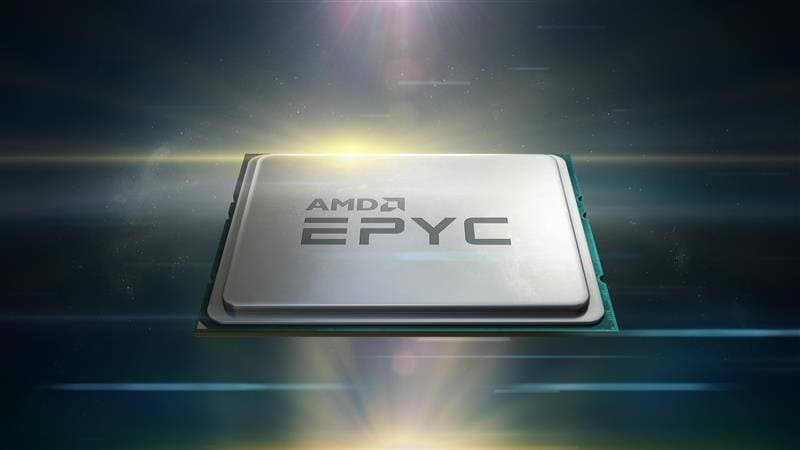
AMD unveils 8005-series Epyc processors with up to 84 Zen 5 cores for telco and edge applications, challenging Intel's Xeon 6 offerings in the vRAN market.
AMD has unveiled its latest Epyc processor lineup, the 8005-series codenamed Sorano, marking a significant upgrade for telco and edge computing applications. The new chips, announced ahead of Mobile World Congress, replace the aging Siena Epycs launched in late 2023 and bring substantial improvements in core count and micro-architectural features.
84 Zen 5 cores in a 225W envelope
The headline feature of Sorano is its impressive core count—up to 84 Zen 5 cores, a substantial increase from the 64 cores offered by the previous Siena generation. This boost comes in a power envelope of just 225 watts, demonstrating AMD's continued focus on efficiency in its server processor designs.
Based on the core count, industry analysts speculate that the chip will feature either six density-optimized Zen 5c chiplets with 14 of 16 cores enabled, or 12 frequency-optimized Zen 5 chiplets with one core fused off per chiplet. Given the significant efficiency gains AMD achieved with the Zen 5 generation, the company may opt for the higher-clocking chiplets this time around.
Built for telco and edge workloads
Sorano is specifically designed for telco and edge applications, with a particular focus on virtual radio access network (vRAN) deployments. As 5G networks have proliferated, traditional radio access networks that relied on specialized hardware from vendors like Samsung, Nokia, and Ericsson have increasingly been virtualized to run on conventional server hardware.
While vRAN workloads can run on standard Epyc and Xeon processors, both AMD and Intel have developed specialized chips tailored for this market. Sorano brings several key optimizations:
- Temperature resilience: Designed to operate in wider temperature ranges, meeting NEBS compliance requirements common in telco deployments
- LDPC decoding acceleration: Optimizations for low-density parity check decoding operations reduce latency and speed up forward error correction in 5G networks
- Compute efficiency: By handling LDPC decoding more efficiently, the chips free up compute resources for additional Layer 1 and Layer 2 processing, allowing operators to support more functions per server
AMD is also promising versions of Sorano with TDPs under 100 watts, maintaining the power efficiency that made the Siena generation attractive to telco equipment makers.
Taking on Intel in the vRAN market
AMD's Sorano faces stiff competition from Intel's Xeon 6 offerings in the vRAN space. Intel has taken a different architectural approach with its Xeon 6E and Xeon 6 SoC platforms.
Nokia, a long-time Intel partner, is using Intel's Xeon 6700E processors—which can feature up to 144 efficiency cores—to power its core network appliances. These stripped-down cores trade clock speeds and advanced features like AVX-512 and AMX for greater core density.
Intel's Xeon 6 SoC, meanwhile, is designed specifically for edge vRAN deployments. These chips pack up to 42 cores and include vRAN-Boost technology—dedicated hardware accelerators for operations commonly seen in 5G deployments. They also feature 200 Gbps of onboard Ethernet networking and acceleration for crypto, AI, and media transcoding.
Ericsson is among the vendors deploying Intel's Xeon 6 SoC processors in customer networks, highlighting the competitive landscape AMD must navigate.
The Zen 5 generation's final chapter
Sorano represents what appears to be the last major addition to AMD's Zen 5 Epyc lineup. The company has already announced its next-generation Venice CPUs, which will feature up to 256 Zen 6 cores per socket and are set to debut in the second half of 2026.
AMD has also teased a Venice-X processor for high-performance computing applications, which will presumably leverage 3D V-Cache technology to boost L3 cache to well over a gigabyte.
With Sorano, AMD is positioning itself to capture a larger share of the growing vRAN market while challenging Intel's dominance in telco infrastructure. The combination of high core counts, power efficiency, and workload-specific optimizations makes Sorano a compelling option for equipment makers like Samsung, Ericsson, and Wind River, who have already expressed interest in the platform.
The battle for telco and edge computing supremacy is heating up, with both AMD and Intel bringing specialized silicon to address the unique demands of 5G and beyond. As networks continue to evolve toward more virtualized architectures, the importance of purpose-built processors like Sorano and Xeon 6 will only grow.
Comments
Please log in or register to join the discussion