Malaysia's government says its reciprocal trade agreement with the US is no longer valid following the Supreme Court's decision to strike down Trump's 'reciprocal' tariffs, potentially risking retaliation from Washington.
Malaysia's government has declared its trade agreement with the United States "null and void" after the U.S. Supreme Court struck down President Donald Trump's "reciprocal" tariffs, creating fresh uncertainty in Southeast Asian trade relations.
After two days of confusing statements, Malaysian officials confirmed on Wednesday that the agreement on reciprocal trade (ART) with Washington no longer applies. The development comes as Southeast Asian exporters recalibrate their strategies amid ongoing tariff turmoil.
Trade Agreement Status Uncertain
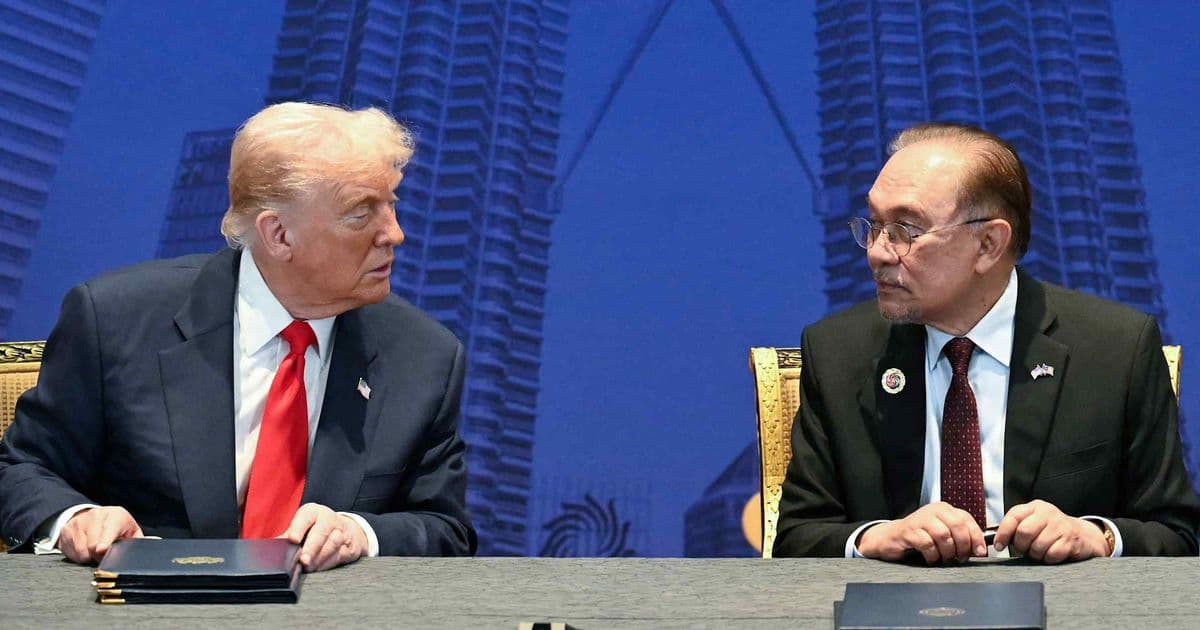
The reciprocal trade agreement's nullification follows the Supreme Court's decision to invalidate Trump's tariff policies. Malaysian Prime Minister Anwar Ibrahim had met with Trump on the sidelines of the ASEAN Summit in Kuala Lumpur last October, where the two leaders discussed trade relations.
Analysts warn that Malaysia's stance could trigger retaliation from the Trump administration. The timing is particularly sensitive as other Southeast Asian nations also face pressure from shifting U.S. trade policies.
Regional Trade Context
Malaysia's auto sales overtook Indonesia's in 2025 to become the top market in Southeast Asia, highlighting the country's growing economic importance. However, the region faces increasing divergence in growth patterns after mixed performance in 2025.
Malaysia's GDP expanded 5.2% in 2025 as growth picked up in the fourth quarter, according to recent economic data. The country's retailers are also preparing for billion-dollar Ramadan spending, which could be affected by trade uncertainties.
Broader Market Implications
The nullification of the trade pact adds to existing challenges facing Malaysian businesses. Malaysian banks are already preparing for a "less forgiving" environment in 2026, according to industry analysts.
Meanwhile, Malaysian companies continue to pursue international opportunities. Rare earths producer Lynas recently secured a price floor in an updated supply agreement with Japan, demonstrating ongoing efforts to diversify trade relationships beyond the United States.
The situation remains fluid as Southeast Asian exporters adjust to the new trade landscape. With the U.S. Supreme Court's ruling creating legal uncertainty around reciprocal tariffs, Malaysia's decision to void its trade agreement could signal broader regional shifts in how countries approach U.S. trade relations.
The potential for retaliation from Washington adds another layer of complexity to an already challenging trade environment, particularly as Southeast Asian economies seek to maintain growth momentum in 2026.
Comments
Please log in or register to join the discussion