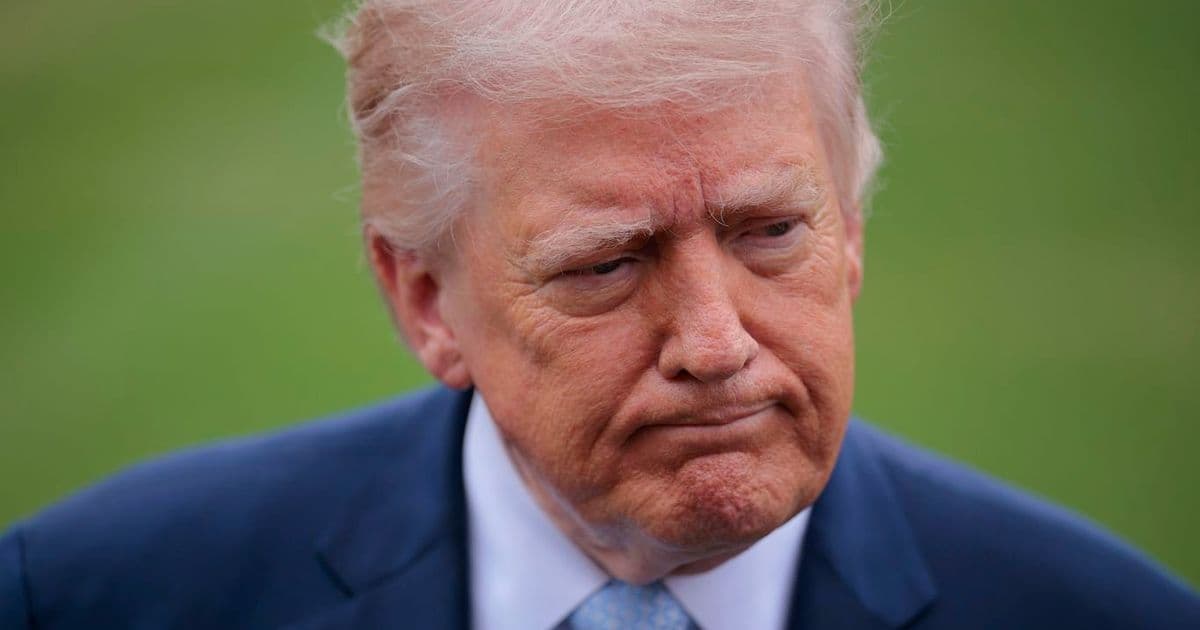
Crude oil futures swing sharply as geopolitical tensions escalate in the Persian Gulf, with Brent crude rising 3.2% and WTI up 2.8% amid fears of supply disruptions.
Oil prices swung sharply Wednesday after President Trump threatened to close the Strait of Hormuz, the narrow waterway through which roughly 20% of global oil supplies flow. The Strait of Hormuz, located between Iran and Oman, is one of the world's most critical energy chokepoints, with tankers carrying approximately 21 million barrels of crude oil passing through daily.
Brent crude futures jumped as much as 3.2% to $82.45 per barrel before retreating to $80.92, while West Texas Intermediate (WTI) crude rose 2.8% to $77.18 per barrel. The volatility reflects market anxiety over potential supply disruptions that could send energy prices soaring.
Trump's comments came during a press conference where he suggested military action against Iran if it attempted to close the strategic waterway. "We'll see what happens with Iran. If they do anything, it'll be a bad, bad day for them," the president stated, adding that the U.S. has "plenty of firepower" to keep the strait open.
Energy analysts warn that even a credible threat to the strait's operations could trigger price spikes. "The market is pricing in a risk premium," said Sarah Johnson, senior oil market analyst at Energy Insights. "Even if there's no actual disruption, the mere possibility of closure sends shockwaves through global energy markets."
Historical precedent shows the strait's vulnerability. During the 1980s "Tanker War," attacks on vessels in the Persian Gulf caused oil prices to spike by over 50%. More recently, in 2019, a series of attacks on oil tankers near the strait briefly pushed prices up 15%.

The economic implications extend beyond energy markets. Higher oil prices typically translate to increased costs for transportation, manufacturing, and consumer goods. Airlines, shipping companies, and chemical producers are particularly sensitive to crude price fluctuations.
Global oil demand remains robust, with the International Energy Agency projecting 2024 consumption at 102.2 million barrels per day. Any supply disruption would force consuming nations to tap strategic reserves or seek alternative sources, potentially from longer supply routes.
Market participants are also watching OPEC+ production decisions closely. The alliance recently agreed to extend voluntary production cuts of 2.2 million barrels per day through the second quarter of 2024, adding another layer of supply uncertainty.
Energy stocks reacted positively to the price movements, with major oil companies seeing share price increases. ExxonMobil rose 2.3%, Chevron gained 2.1%, and European majors BP and Shell each climbed approximately 3%.
Geopolitical experts note that Iran has threatened to close the strait multiple times since the 1979 Islamic Revolution but has never followed through on a complete closure. Such an action would likely trigger military responses from the United States and its allies, as well as severe economic consequences for Iran itself.
The White House has not clarified whether Trump's comments represent a formal policy shift or were intended as rhetorical pressure on Iran during ongoing nuclear negotiations. State Department officials declined to provide additional details on potential military options.
For now, markets remain on edge, with traders closely monitoring developments in the Persian Gulf and any statements from Iranian officials. The situation underscores how geopolitical tensions in key energy regions continue to create volatility in global commodity markets, affecting everything from gasoline prices at the pump to inflation rates in major economies.
Comments
Please log in or register to join the discussion