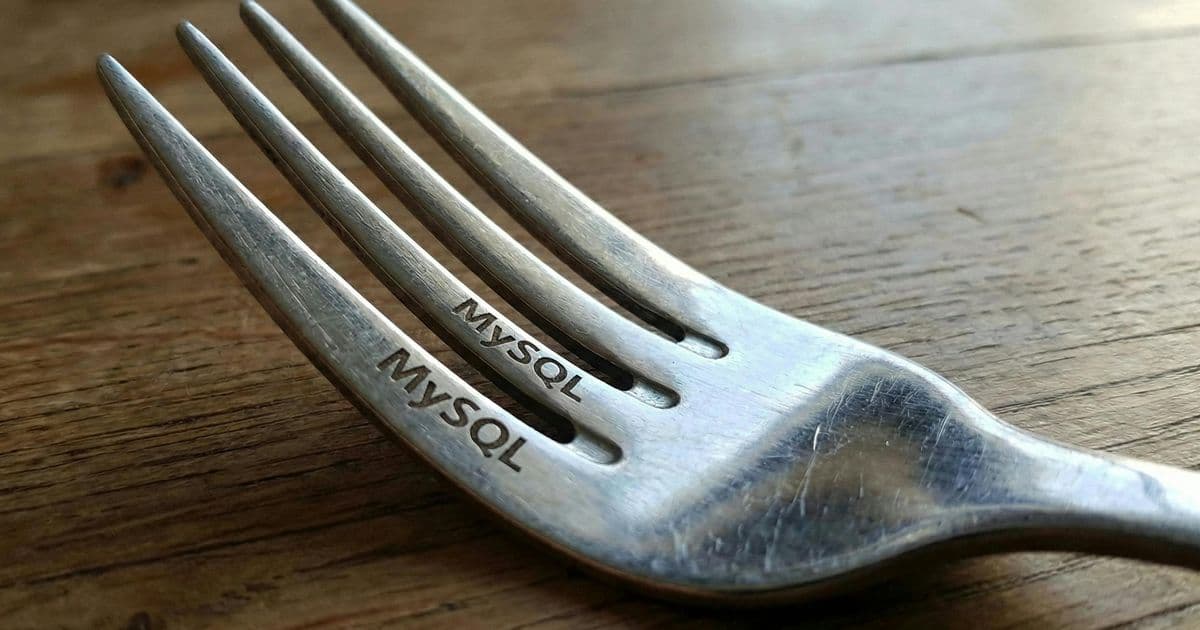
MariaDB has evolved from a MySQL fork into a fully independent database system. While maintaining compatibility, its development roadmap, features, and community have diverged significantly from Oracle's MySQL, making it a practical replacement rather than a dependent clone.
When MariaDB was first announced in 2009 by Michael "Monty" Widenius, it was positioned as a "fork of MySQL." This framing, while technically accurate, has created persistent misconceptions about MariaDB's independence and future. The reality is that MariaDB has evolved into a distinct database system that no longer depends on MySQL for its development or direction.
What a Fork Really Means
In software development, a fork represents a project that takes another's source code and continues development independently. While forks often begin by maintaining compatibility with their parent, they can evolve into completely separate entities with their own features, architecture, and development philosophy.
This is precisely what happened with MariaDB. The initial fork allowed MariaDB to inherit MySQL's codebase and ecosystem, but over time, the projects have diverged so significantly that they now represent different approaches to database development.
The Divergence Point
For several years, MariaDB maintained close alignment with MySQL, merging changes and keeping pace with Oracle's development. This changed substantially in 2014 when Oracle stopped publishing MySQL's source code on Launchpad. While MariaDB still incorporates changes from InnoDB (Oracle's storage engine), this marked a clear point of codebase divergence.
MariaDB developers don't wait for MySQL to implement features, fix bugs, or innovate. They write their own tests, create their own features, and solve problems according to their own development philosophy. When Oracle changes something in MySQL or restricts access to components, it has minimal impact on MariaDB's roadmap.
Evidence of Independence
Recent developments highlight MariaDB's autonomous trajectory. According to Otto Kekäläinen, former Software Development Manager at AWS, "the number of git commits on github.com/mysql/mysql-server has been significantly declining in 2025." This slowdown in MySQL's development activity contrasts with MariaDB's continued innovation.
The DB-Engines popularity ranking shows MySQL's steep decline, while MariaDB maintains its position. Performance reports indicate that newer MySQL versions have experienced degradation, pushing developers to evaluate alternatives.
Practical Migration Considerations
For applications currently using MySQL, migration to MariaDB represents a low-friction path. Unlike migrating to PostgreSQL—which requires extensive SQL code and connector rewrites—switching to MariaDB can be nearly seamless. The compatibility layer allows existing MySQL connectors and tools to work with MariaDB with minimal changes.
A notable example is Cantamen, Germany's leading car-sharing service provider, which successfully migrated from MySQL to MariaDB in a live broadcast with Monty's assistance. This real-world case demonstrates the practical feasibility of the transition.
The Ecosystem Context
PostgreSQL offers another alternative, but its ecosystem differs significantly. PostgreSQL has numerous forks and third-party extensions, making it popular for its features and the commercial ecosystem around it. However, for teams already invested in the MySQL ecosystem, the migration effort to PostgreSQL remains substantial.
TiDB represents a distributed alternative that excels in large-scale setups but may be overkill for typical small to mid-scale applications currently using MySQL.
Shifting Positioning
The MariaDB Foundation has gradually shifted its messaging from "fork of MySQL" to "MySQL replacement," and more recently to "MariaDB is the Future of MySQL." This evolution reflects the project's growing independence and confidence in its own direction.
The "fork" label, while historically accurate, has led to misconceptions about MariaDB's dependency on Oracle's MySQL development. In reality, MariaDB has achieved what David A. Wheeler describes as "successful branching"—both projects have found success with different developers and end users.
Looking Forward
MariaDB's trajectory demonstrates how a fork can mature into an independent project with its own identity. While maintaining compatibility with the MySQL ecosystem remains a priority, MariaDB's development is driven by its own vision, community, and technical decisions.
For developers and organizations evaluating database options, understanding MariaDB's independence is crucial. It's not merely a MySQL clone but a distinct database system that happens to share common ancestry and maintain compatibility. This distinction matters for long-term planning, as MariaDB's future is no longer tied to Oracle's decisions about MySQL.
The question isn't whether MariaDB depends on MySQL, but rather how its independence positions it as a viable alternative for the future of open-source relational databases.
Comments
Please log in or register to join the discussion