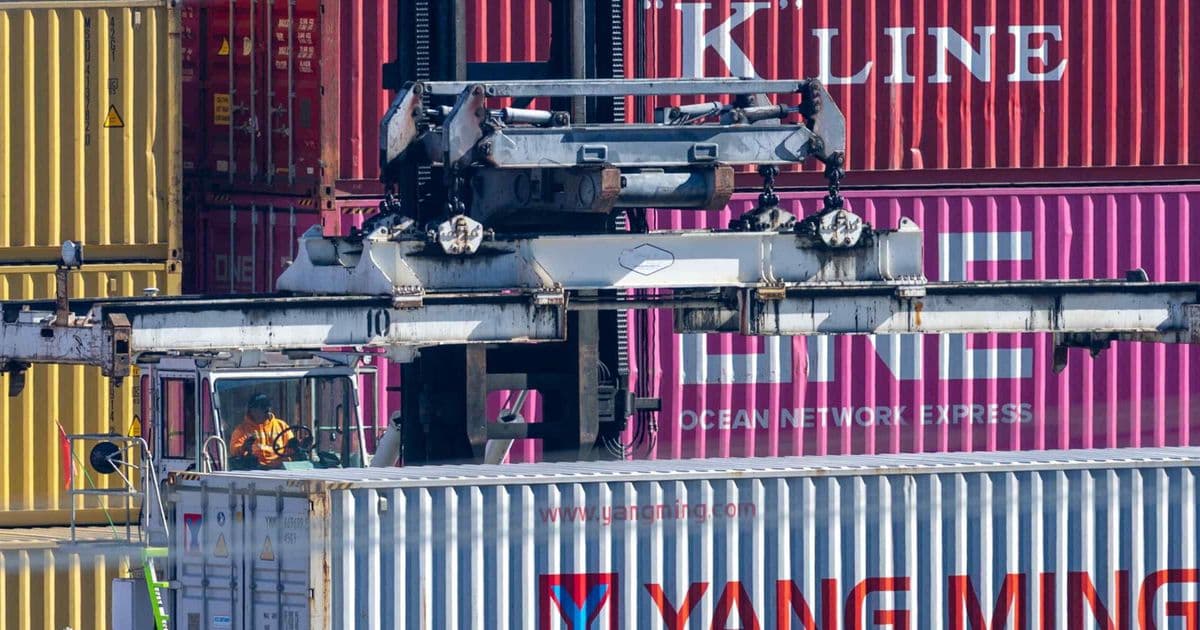
China's exports jumped 21.9% year-over-year in January-February 2026, outpacing import growth of 19.8% despite ongoing U.S. trade tensions and Middle East geopolitical risks.
China's export growth accelerated into double digits in early 2026, the latest data shows, despite global supply uncertainty related to U.S. tariffs and geopolitical tensions in the Middle East.
According to China's General Administration of Customs, outbound shipments surged 21.9% year-over-year in the first two months of 2026, significantly outpacing the 19.8% growth in imports during the same period. This marks a notable acceleration from December 2025, when exports grew by 10.7% and imports by 17.6%.
The robust export performance comes amid what many analysts considered challenging conditions. The United States has maintained elevated tariffs on Chinese goods, creating what should theoretically be headwinds for China's export-driven economy. Additionally, escalating tensions in the Middle East have introduced new uncertainties into global supply chains.
Several factors appear to be driving this unexpected strength in Chinese exports:
Manufacturing Resilience: China's manufacturing sector has shown remarkable adaptability in redirecting exports to alternative markets. While the U.S. remains a significant trading partner, Chinese exporters have successfully expanded into Southeast Asian, African, and European markets.
Inventory Rebuilding: Global businesses appear to be rebuilding inventories after pandemic-era disruptions, creating sustained demand for manufactured goods from China's industrial base.
Competitive Pricing: Despite tariffs, Chinese manufacturers have maintained competitive pricing through efficiency improvements and supply chain optimization, allowing them to preserve market share even in tariff-affected regions.
The import data tells a complementary story. The 19.8% growth in imports suggests robust domestic demand within China, potentially signaling economic recovery or at least stabilization after several challenging years. Key import categories likely include industrial components, energy resources, and consumer goods.
This export strength has broader implications for the global economy. China's manufacturing output serves as a bellwether for global trade health, and the January-February numbers suggest underlying demand remains solid despite geopolitical tensions.
However, economists caution that this growth trajectory may face challenges ahead. The sustainability of export growth will depend on several factors:
- The trajectory of U.S.-China trade relations and potential tariff adjustments
- Global economic growth rates in key markets
- The resolution (or escalation) of Middle East tensions
- Domestic economic policies within China
The data also highlights China's continued importance to global supply chains. Despite years of discussion about diversification and nearshoring, China's manufacturing ecosystem remains deeply integrated into global production networks.
For investors and businesses tracking global trade patterns, this data suggests that China's economic influence remains substantial. The ability to maintain double-digit export growth despite headwinds demonstrates the resilience of China's manufacturing sector and its adaptability to changing global conditions.
As the year progresses, market watchers will be monitoring whether this early-year strength can be sustained, particularly if trade tensions escalate or if global economic growth moderates. The coming months will test whether China's export machine can maintain its momentum in an increasingly complex global environment.
Comments
Please log in or register to join the discussion