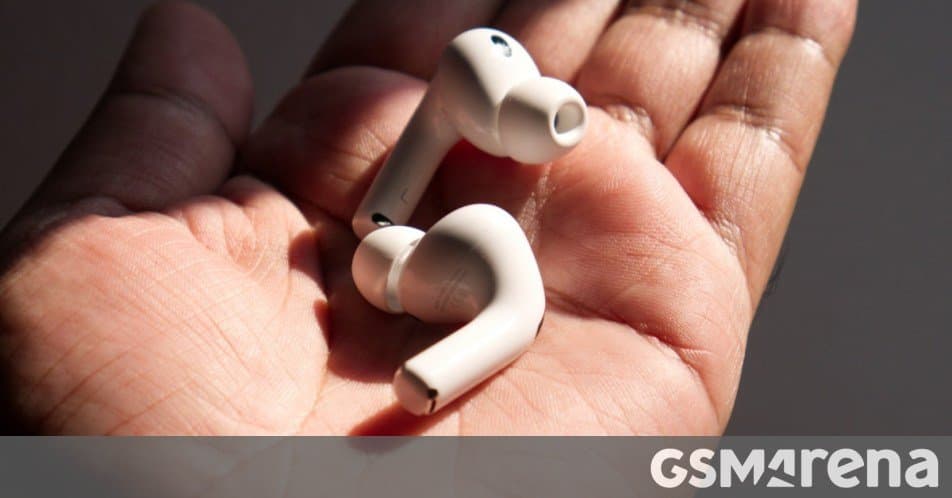
Apple’s long-rumored AirPods with integrated cameras have reached the final design validation stage ahead of production, though delays tied to a revamped AI-powered Siri have pushed the expected launch past its original first half 2026 window.
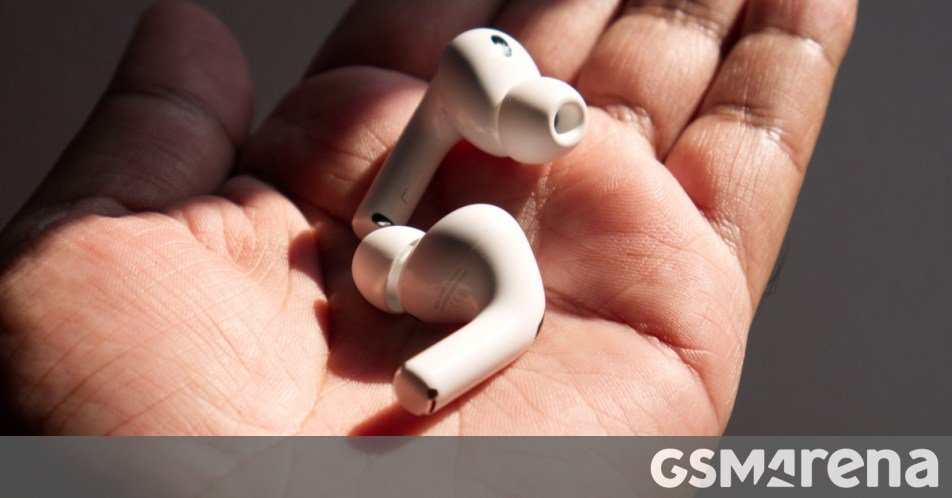
Bloomberg reporter Mark Gurman, who has a long track record of accurate Apple product leaks, reports that the company’s next-generation AirPods with built-in cameras have entered design validation testing (DVT). This phase marks the final stage of hardware development before Apple moves to production validation testing (PVT), where small batches of units are manufactured using mass production tooling to verify quality and consistency. Prototypes of the earbuds are currently being tested internally by Apple staff, per sources familiar with the matter.
DVT is a critical milestone for Apple hardware. During this phase, the company freezes the core hardware design, meaning no major changes to components, form factor, or internal layout unless critical defects are discovered. Testing covers durability, thermal performance, battery life, audio quality, and compatibility with existing Apple devices including iPhones, iPads, and Macs. Once DVT is complete, PVT begins. This phase focuses on manufacturing scalability, ensuring that suppliers can produce components at volume, that assembly lines yield consistent units, and that final products match the approved DVT prototypes exactly.
These camera-equipped AirPods were originally expected to launch in the first half of 2026, but timelines have slipped. Gurman notes that while the hardware for the new earbuds is nearly finalized, Apple may delay the launch further if the AI experience tied to its revamped Siri assistant does not meet internal standards. The Siri update, which adds visual context awareness via the AirPods’ cameras, has been the primary driver of the delay.
Key Features and Specifications
Recent leaks suggest the new model may be branded as AirPods Ultra, positioning it as a premium tier above the existing AirPods Pro 3. The design will remain largely consistent with the current AirPods Pro 3, including the same in-ear fit and interchangeable silicone tips, but stems will be slightly longer to accommodate the integrated camera modules. The cameras are housed in the stems, as this is the only area of the earbuds with enough space to add the necessary hardware without significantly increasing the size of the in-ear portion.
The cameras are not intended for user-facing photography or video recording. Instead, they feed low-latency visual data to Siri, allowing the assistant to better understand the user’s immediate surroundings. This addresses a long-standing limitation of voice assistants, which have historically relied solely on audio input and preloaded knowledge bases to respond to queries. For example, a user could point at a storefront and ask Siri for opening hours, hold up a piece of electronics and ask for troubleshooting steps, or look at a menu and ask for dish recommendations, with the camera providing visual context to Siri to generate accurate responses.
Separate reports indicate the revamped Siri may integrate third-party AI models including Google’s Gemini, which would explain the cross-company coordination contributing to the delay. Apple has not officially confirmed this integration, but the company has increasingly partnered with external AI providers to augment its first-party models in recent years.
Ecosystem and Market Context
AirPods are already a cornerstone of Apple’s ecosystem lock-in strategy. The earbuds feature deep integration across iOS, iPadOS, macOS, and watchOS, with features like automatic device switching, spatial audio, and Find My tracking that work only within Apple’s ecosystem. Adding cameras and AI-driven Siri integration would deepen this lock-in further. The AirPods would become a new input peripheral for all Apple devices linked to a user’s account, providing visual context to any device the user is actively using.
This launch fits into Apple’s broader wearables roadmap, which per related reports includes smart glasses and an AI pendant. All three devices are designed to feed contextual data to Siri, creating a network of wearables that work together to provide proactive, location-aware assistance. This is a direct response to similar pushes from competitors. Meta’s Ray-Ban smart glasses already include cameras for AI context, and Google’s Pixel Buds line has experimented with similar features. Apple’s advantage lies in its ecosystem integration, as all its wearables work together without requiring separate apps or manual pairing, unlike competitor devices that often operate in silos.
Practical considerations for users include pricing and fit. The current AirPods Pro 3 retail for $249, so the premium AirPods Ultra tier is expected to start at $300 or higher, reflecting the added camera hardware and AI features. The longer stems required to house the cameras may affect fit for some users who prefer the shorter stems of the current Pro model. Battery life is another potential concern. Processing visual data and powering additional hardware will increase power draw, so Apple may need to increase battery capacity, which could add weight to the earbuds or require a larger charging case.
Privacy will also be a key focus. Apple has long marketed its devices as privacy-first, with on-device processing for sensitive data. It is likely that visual data from the AirPods’ cameras will be processed locally on the user’s iPhone or the earbuds themselves, rather than being sent to Apple’s cloud servers. This would prevent third parties from accessing camera feeds, addressing potential concerns about always-on cameras in earbuds that are carried on the user’s person at all times.
Public Reaction
The report has already sparked significant discussion on social media platforms, with users speculating about use cases, pricing, and privacy implications.  Early responses range from excitement about new Siri capabilities to skepticism about the need for cameras in earbuds, with some users joking about surveillance concerns. Apple has not responded to the report publicly, as is typical for the company during pre-launch testing phases.
Comments
Please log in or register to join the discussion