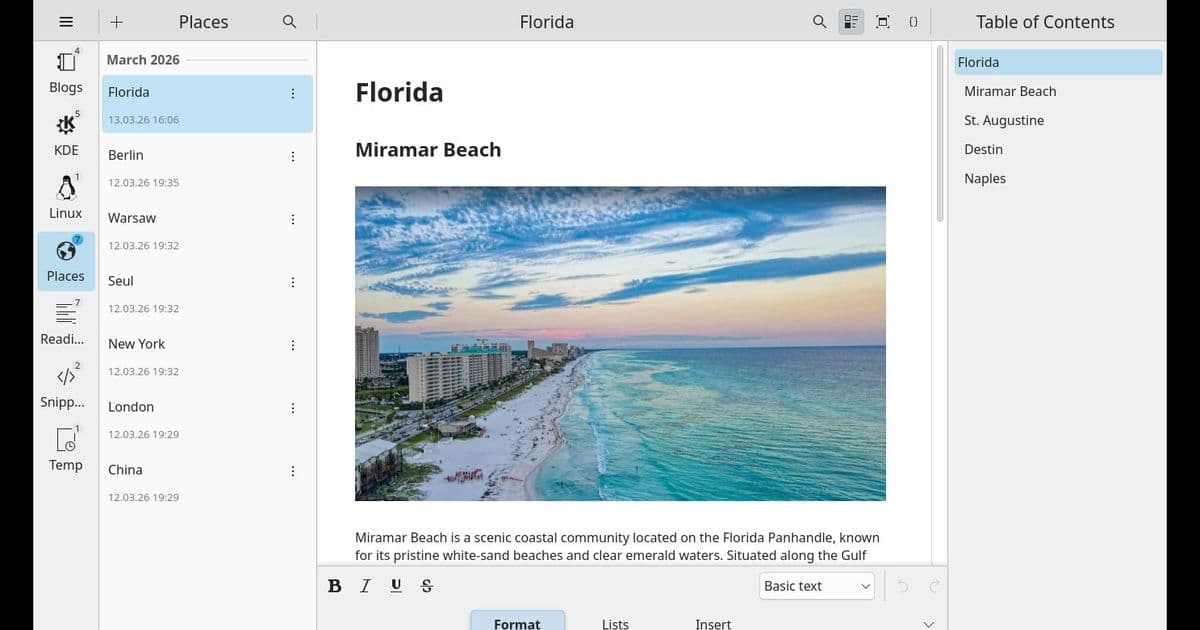
Marknote 1.5 represents a significant evolution in the KDE note-taking application, transforming it from a simple note-taking tool into a more robust knowledge management system with features like source editing, note linking, and improved organization capabilities.
The recent release of Marknote 1.5 signals an important maturation in the KDE ecosystem's approach to digital knowledge management. This update moves beyond conventional note-taking applications, positioning Marknote as a comprehensive system for organizing and connecting information. The development team's focus on creating a "more robust knowledge base while keeping the interface as clean and distraction-free as possible" reflects a thoughtful balance between functionality and simplicity that characterizes many successful productivity tools.
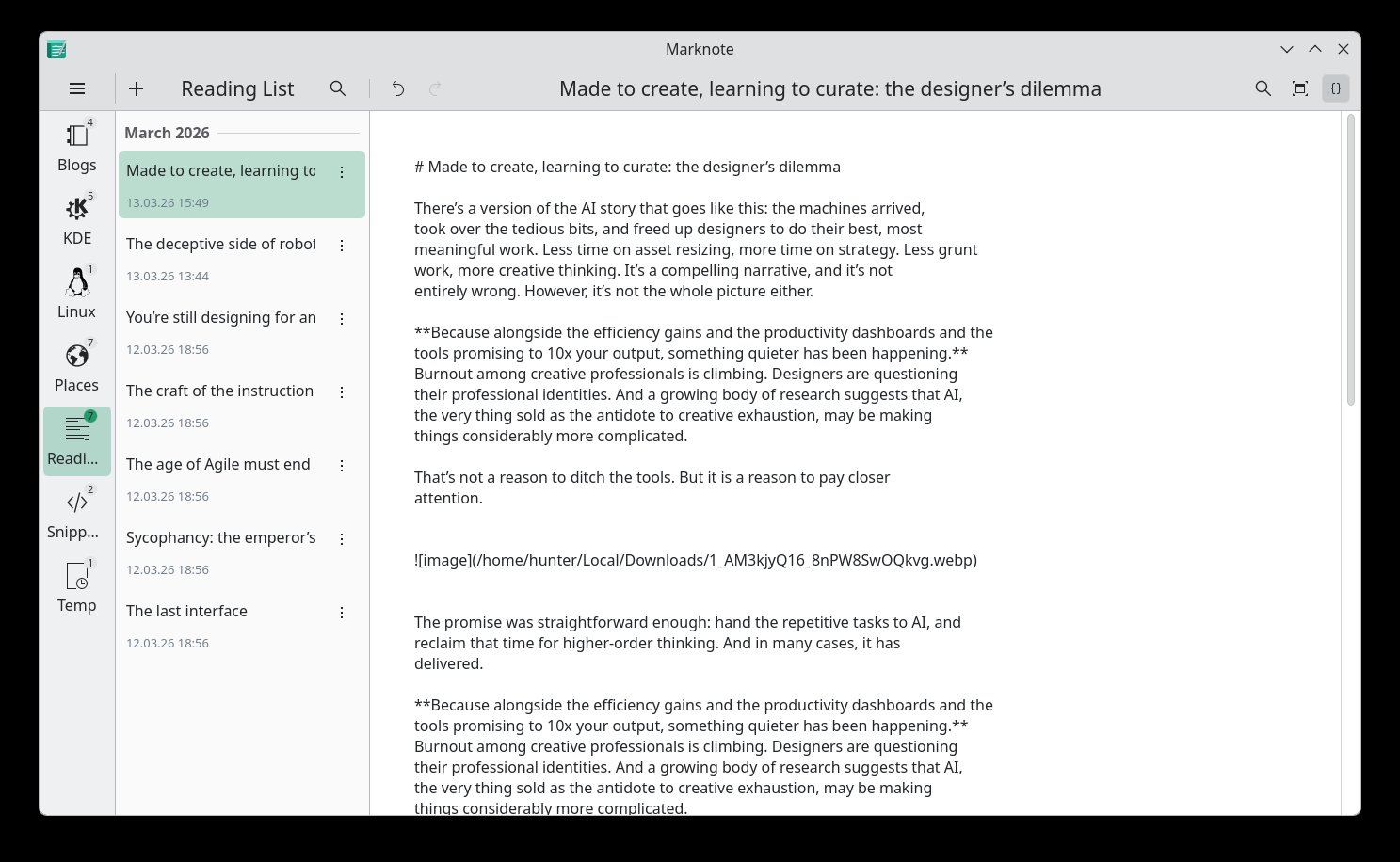
The most significant addition in this release is the implementation of Source Mode, a feature that addresses the growing divide between visual and code-first workflows. For users who prefer working with raw Markdown syntax while structuring their thoughts, this dedicated source editing view provides an alternative to the rich-text WYSIWYG interface. The inclusion of this feature, developed by Season of KDE contributor Siddharth Chopra, demonstrates the project's commitment to accommodating diverse working styles—a recognition that knowledge workers often need to switch between different modes of expression depending on their task.
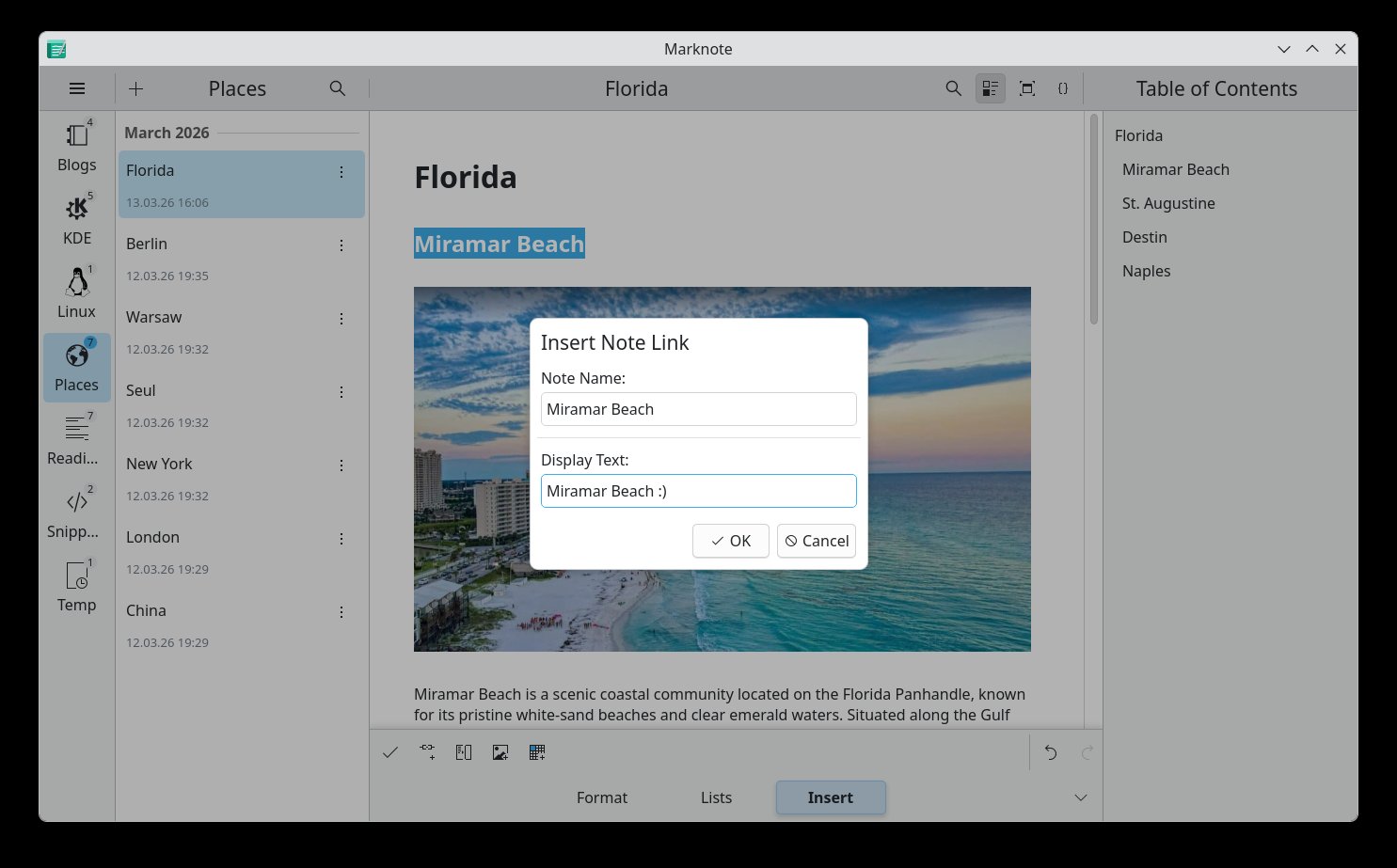
Perhaps even more transformative is the introduction of internal wiki-style links with cross-notebook lookup. This feature acknowledges a fundamental truth about knowledge: it rarely exists in isolation. By enabling users to easily connect documents across notebooks, Marknote facilitates the creation of what researchers call "networked knowledge"—where ideas are interconnected rather than stored in discrete silos. This approach mirrors the methodology of tools like Roam Research and Obsidian, which have gained popularity for their emphasis on building a web of interconnected ideas rather than maintaining separate, unrelated notes.
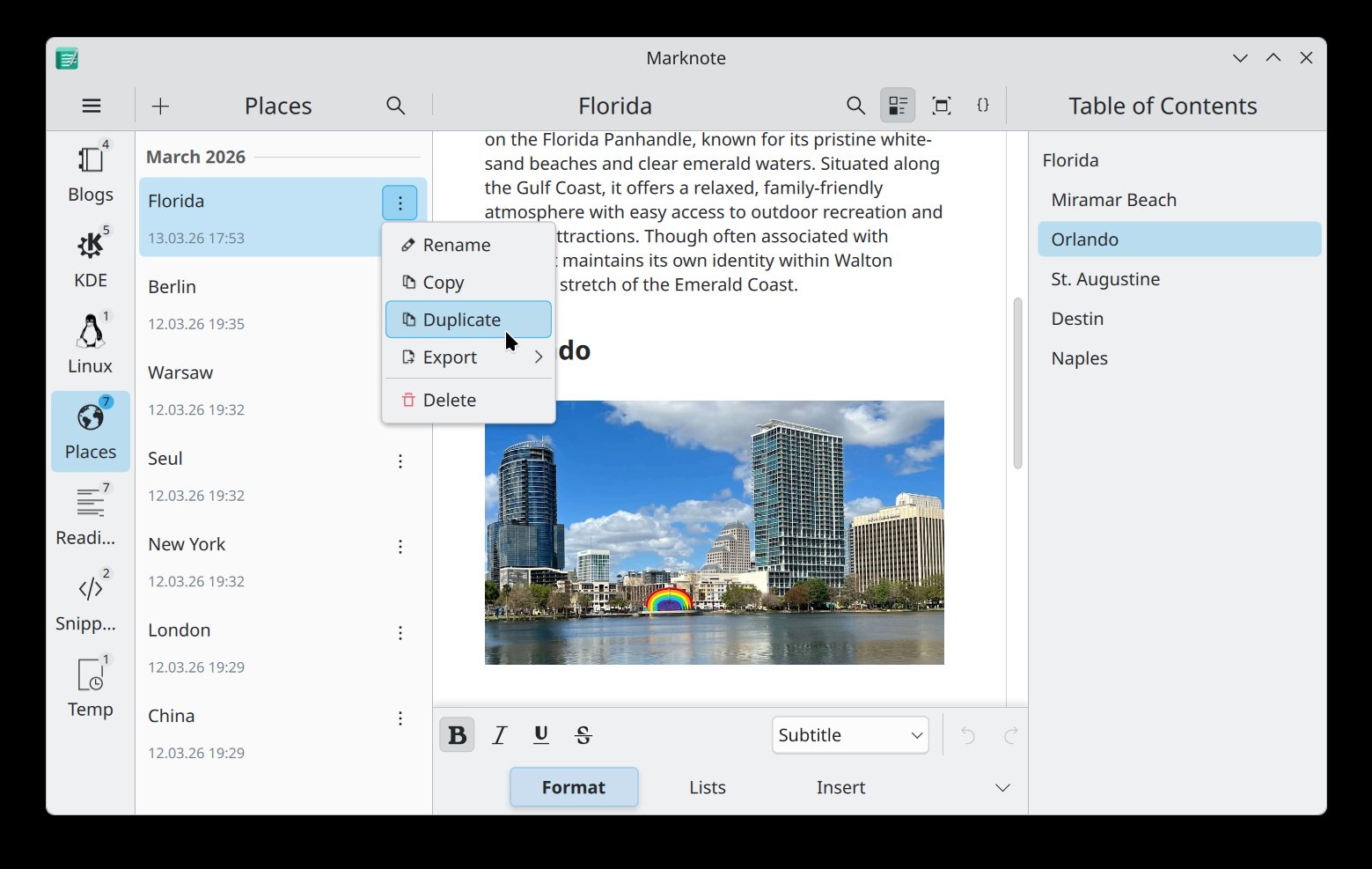
The improvements to note management reveal a deeper understanding of how personal knowledge systems evolve over time. The addition of note counters within each notebook addresses the common challenge of losing track of content volume as collections grow. The implementation of drag-and-drop functionality for moving notes between notebooks solves a practical organizational problem that many users face when their initial categorization systems prove inadequate. Most notably, the "Duplicate Note" action acknowledges the reality that templates and patterns emerge naturally in knowledge work, allowing users to efficiently replicate useful structures without manual reconstruction.
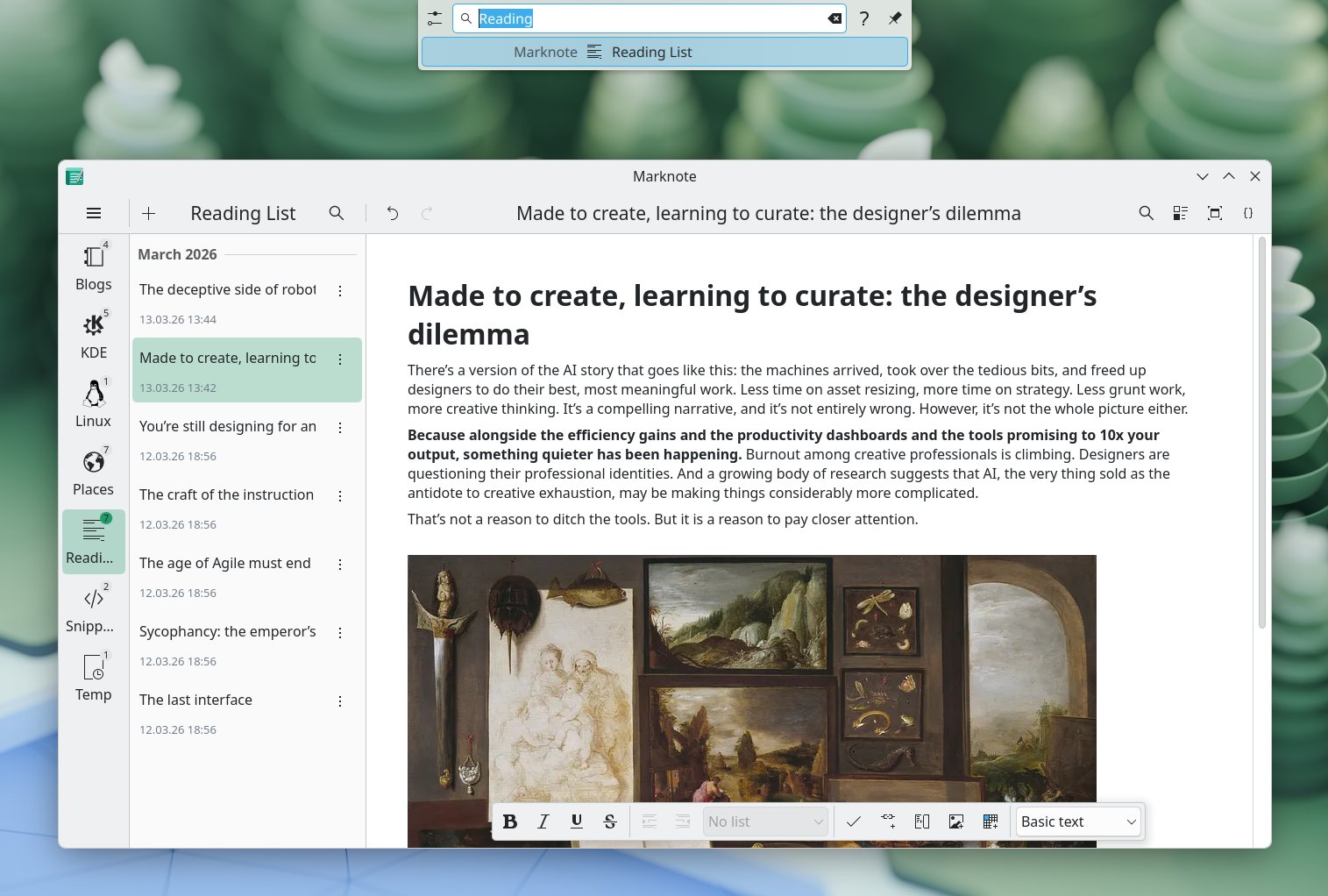
The inclusion of a KRunner plugin demonstrates thoughtful integration with the broader KDE desktop environment. This feature eliminates friction in the knowledge retrieval process, allowing users to access their notes without first launching the full application—a small but significant improvement for maintaining flow states during knowledge work. The search and replace functionality, while seemingly basic, addresses a critical need in knowledge management: the ability to efficiently update and reorganize content as understanding evolves.
The UI polish and technical improvements in this release reveal a development team that understands that user experience extends beyond feature lists. The new animations for note and notebook items, along with restored sidebar transitions, create a more dynamic and responsive interface that makes navigation feel fluid rather than mechanical. The technical fixes—such as resolving the issue where opening a note inappropriately updated its modification timestamp and addressing the Flatpak bug—demonstrate attention to detail that often distinguishes mature applications from those still finding their footing.
From a broader perspective, Marknote 1.5 reflects an important trend in the note-taking and knowledge management space: the movement beyond simple storage solutions toward systems that actively facilitate knowledge creation and connection. The application's evolution mirrors a growing recognition that digital tools should not merely archive information but should help users make meaningful connections between ideas, identify patterns, and develop deeper understanding.
However, this release also highlights areas where Marknote might still be catching up to more established players in the knowledge management space. Features like bi-directional linking, backlinking, and graph visualization—common in tools like Obsidian, Logseq, and Roam Research—are notably absent. The current implementation of note linking, while valuable, appears to be uni-directional, which limits the ability to explore connections from multiple entry points.
The application's commitment to the KDE ecosystem presents both an advantage and a potential limitation. On one hand, the tight integration with Plasma desktop and KRunner creates a seamless experience for KDE users. On the other hand, this focus may limit adoption among users who prefer other desktop environments or cross-platform solutions. As knowledge management tools become increasingly central to personal and professional workflows, the ability to synchronize and access content across multiple devices and platforms becomes increasingly important.
Looking forward, Marknote's development team has established a strong foundation for building a comprehensive knowledge management system within the KDE ecosystem. The thoughtful implementation of features in version 1.5 demonstrates an understanding that effective knowledge tools must balance functionality with simplicity, structure with flexibility, and individual tools with connected systems. As the application continues to evolve, it will be interesting to see how it addresses the more advanced features that define the current generation of networked note-taking applications while maintaining its commitment to the clean, distraction-free interface that has been a hallmark of the project.
For users interested in exploring Marknote 1.5, the application is available on Linux via Flatpak and Snapcraft, making it easily accessible to those within the Linux community. The release represents not just a collection of new features, but a thoughtful evolution in how digital tools can support the complex, interconnected nature of modern knowledge work.
Comments
Please log in or register to join the discussion