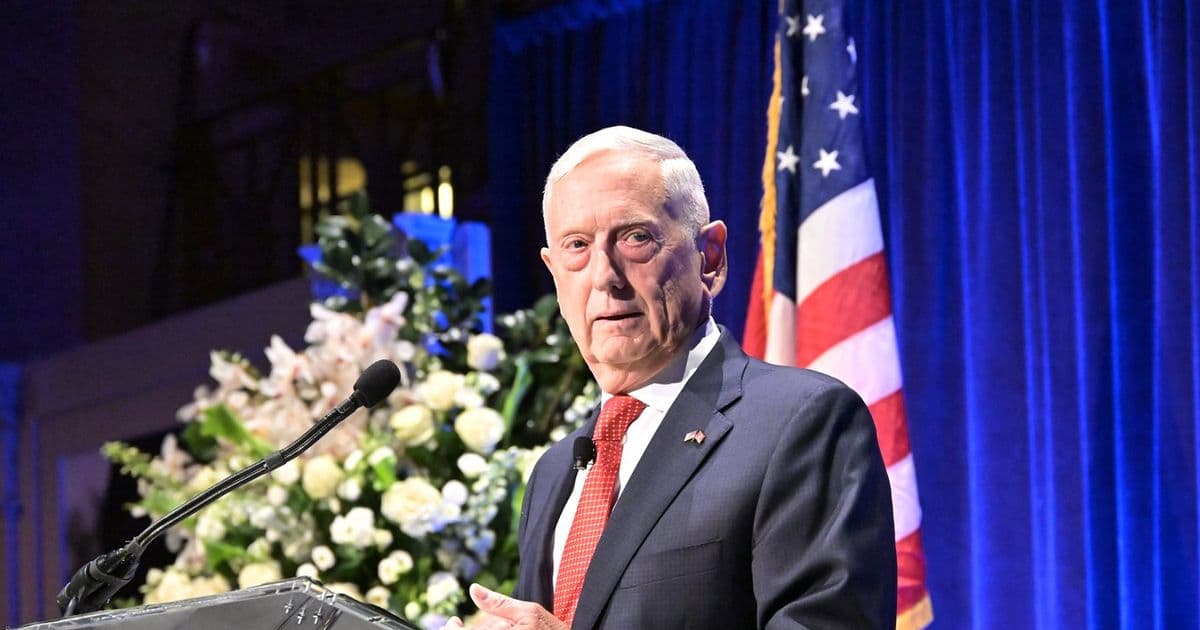
Former Defense Secretary James Mattis warns of difficult geopolitical situation with Iran, highlighting energy market vulnerabilities and regional security challenges.
Former Defense Secretary James Mattis delivered a stark assessment of the United States' position regarding Iran, warning that "we're in a tough spot" as tensions continue to escalate in the Middle East.
Geopolitical Tensions and Energy Market Impact
The comments come at a critical juncture for global energy markets, which remain deeply intertwined with Middle Eastern stability. Iran's strategic position along key shipping routes and its influence over regional oil production create significant vulnerabilities for global energy supply chains.
Energy analysts note that any escalation with Iran could trigger immediate price volatility in crude oil markets. The country controls access to the Strait of Hormuz, through which approximately 20% of global oil shipments pass daily. A disruption here would send shockwaves through energy markets worldwide.
Regional Security Dynamics
Mattis's assessment reflects growing concerns among defense experts about Iran's expanding influence across the region. The country's support for proxy groups, ballistic missile program development, and nuclear ambitions continue to challenge U.S. strategic interests.
Military strategists point to several key factors complicating the situation:
- Iran's asymmetric warfare capabilities
- Network of regional alliances and proxy forces
- Advanced missile technology development
- Economic resilience despite sanctions
Economic Implications
The geopolitical uncertainty surrounding Iran has broader economic implications beyond energy markets. Companies with exposure to Middle Eastern operations face increased risk assessments, while supply chain managers must develop contingency plans for potential disruptions.
Technology firms, particularly those with data centers or operations in the region, are evaluating their disaster recovery protocols. Financial institutions are adjusting their risk models to account for potential market volatility stemming from Iran-related developments.
Strategic Options and Limitations
Defense experts suggest that traditional military responses may be complicated by Iran's ability to retaliate through unconventional means. The country's demonstrated capability to target critical infrastructure and conduct cyber operations presents challenges for conventional deterrence strategies.
Economic sanctions, while impactful, have not achieved their intended policy objectives, leading to questions about the effectiveness of current approaches. The situation highlights the complex nature of modern geopolitical conflicts where military, economic, and cyber domains intersect.
Looking Ahead
As tensions persist, businesses and governments alike are developing more sophisticated risk management strategies. Energy companies are diversifying supply sources, while technology firms are enhancing their cybersecurity measures to prepare for potential escalation.
The assessment from Mattis, a respected voice in defense circles, underscores the need for comprehensive approaches to addressing Iran's role in regional and global affairs. The "tough spot" he describes reflects the challenging balance between deterrence, diplomacy, and economic interests that characterizes current U.S. policy toward Iran.
Comments
Please log in or register to join the discussion