Mesa 26.1 introduces a new LLVMpipe feature that lets developers simulate GPU resets by writing to a file, making it easier to test how software handles hardware failures.
Mesa 26.1 introduces a practical new feature for developers working with GPU-dependent software. The latest update to the popular open-source graphics library adds support for simulating GPU resets using LLVMpipe, Mesa's software-based OpenGL implementation.
Why Simulate GPU Resets?
GPU resets are hardware events that can occur when a graphics card encounters an unrecoverable error, forcing the GPU to restart. For application and compositor developers, handling these events gracefully is crucial for maintaining system stability and user experience. However, testing how software behaves during a GPU reset has traditionally been challenging, often requiring actual hardware failures or specialized debugging tools.
How It Works
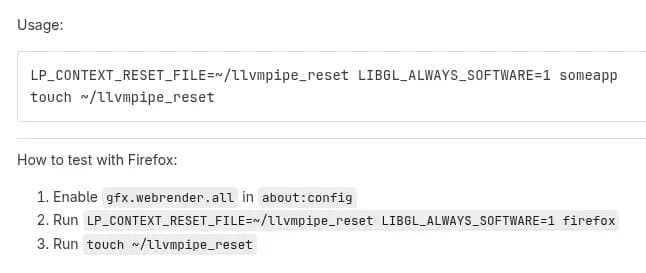
The new LLVMpipe feature provides a simple, hardware-independent method for triggering GPU reset simulations. Developers can enable this functionality by setting the LP_CONTEXT_RESET_FILE environment variable to point to an arbitrary file location. When any external process writes to this file—whether through a touch command or other means—LLVMpipe will trigger an emulated GPU reset.
This approach offers several advantages:
- Hardware independence: No need for actual GPU hardware or specific failure conditions
- Repeatability: Tests can be triggered consistently and on-demand
- Simplicity: Minimal setup required, just an environment variable and file write
Developer Benefits
The feature is particularly valuable for Wayland compositor developers and anyone building graphics-intensive applications. Being able to reliably test GPU reset scenarios helps ensure software can recover gracefully from hardware failures, preventing crashes or hangs that could frustrate users.
LLVMpipe, being a CPU-based software renderer, doesn't normally experience GPU resets. This new code path creates a controlled environment for testing without requiring actual hardware failures or complex debugging setups.
The feature was implemented by Wayland developer Robert Mader and has been merged into the Mesa 26.1 codebase, which is scheduled for release later this quarter.
For developers looking to test their software's resilience to GPU failures, this addition provides a straightforward and reliable testing method that works across different hardware configurations and operating systems.

Related Links:
Comments
Please log in or register to join the discussion