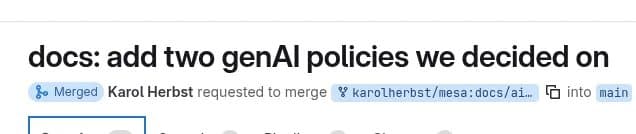
Mesa's upstream developers have implemented two new policies governing the use of generative AI tools in their open-source graphics driver development, requiring human oversight and disclosure of AI assistance.
The Mesa open-source graphics driver project has established two new policies governing the use of generative AI tools in its development workflow. These policies, which were merged into Mesa 26.1 Git today, represent the culmination of discussions among upstream Mesa developers about how to handle AI-generated code submissions while maintaining the project's quality standards and transparency.
The Two New GenAI Policies
The first policy addresses the submission process itself. While Mesa developers acknowledge that generative AI tools can be useful in developing patches, they have decided that all submissions must still come from actual humans. The policy explicitly states that Mesa will not accept automatic submissions through autonomous GenAI tools of any kind unless there becomes community consensus to change this stance. This means that even if AI tools are used to help generate code, a human developer must still be the one opening the merge request and interacting with the development team.
The second policy focuses on transparency. Mesa will honor contributions made via generative AI or large language models (LLMs), but proper disclosure is now required. Contributors must indicate if their patch was generated by an AI agent or if AI assistance was used in developing the code. This disclosure requirement ensures that users and other developers are aware of the origin of the code they're working with.
Context and Development Process
These policies build upon prior Mesa contributor guidelines and represent a thoughtful approach to integrating emerging AI technologies into an established open-source project. The development community engaged in discussions to reach consensus on these guidelines, reflecting the collaborative nature of Mesa's development process.
Implications for Mesa Development
By requiring human oversight of all submissions, Mesa maintains its existing review processes and quality control measures. The disclosure requirement adds a new dimension to code review, allowing developers to better understand the context and potential limitations of AI-generated contributions.
These policies strike a balance between embracing helpful new tools while preserving the human-centric development model that has served Mesa well. They provide clear guidelines for contributors who wish to use AI tools in their workflow while ensuring that the project maintains its standards for code quality and transparency.

The policies are now part of the official Mesa development guidelines, and contributors are expected to follow them when submitting code to the project. As AI tools continue to evolve, Mesa's development community may revisit these policies, but for now, they provide a clear framework for handling AI-assisted development in one of the most important open-source graphics projects.
Comments
Please log in or register to join the discussion