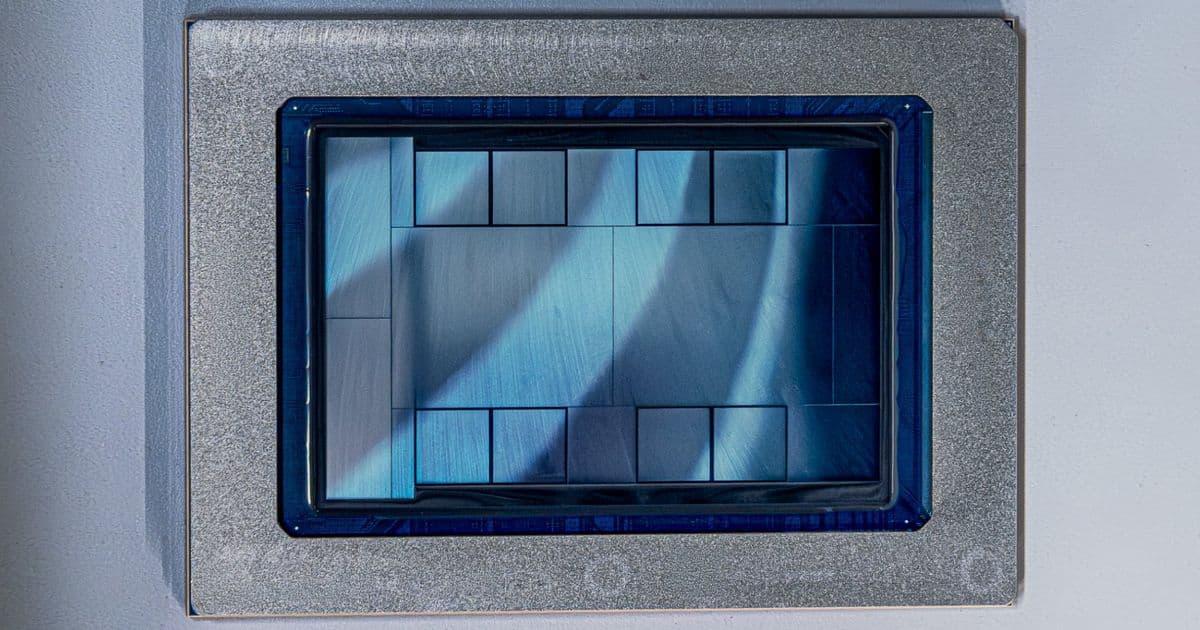
Meta joins Google, AWS, and Microsoft in developing custom AI inference chips, with its MTIA lineup promising 4.5x bandwidth increases and 25x compute improvements as hyperscalers seek alternatives to Nvidia's GPU monopoly.
Meta's announcement of four successive MTIA chip generations marks a pivotal moment in the AI hardware landscape, as hyperscalers accelerate their push to develop dedicated inference silicon and reduce dependence on Nvidia's dominant GPU ecosystem.

The MTIA Family: Four Generations in Two Years
On March 11, Meta unveiled its Meta Training and Inference Accelerator (MTIA) roadmap spanning four chip generations: MTIA 300, 400, 450, and 500. This aggressive timeline sees deployment beginning immediately with the MTIA 300 already in production for ranking and recommendations training, while the MTIA 400 completes lab testing and heads toward data center deployment.
The MTIA 400 features a 72-accelerator scale-up domain and represents Meta's first inference-optimized chip. The MTIA 450 and 500, scheduled for mass deployment in early and late 2027 respectively, push the boundaries of HBM memory bandwidth—a metric Meta identifies as the critical bottleneck for AI inference performance.
Across the full progression, HBM bandwidth increases 4.5 times from 6.1 TB/s to 27.6 TB/s, while compute FLOPs jump 25 times. The MTIA 450's HBM bandwidth already exceeds that of existing leading commercial products, with the MTIA 500 adding another 50% on top, along with up to 80% more HBM capacity.
Technical Architecture and Deployment Strategy
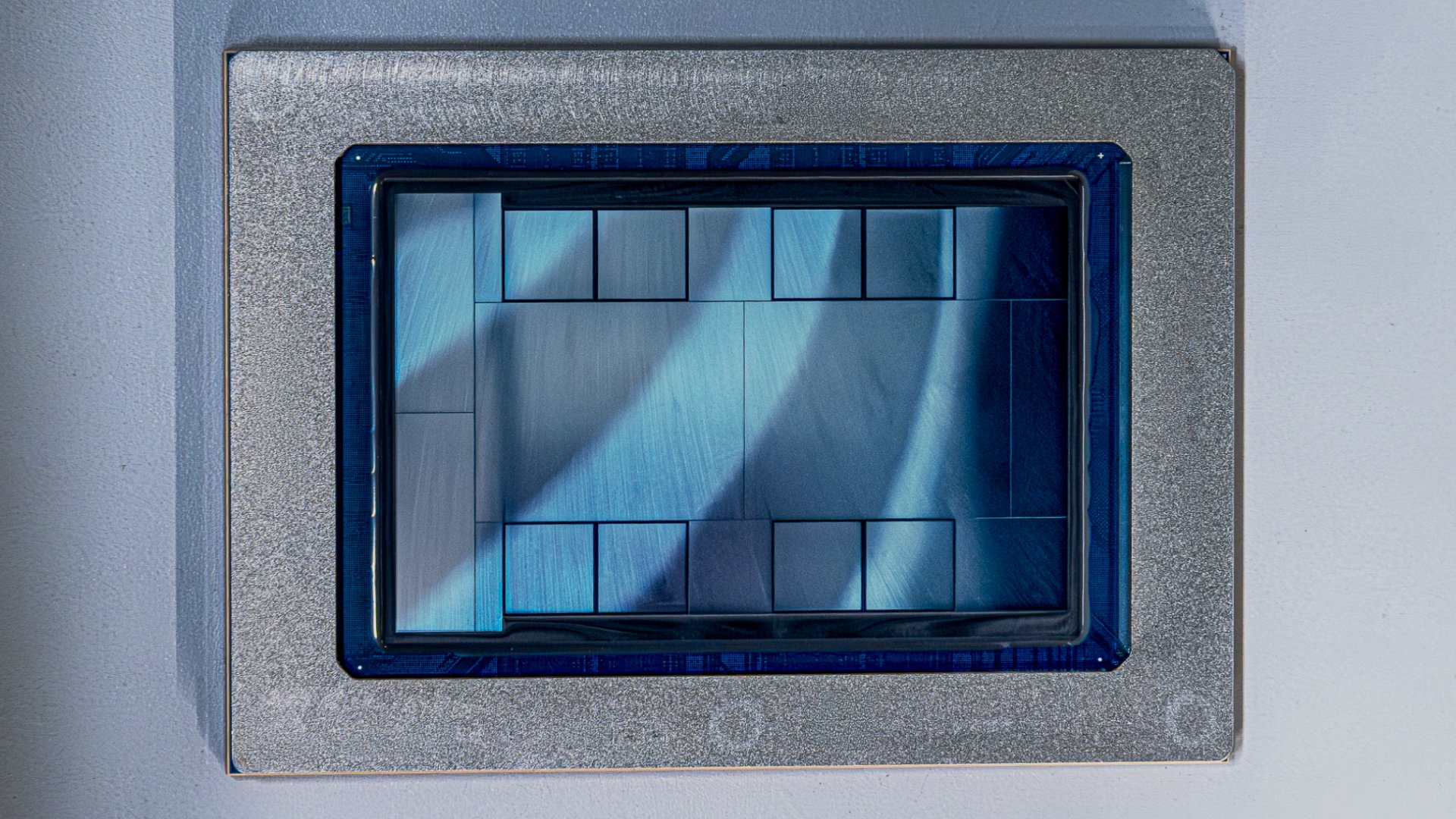
Meta's modular chiplet architecture enables the MTIA 400, 450, and 500 to share the same chassis, rack, and network infrastructure. This compatibility allows each new generation to drop into existing physical footprints without requiring new data center buildouts—a key factor in Meta's roughly six-month development cadence, significantly faster than the industry's typical one-to-two year cycle.
"More importantly, we have deployed hundreds of thousands of MTIA chips in production, onboarded numerous internal production models, and tested MTIA with large language models (LLMs) like Llama," Meta stated in its technical blog post.
The Inference-First Philosophy
Meta's approach centers on the premise that HBM memory bandwidth is the binding constraint on inference performance. The company argues that mainstream chips built for large-scale pre-training are applied less cost-effectively to inference workloads.
This philosophy manifests in the MTIA family's specifications:
| Chip | Workload Focus | TDP | HBM Bandwidth | HBM Capacity | Performance |
|---|---|---|---|---|---|
| MTIA 300 | R&R Training | 800W | 6.1 TB/s | 216 GB | - |
| MTIA 400 | General AI Inference | 1,200W | 9.2 TB/s | 288 GB | 12 PFLOPS |
| MTIA 450 | AI Inference | 1,400W | 18.4 TB/s | 288 GB | 21 PFLOPS |
| MTIA 500 | AI Inference | 1,700W | 27.6 TB/s | 384-512 GB | 30 PFLOPS |
The Hyperscaler Convergence
Meta's announcement comes amid a broader industry shift. Google revealed Ironwood, its seventh-generation TPU, at Google Cloud Next in April 2025, describing it as the first TPU purpose-built for inference and the beginning of an "age of inference." Ironwood delivers 192 GB of HBM3E per chip at 7.37 TB/s of memory bandwidth, scaling to configurations of up to 9,216 AI accelerators.
AWS announced Trainium3 at re:Invent in December, a 3nm chip with 144 GB HBM3E per chip at 4.9 TB/s bandwidth, with a single Trainium3 UltraServer connecting 144 chips. AWS has also maintained its Inferentia product line since 2019.
Microsoft introduced its Maia 200 for inference workloads built on TSMC 3nm, calling it its "most efficient inference system."
Broadcom: The Unifying Force
Broadcom emerges as the critical connector across competing hyperscaler programs, having built both Google's TPUs (as silicon integrator) and Meta's MTIA family. Meta described the MTIA chips as developed "in close partnership with" Broadcom, which it called "a key partner of Meta's AI infrastructure strategy."
The company also secured an agreement in October to help OpenAI build 10 GW of custom ASICs, with deployments beginning as early as this year. This convergence reflects both the capital-intensive nature of custom silicon development and the consistency of underlying architectural requirements.
Software Stack Standardization
Meta builds MTIA natively on PyTorch, vLLM, and Triton, while Google added TPU support for vLLM in beta, and AWS runs its Neuron SDK across PyTorch, TensorFlow, and JAX. These shared inference-serving frameworks ultimately determine how easily production workloads can port between chips.
This portability is what makes the economics of switching from CUDA-locked Nvidia silicon credible at scale. As Meta noted, "We doubled HBM bandwidth from MTIA 400 to 450, making it much higher than that of existing leading commercial products."
Nvidia's Enduring Position
Despite the hyperscaler push, Nvidia retains its position in large-scale pre-training. Frontier model development still overwhelmingly runs on high-end GPU clusters, with Nvidia's Blackwell as the current standard for that workload. Meta itself operates large Nvidia GPU clusters alongside MTIA deployments, and its February 2026 AMD agreement adds further GPU capacity.
Instead, what's emerging is workload segmentation, whereby custom silicon takes high-volume, predictable inference workloads while GPUs retain training. MTIA 450 and 500 are designed to cover AI inference production through 2027, while Google, AWS, and Microsoft have each made equivalent commitments on their own timelines.
At the point where inference represents the bulk of AI compute cycles, hyperscalers appear to have collectively decided that paying a premium for GPUs to run those workloads is no longer financially sound.
The question isn't whether Nvidia will lose its AI dominance entirely, but rather how much market share hyperscalers can capture through custom silicon before the next architectural shift occurs. With Meta's MTIA family joining Google's Ironwood, AWS's Trainium, and Microsoft's Maia in a coordinated push toward inference-optimized hardware, the answer increasingly appears to be "a substantial portion."
Comments
Please log in or register to join the discussion