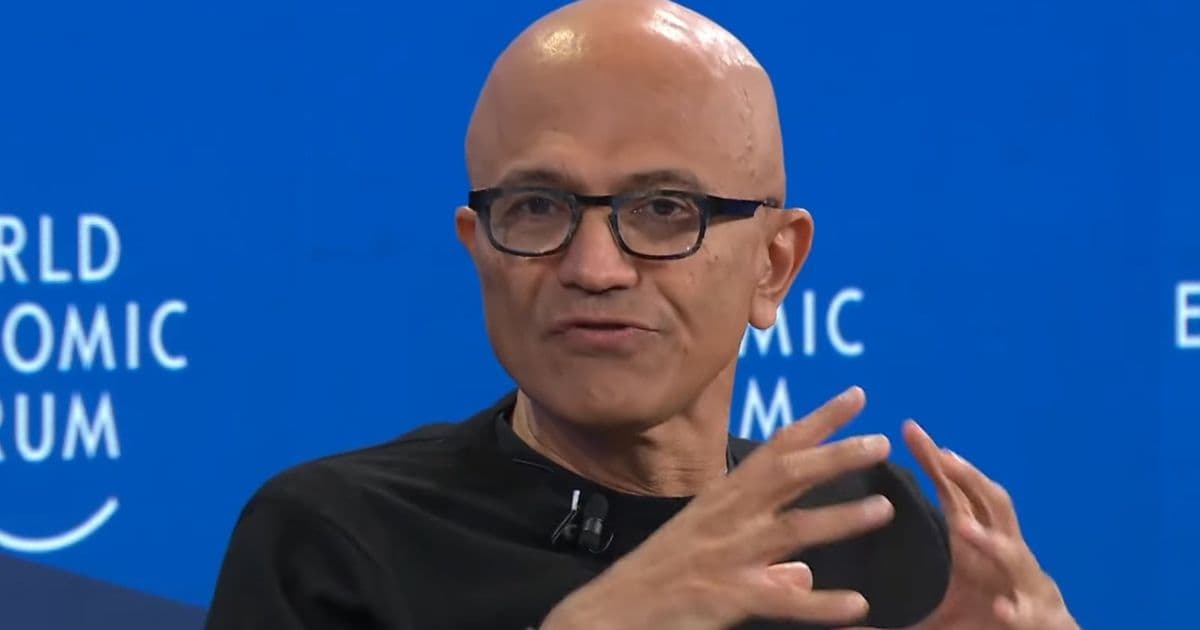
At the World Economic Forum, Satya Nadella framed AI's future in stark terms: without tangible improvements in health, education, and economic efficiency, the industry risks losing public support for its massive energy consumption. His comments come as hardware shortages persist and skepticism grows about AI's real-world impact.
At this year's World Economic Forum in Davos, Microsoft CEO Satya Nadella delivered a stark warning to the AI industry: if the technology doesn't prove its utility in concrete, measurable ways, society will revoke its "social permission" to consume vast amounts of energy. The statement, made during a conversation at the annual gathering of global leaders and business elites, frames AI's future in terms of practical outcomes rather than speculative potential.
"We will quickly lose even the social permission to take something like energy, which is a scarce resource, and use it to generate these tokens, if these tokens are not improving health outcomes, education outcomes, public sector efficiency, private sector competitiveness, across all sectors, small and large, right?" Nadella said. "And that, to me, is ultimately the goal."
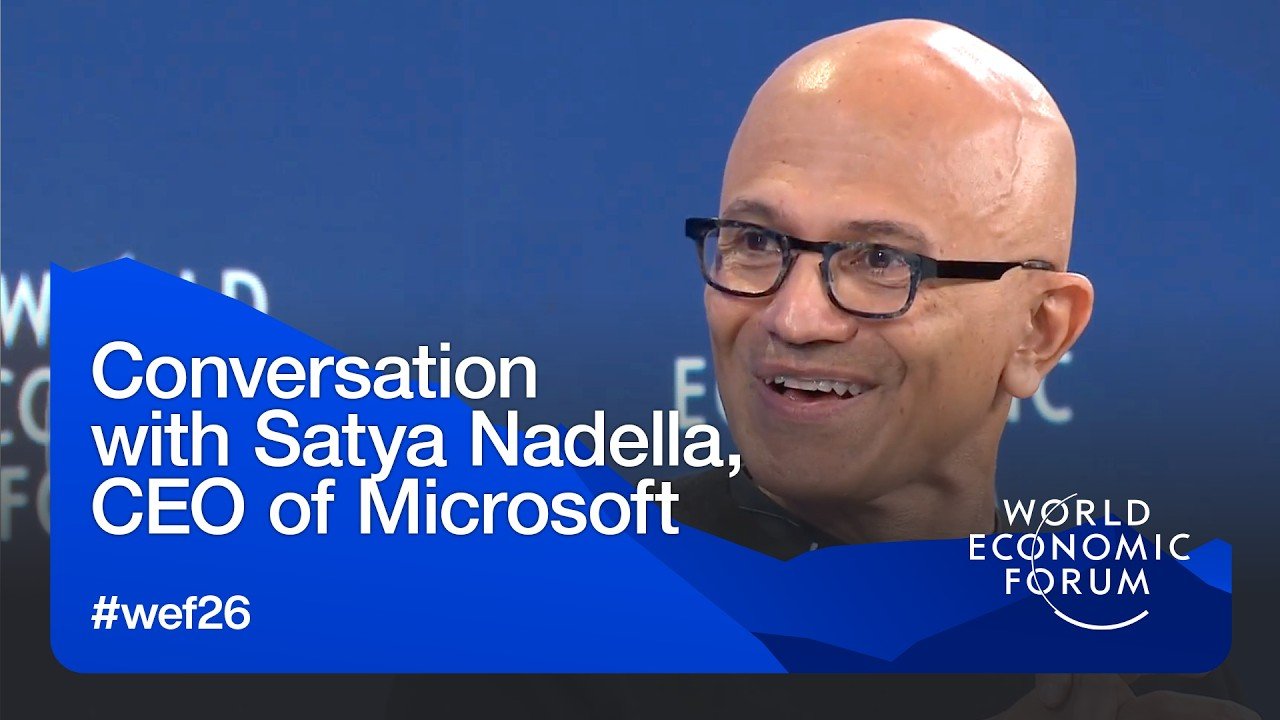
The comment comes at a critical juncture for the AI industry. While companies continue to invest billions in data center expansion and model training, consumer and enterprise adoption has been slower than anticipated. A recent report by researchers associated with the MIT Media Lab found that despite massive investment, "95% of organizations are getting zero return" from AI adoption. Meanwhile, hardware shortages persist—Nadella himself acknowledged that the current task of building out "a ubiquitous grid of energy and tokens" is "currently making it impossible to buy a stick of RAM at a reasonable price."
Nadella's prescription for the demand side was equally direct. He argued that both employers and job seekers must simply start using AI, comparing the acquisition of AI skills to mastering Excel for employability. "People need to say, 'Oh, I pick up this AI skill, and now I'm a better provider of some product or service in the real economy,'" he said, calling AI a "cognitive amplifier" that provides "access to infinite minds."
The Microsoft CEO provided one concrete example: medical transcription. "When a doctor can spend more time with the patient, because the AI is doing the transcription and entering the records in the EMR system, entering the right billing code so that the healthcare industry is better served across the payer, the provider, and the patient, ultimately—that's an outcome that I think all of us can benefit from."
This example highlights both the promise and the complexity of AI implementation. While some medical professionals report "tremendous benefits" from AI scribes, the technology also raises concerns about privacy and system design. The billing code example, in particular, touches on deeper structural issues in healthcare—does AI optimize a flawed system, or could it enable more fundamental redesign?
Nadella addressed the growing skepticism about AI's potential, including concerns about a bubble. He argued that the current phase of tech partnerships and infrastructure spending represents necessary groundwork rather than speculative excess. His confidence rests on the belief that AI will "bend the productivity curve" and bring "economic growth all around the world, not just economic growth driven by capital expense."
The Microsoft CEO's comments reflect a broader industry tension between ambitious vision and practical implementation. While companies continue to develop increasingly capable models, the applications that demonstrate clear, measurable value remain limited. Many AI tools still primarily handle transcription, summarization, and code assistance—useful functions, but perhaps not the societal transformation some investors anticipate.
The energy question adds urgency to this discussion. Training large language models requires enormous computational resources, and the environmental impact has drawn increasing scrutiny. Nadella's warning suggests that the industry cannot indefinitely rely on future potential to justify current consumption; it must demonstrate present value.
For the gaming community, which has seen AI increasingly integrated into tools and services, these questions have practical implications. The hardware shortages Nadella mentioned directly affect gamers and PC builders, who continue to face elevated prices for components like RAM and graphics cards. The industry's ability to prove AI's utility may determine whether these resource constraints persist or ease.
As the AI industry moves from research to deployment, Nadella's framework provides a clear benchmark: measurable improvements in health, education, public efficiency, and private competitiveness. The coming years will test whether the technology can deliver on these promises, or whether society will indeed question the energy cost of generating tokens that don't meaningfully improve outcomes.
Comments
Please log in or register to join the discussion