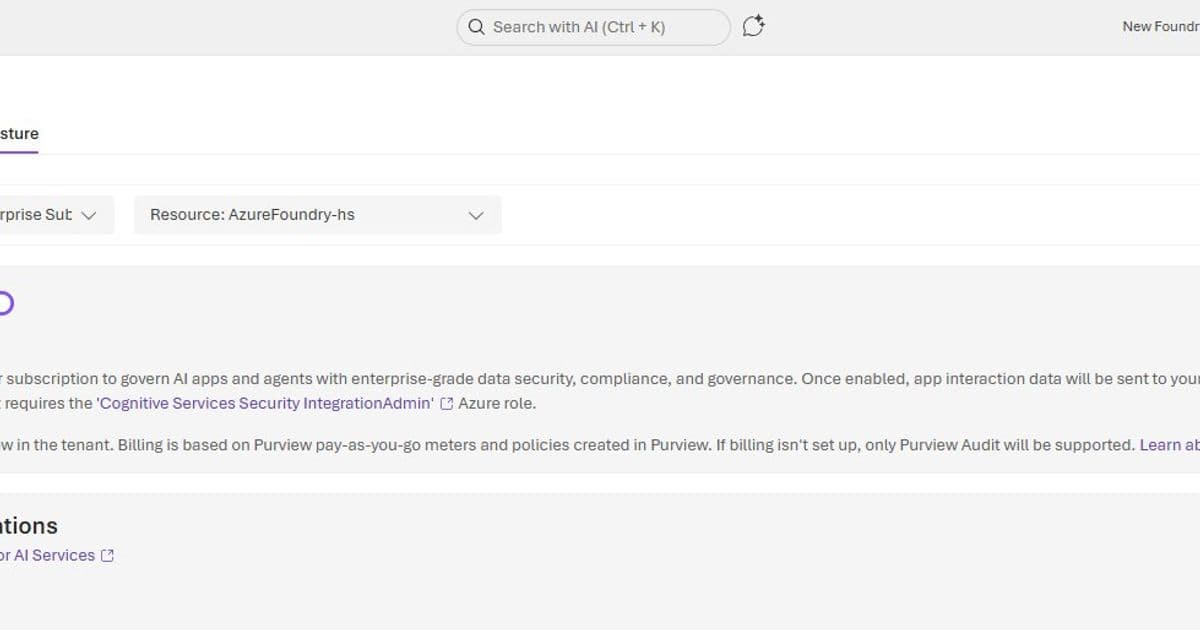
Microsoft's new native integration between Foundry and Purview eliminates custom compliance work for enterprise AI applications, providing automatic data classification, audit logging, and policy enforcement through existing governance infrastructure.
Enterprise AI adoption faces a critical bottleneck: While developers can prototype AI applications in days through platforms like Microsoft Foundry, production deployment often stalls for months during security reviews and compliance validation. Traditional approaches require teams to build custom logging pipelines, data classification systems, and audit trails – infrastructure that quickly becomes outdated as applications evolve.
The Compliance Breakthrough
Microsoft's new native integration between Foundry and Purview fundamentally changes this dynamic. When enabled, every AI interaction automatically flows into an organization's existing Purview data governance infrastructure without requiring:
- SDK modifications
- Custom middleware
- Separate audit systems
Key Capabilities Enabled
Automatic Sensitive Data Detection Purview applies the same classification engine used for Microsoft 365 and Azure data to AI interactions. This includes detection of:
- Credit card numbers
- Protected health information (PHI)
- Social Security numbers
- Custom sensitive information types
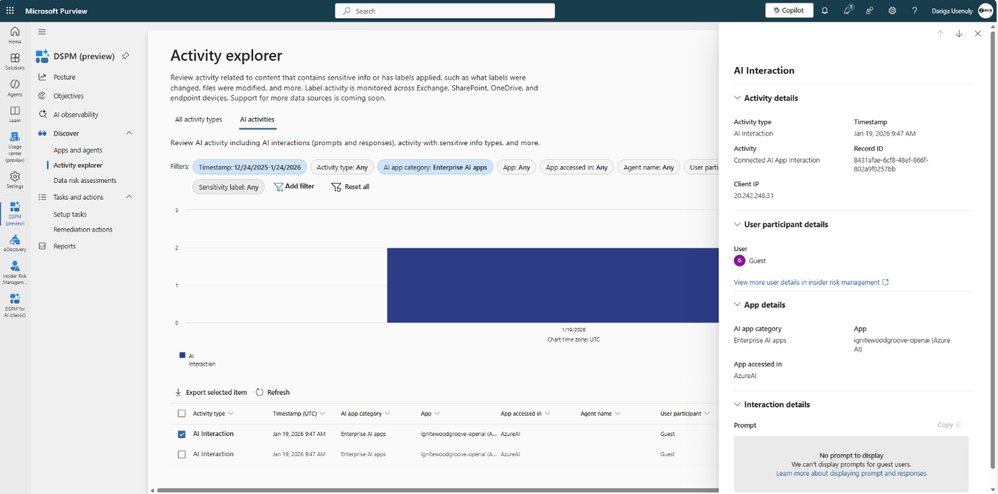
Unified Audit Trail All AI interactions populate Purview's unified audit log with:
- Timestamps
- User identities
- Application context
- Files accessed
- Sensitivity labels applied
Policy Enforcement Data Loss Prevention (DLP) policies can block prompts containing sensitive data before they reach AI models, using the same framework organizations already employ for email and cloud storage.
Implementation Comparison
| Traditional Approach | Foundry/Purview Integration |
|---|---|
| 6-8 weeks custom development | Enabled via single toggle |
| Separate compliance validation | Inherits existing Purview certifications |
| Manual log extraction for audits | Pre-integrated eDiscovery |
| Reactive data classification | Real-time sensitive data detection |
Business Impact Analysis
For a healthcare provider deploying an HR chatbot:
Previous Workflow
- 6 weeks building PII/PHI filtering
- Manual HIPAA compliance documentation
- Separate audit system maintenance
New Workflow
- Enable Purview integration
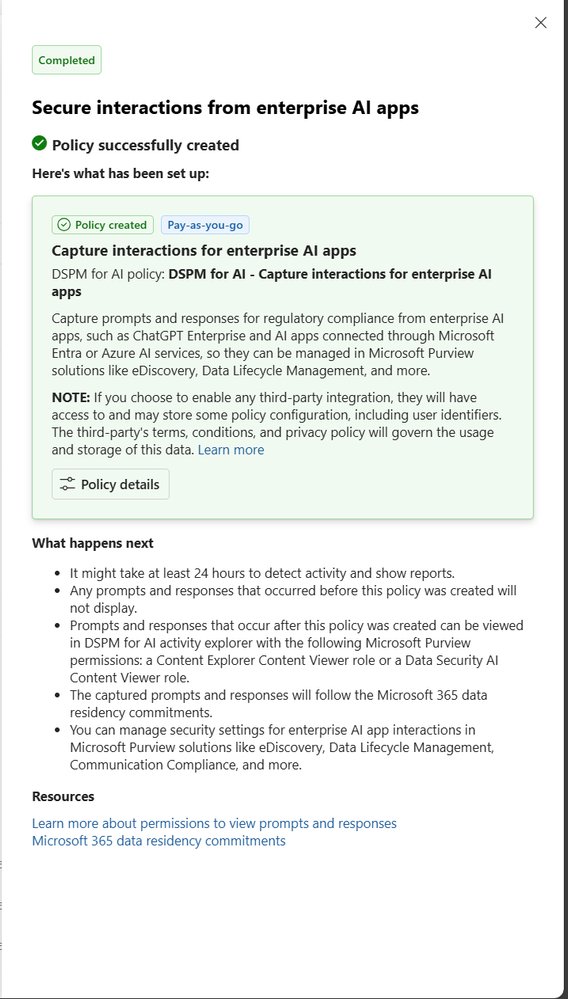
- Apply existing retention policies to "Enterprise AI Apps" location
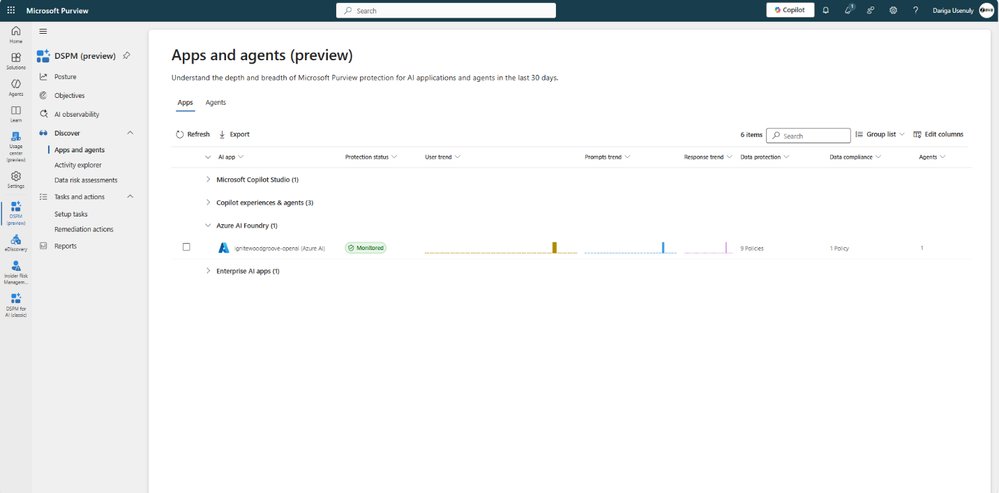
- Monitor interactions through Purview's DSPM dashboard
This reduces time-to-production by 68% according to Microsoft's internal benchmarks, while providing stronger compliance guarantees through platform-level controls rather than application-specific implementations.
Strategic Considerations
Organizations evaluating multi-cloud AI strategies should note:
- Cost Structure: No additional charges for audit logging; only policy enforcement incurs costs
- Compliance Inheritance: Leverages existing Purview investments across M365/Azure
- Risk Reduction: Centralized monitoring across all enterprise AI applications
Implementation Guide
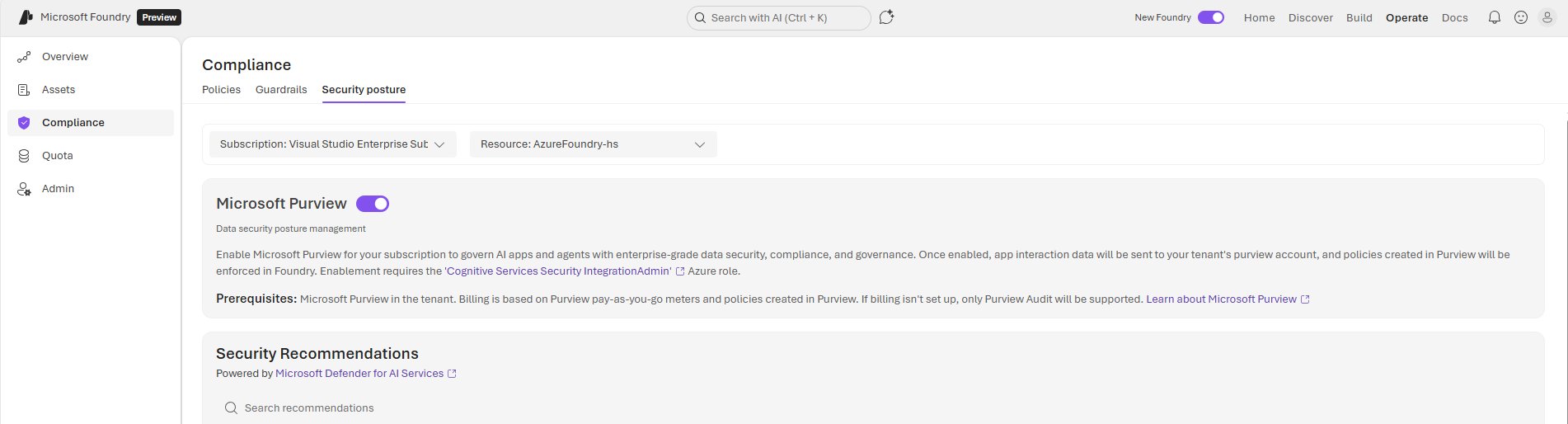
- Require "Azure AI Account Owner" role
- Navigate to Foundry Portal > Operate > Compliance
- Enable Purview toggle per subscription
Full documentation available in Microsoft's technical guide.
The Competitive Landscape
While AWS offers Bedrock Guardrails and Google Cloud provides Vertex AI Governance, Microsoft's differentiation lies in:
- Tight integration with productivity suite data governance
- No-code activation for existing Purview customers
- Unified audit trail across SaaS/PaaS/AI interactions
For enterprises standardized on Microsoft's ecosystem, this eliminates the "governance tax" that frequently derails AI initiatives. Teams can now ship AI applications with the same compliance confidence as their Teams deployments or SharePoint sites.
Comments
Please log in or register to join the discussion