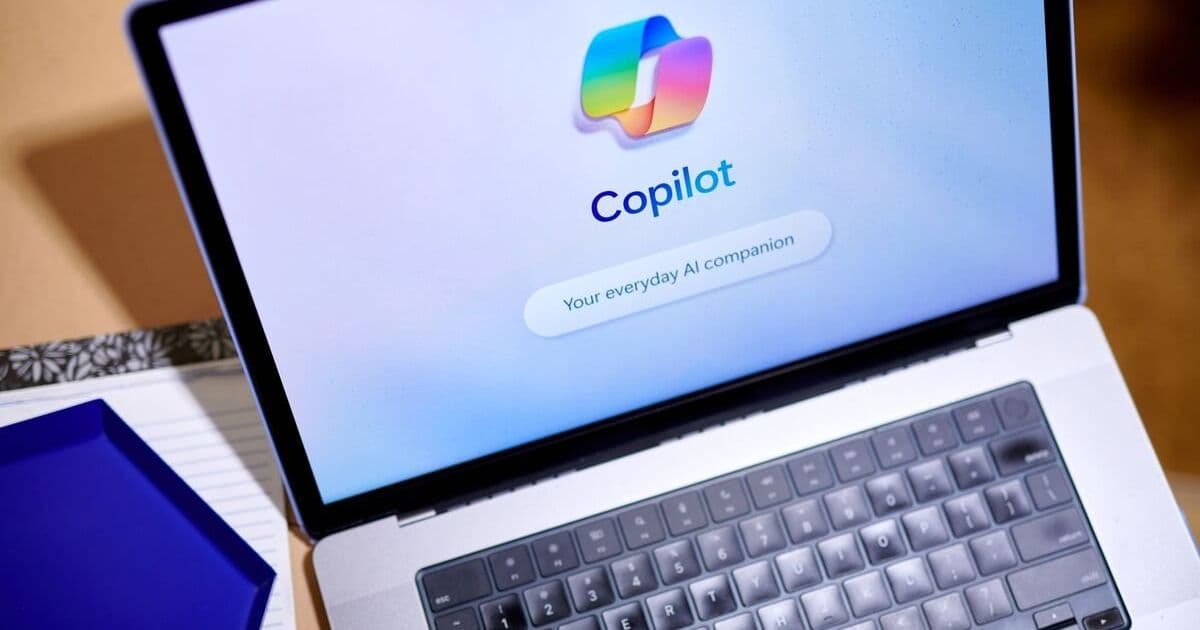
Microsoft's Judson Althoff reports Copilot sales met "audacious goals" in Q3, but adoption remains low with just 3% of customers paying for the AI assistant as of January 2026.
Microsoft's Copilot AI assistant has achieved its ambitious sales targets for the third quarter, according to Judson Althoff, the company's executive vice president of worldwide commercial business. However, the numbers reveal a significant gap between sales success and actual customer adoption.
Speaking about the company's performance, Althoff stated that Copilot sales had hit "some pretty big audacious goals" in Q3. This suggests Microsoft has been successful in convincing businesses to purchase Copilot licenses and integrate the AI assistant into their workflows. The company has been aggressively marketing Copilot as a productivity enhancer that can help users draft emails, summarize documents, analyze data, and automate routine tasks across Microsoft 365 applications.
Despite this sales momentum, the reality of customer adoption tells a different story. As of January 2026, only 3% of Microsoft's customer base was actually paying for Copilot subscriptions. This low conversion rate indicates that while many organizations may have purchased Copilot licenses—possibly as part of broader Microsoft 365 agreements—the majority of users have not yet committed to paying for the service separately.
The disparity between sales achievements and paid adoption highlights the challenges Microsoft faces in convincing customers of Copilot's value proposition. Many businesses may be in a testing or evaluation phase, using free trials or bundled licenses to assess whether the AI assistant delivers sufficient productivity gains to justify ongoing subscription costs.
This situation reflects broader challenges in the enterprise AI market, where companies are still determining how to measure and justify the return on investment for AI-powered productivity tools. While Copilot offers compelling features, organizations may be hesitant to commit to additional subscription fees without clear evidence of tangible benefits.
The 3% paid adoption rate also suggests that Microsoft may need to refine its pricing strategy or demonstrate more compelling use cases to drive broader customer acceptance. The company has been positioning Copilot as a transformative tool for knowledge workers, but the low conversion rate indicates that many customers remain unconvinced or are taking a wait-and-see approach.
Microsoft's experience with Copilot mirrors challenges faced by other AI tool providers in the enterprise space. While there is significant interest in AI-powered productivity solutions, translating that interest into sustained, paid adoption remains a hurdle. Companies are balancing the potential benefits of AI assistance against cost considerations and the need to integrate these tools into existing workflows.
The sales achievement reported by Althoff demonstrates Microsoft's strong sales execution and market presence, but the low paid adoption rate suggests that the company still has work to do in converting interest into committed usage. As the AI assistant market continues to evolve, Microsoft's ability to bridge this gap will be crucial for Copilot's long-term success and its role in the company's AI strategy.
Microsoft's approach to addressing this challenge may include refining Copilot's feature set, adjusting pricing models, or providing more robust case studies and ROI metrics to help customers justify the investment. The company's large enterprise customer base and deep integration with Microsoft 365 give it significant advantages, but converting that base into paying Copilot users remains a key priority.
As AI assistants become increasingly central to workplace productivity, the gap between sales success and paid adoption highlighted by these numbers will likely influence how Microsoft and competitors approach product development, pricing, and customer education in the coming months.
Comments
Please log in or register to join the discussion