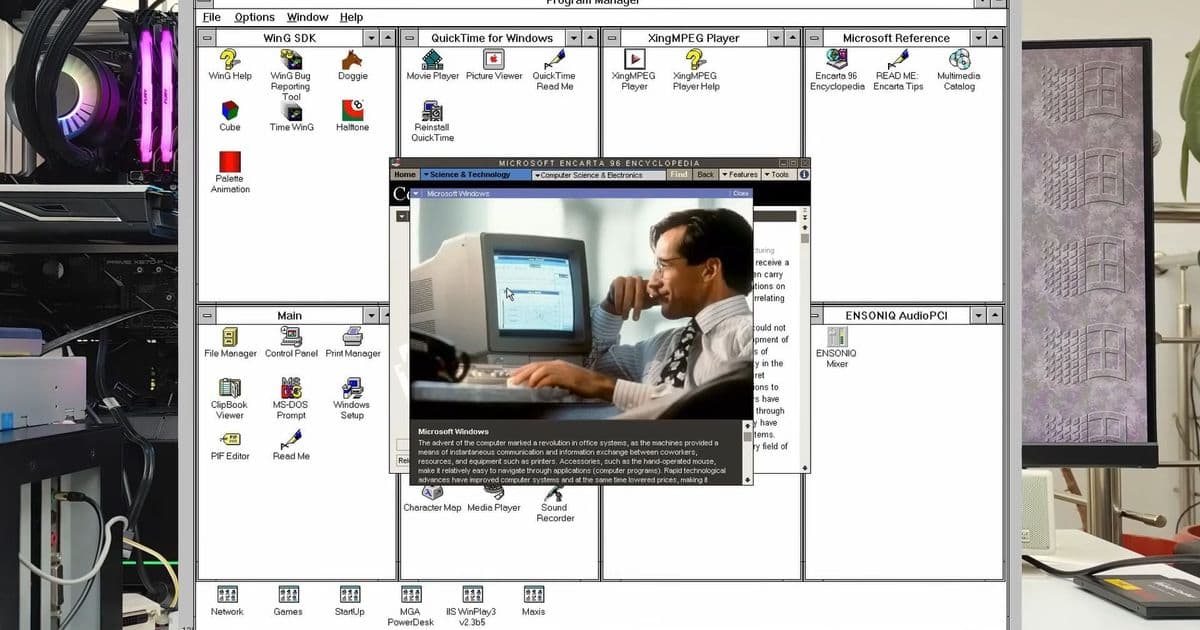
A retro computing enthusiast successfully installed Windows 3.1X on cutting-edge 2024 hardware, demonstrating remarkable backward compatibility through creative workarounds and modern driver patches.
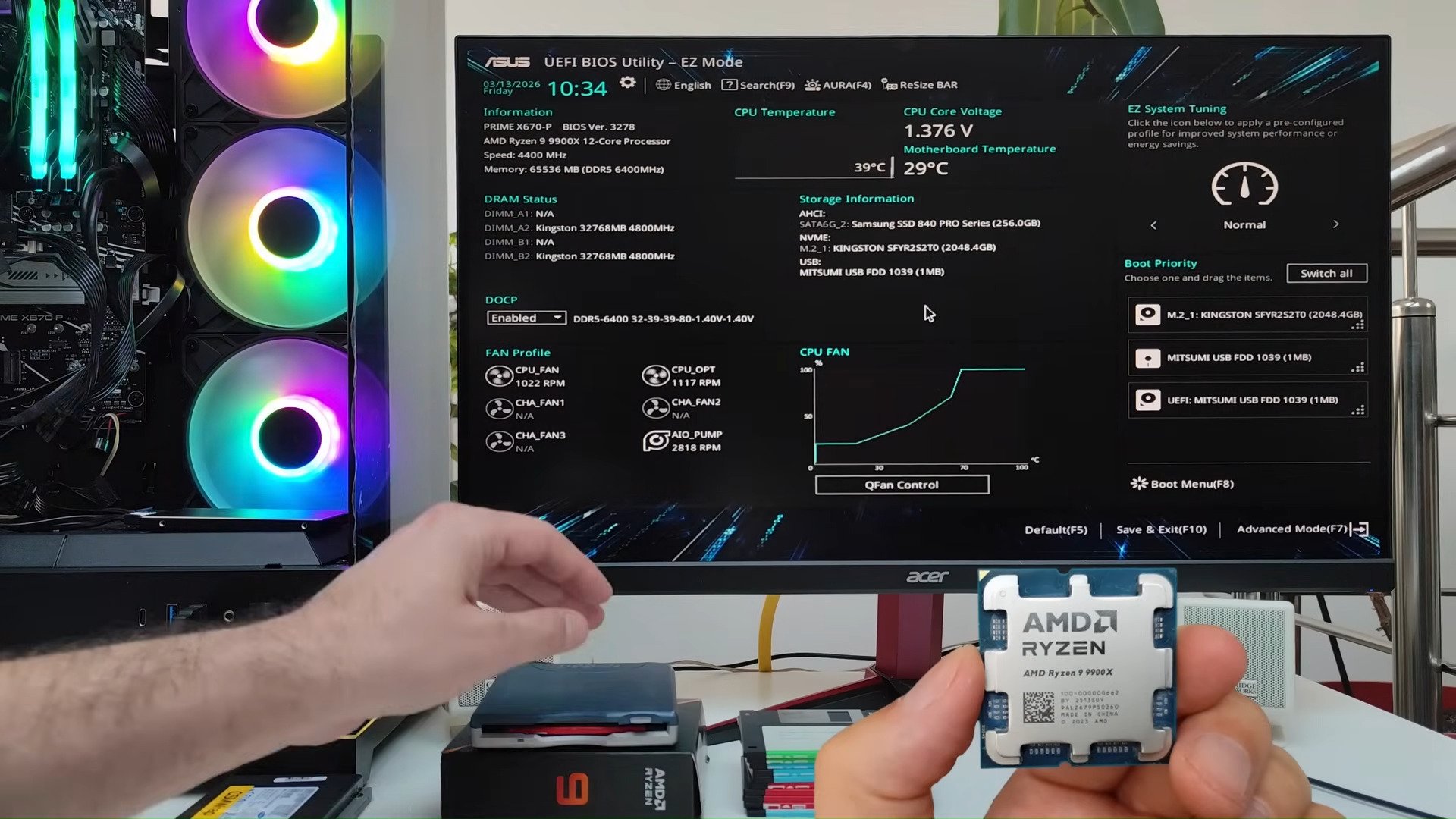
A retro computing enthusiast has achieved what many would consider impossible: successfully installing and running Microsoft Windows 3.1X on a modern bare-metal system featuring a Ryzen 9 9900X processor and RTX 5060 Ti graphics card. This remarkable feat bridges a 32-year gap between a 1992 operating system and 2024 hardware, showcasing both the enduring design of Windows 3.1X and the flexibility of modern computing platforms.
The Hardware Challenge
The system at the center of this experiment features some of the most advanced consumer hardware available in 2024. The Ryzen 9 9900X represents AMD's latest Zen 5 architecture, while the RTX 5060 Ti utilizes NVIDIA's cutting-edge Blackwell GPU architecture. Running a 32-bit operating system from the early 1990s on such modern hardware presents numerous compatibility challenges that would seem insurmountable at first glance.
The Motherboard's Crucial Role
A key enabler of this project was the choice of motherboard. The Asus motherboard used in this build includes a "classic BIOS" functionality that proved instrumental to the success of the installation. When the built-in Compatibility Support Module (CSM) was enabled, it allowed the system to properly interface with the ancient Windows 3.1X installer without the modern UEFI restrictions that would typically prevent such an installation.
Installation Process
The installation began with a set of Spanish-language Windows 3.1X backup floppy disks from 1992. The enthusiast used a USB-attached 3.5-inch floppy drive, which the installer recognized as Drive A: without issue. Interestingly, the original 1992 media showed no signs of deterioration or bit rot, a testament to proper storage over three decades.
Before beginning the Windows 3.1X installation proper, the system was initially prepared using a Windows 95 boot floppy to create a bootable DOS FAT16 partition. This preparatory step was necessary to establish the proper filesystem structure that Windows 3.1X expects during installation.
Overcoming the First Hurdle
The initial installation appeared successful, but the system crashed immediately upon transitioning from the DOS prompt to the Windows 3.1X graphical user interface. This crash was caused by a conflict between Windows 3.1X's Enhanced Mode and the modern hardware configuration.
The solution was elegantly simple: switching to Standard Mode. While Standard Mode was originally intended for pre-i386 systems, it proved invaluable for this project due to its greater compatibility with modern hardware. This single mode switch was all that was needed to get Windows 3.1X running on the Ryzen 9 and RTX 5060 Ti system.
Graphics Enhancement
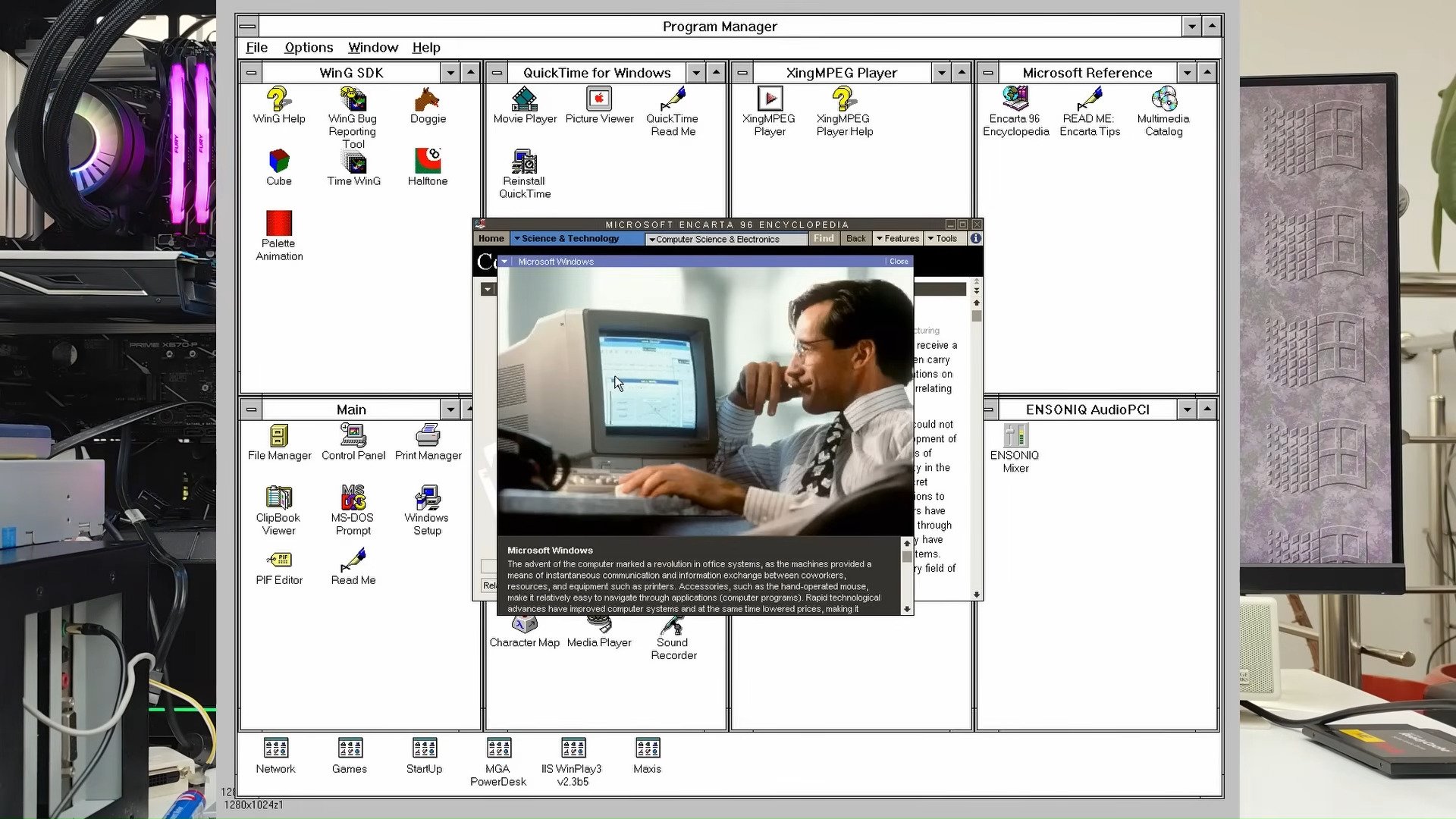
With the system successfully booting, attention turned to improving the visual experience. The initial graphics output was described as "glitchy" and running at a low resolution. The solution came in the form of the VBESVGA graphics driver from PluMGMK on GitHub.
This driver made a dramatic difference, scaling the Windows 3.1X interface properly to the display's native 1920 x 1080 resolution. More impressively, it enabled full functionality of the RTX 5060 Ti graphics card without any issues. The tinkerer noted that this driver had previously been "picky with Nvidia cards" and slightly glitchy, but had matured significantly through its 44 beta releases.
Achieving Enhanced Mode
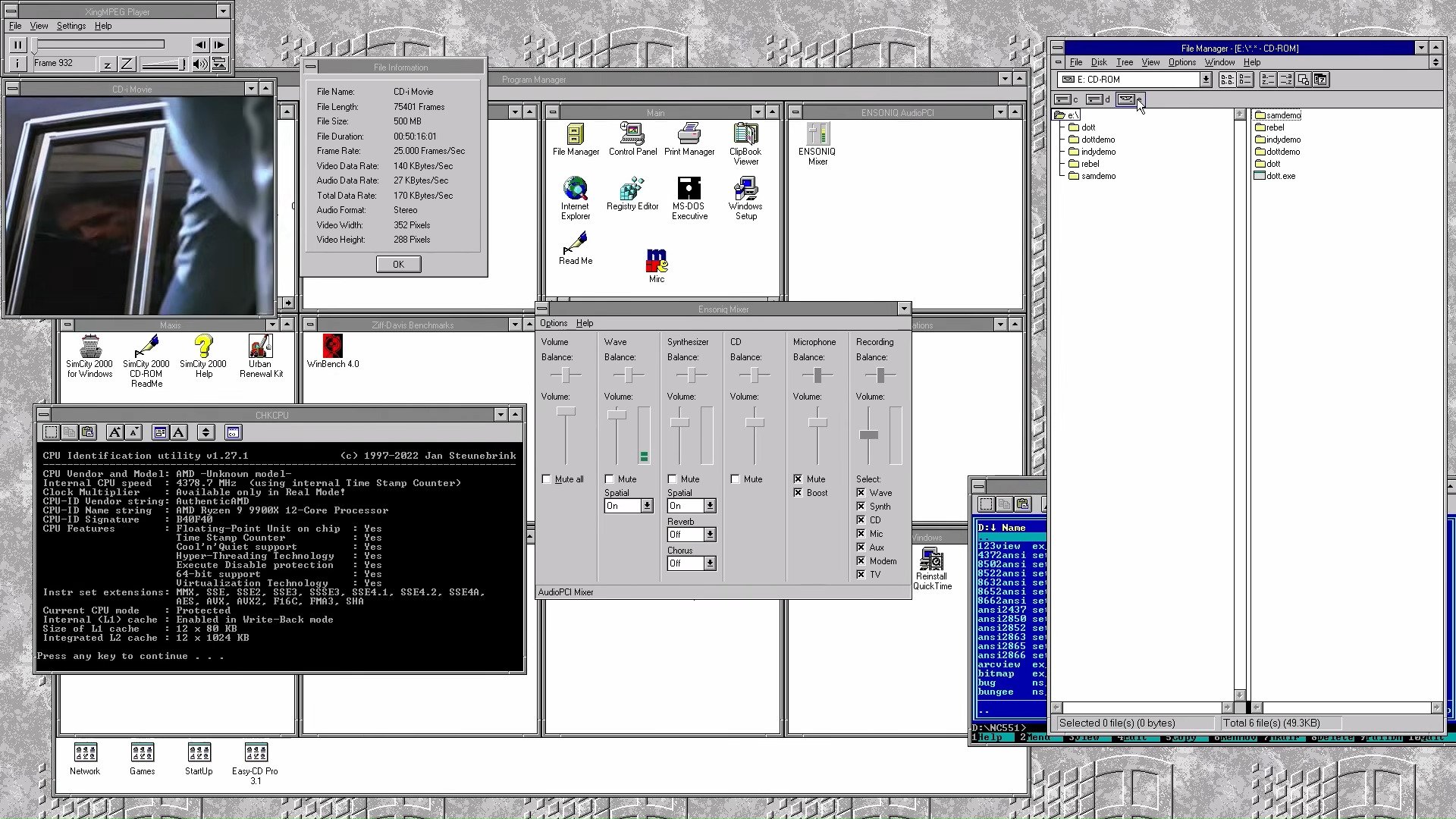
With graphics working properly, the next goal was to enable Enhanced Mode to unlock benefits such as virtual memory and improved multitasking. This was particularly important because the chosen sound card required Enhanced Mode to function properly.
The solution involved installing AHCIFIX.386, also from the same GitHub source as the VBESVGA driver. Installation was straightforward, requiring only a file copy and the addition of a single line to the System.ini configuration file.
Sound Card Compatibility
The audio solution chosen for this build was an Ensoniq ES1370 audio PCI card. While other sound cards with Windows 3.1 drivers were tried, this particular card was the only one known to work with modern hardware using original drivers while maintaining MIDI support. The enthusiast noted that other brand cards using the same chip were not compatible in his experience.
The Complete Solution
Through this combination of hardware choices, driver modifications, and configuration tweaks, the enthusiast successfully created a fully functional Windows 3.1X system running on what is essentially cutting-edge hardware. The project demonstrates that with sufficient knowledge and persistence, even operating systems from the early 1990s can be made to work on modern systems.
For those interested in attempting similar projects, the video description includes a link to a Windows 3.1 update script that guides users from the original floppy disks to a fully working Enhanced Mode system running on bare metal.
This achievement represents more than just a technical curiosity; it showcases the remarkable backward compatibility that can be achieved through creative problem-solving and the enduring quality of well-designed software architectures. The fact that a 32-year-old operating system can be coaxed into running on hardware that didn't exist when it was created speaks volumes about both the original design decisions made by Microsoft and the flexibility of modern computing platforms.
Watch the full video demonstration to see this impressive technical achievement in action and learn more about the specific steps taken to make it possible.
Comments
Please log in or register to join the discussion