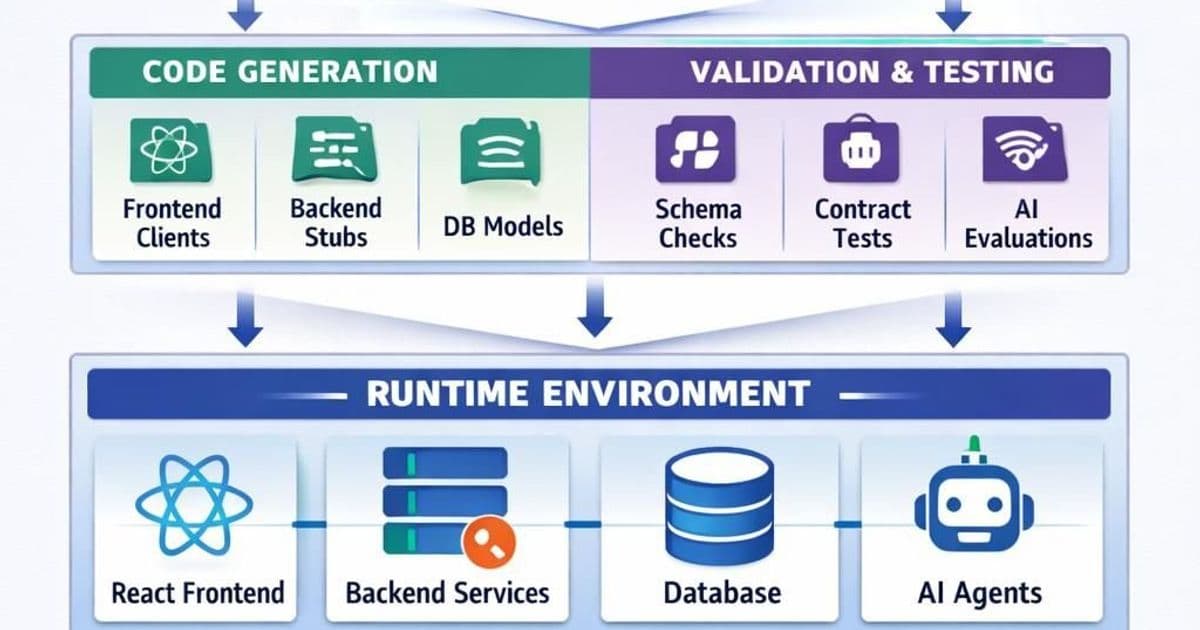
Microsoft advances Spec-Driven Development as the essential methodology for coordinating AI coding agents within complex enterprise architectures, offering structured specifications that bridge business requirements with technical implementation.
The emergence of AI coding agents has transformed how we approach software development, but with this transformation comes new challenges in ensuring these agents produce code that aligns with business requirements. Microsoft is positioning Spec-Driven Development (SDD) as the critical methodology for addressing this challenge in enterprise environments, particularly for systems with React frontends, backend APIs, databases, and shared libraries.
The Evolution of Spec-Driven Development in the AI Era
Spec-Driven Development has evolved from primarily serving human teams to becoming essential infrastructure for AI coding agents. While traditional SDD focused on aligning human developers with business requirements, the modern context adds AI agents to this equation. These agents need structured, machine-readable specifications to generate code that actually matches what the business needs, rather than hallucinating solutions based on incomplete or ambiguous context.
Microsoft's approach treats specifications as layered and modular rather than monolithic documents, drawing from Domain-Driven Design (DDD) principles with bounded contexts. This layered approach includes:
- Business and domain layer: Technology-agnostic specifications capturing business capabilities, domain language, entities, rules, and non-functional requirements
- Solution and architecture layer: System context, service boundaries, integration patterns, and data models
- Implementation-oriented specs per component: Detailed specifications for each concrete component
This structure provides the necessary context for both human developers and AI agents to work effectively.
Microsoft's SDD Approach Compared to Alternatives
Microsoft's implementation of SDD distinguishes itself through deep integration with their cloud ecosystem and development tools. While other providers offer parts of this puzzle, Microsoft provides a comprehensive approach:
- Azure DevOps integration: Spec versioning links directly to work items, releases, and deployment artifacts
- Azure API Management: Native support for OpenAPI and AsyncAPI contracts with enforcement capabilities
- Architecture Decision Records (ADRs): Formalized approach to documenting architectural decisions
- Well-Architected Framework: Incorporates SDD principles into broader cloud architecture guidance
Compared to standalone SDD approaches or offerings from other cloud providers, Microsoft's solution provides tighter integration between specifications, implementation, and operational monitoring. The Azure ecosystem allows for automated validation that implementations match specifications throughout the development lifecycle.
Practical Implementation of Microsoft's SDD Methodology
Microsoft recommends a structured approach to implementing SDD across enterprise systems:
Layered Specification Structure
Business and domain layer: Technology-agnostic specifications including:
- Business capabilities and problem statements
- Domain language and key entities
- Business rules and workflows
- Non-functional requirements (performance, security, compliance, SLAs)
Solution and architecture layer: System design specifications including:
- System context and C4-style diagrams
- Service boundaries and ownership
- Integration patterns and event flows
- Data ownership and high-level models
Implementation-oriented specs per component: Detailed specifications for each concrete component
Templates and Standards That Scale
Microsoft recommends using a base template extended with technology-specific sections:
- Base specification template: Purpose, scope, stakeholders, requirements mapping, architecture overview, contracts, non-functional requirements, risks, test criteria
- Extended templates per component: Technology-specific sections like UX flows for frontends, OpenAPI links for APIs, schema definitions for databases
Contract Management and Versioning
For API contracts, Microsoft emphasizes:
- OpenAPI or AsyncAPI as the source of truth
- Explicit versioning (v1, v2) rather than breaking changes
- Contract testing to keep providers and consumers aligned
- Database migration planning with tooling like EF Core migrations, Flyway, or Liquibase
Business Impact and ROI Considerations
Organizations adopting Microsoft's SDD approach report several key benefits:
Improved alignment between business requirements and implementation: The structured specification process ensures that both human developers and AI agents build what's actually needed
Reduced rework and debugging: Machine-readable specifications catch mismatches earlier in the development process
Enhanced scalability: Modular specifications allow teams to work independently while maintaining system coherence
Better knowledge retention: Specifications serve as living documentation that evolves with the system
Improved onboarding: New team members and AI agents can quickly understand system architecture and requirements
Migration Path for Organizations Adopting SDD
For organizations looking to adopt SDD, Microsoft recommends a gradual approach:
Start with one domain: Pick a bounded context like "Orders" and implement a thin but end-to-end SDD flow
Define minimal viable specifications: Focus on the most critical aspects rather than attempting perfect documentation from day one
Implement automated validation: Use CI/CD pipelines to validate that implementations match specifications
Iterate and expand: Once the initial domain feels natural, expand to other domains and refine the process
Integrating AI Agents into SDD Workflows
Microsoft's approach specifically addresses how to integrate AI coding agents into SDD workflows:
- LangGraph and multi-agent orchestration: Design graphs where different agents handle specification reading, implementation, and testing
- Model Context Protocol (MCP): Expose specifications as MCP tools so agents can query the source of truth
- BPMN and process flows: Store process diagrams as part of specifications for agents to generate workflow code
- CI/CD validation: Use pipeline gates to block deployments if contracts or specifications aren't met
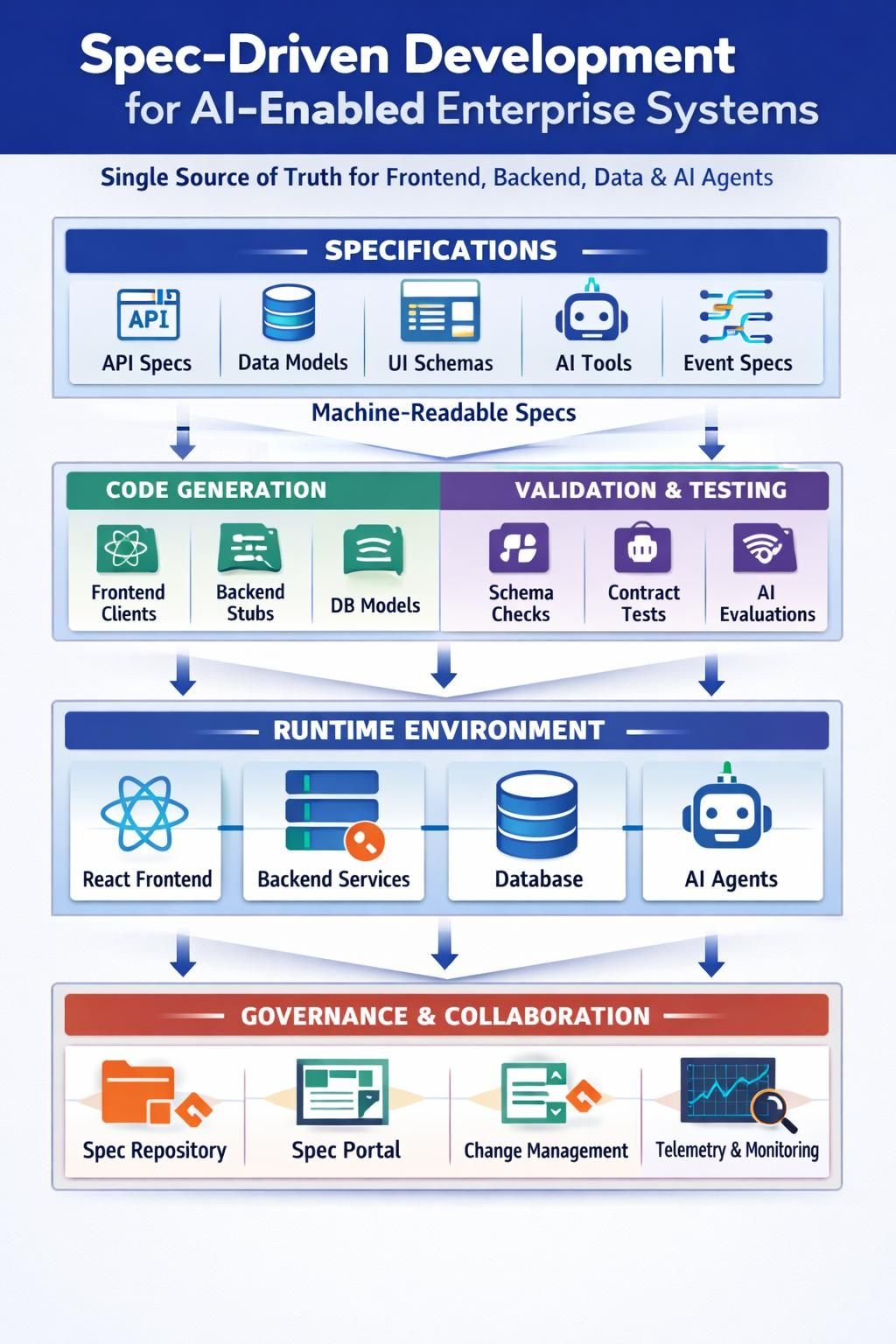
Microsoft's guidance emphasizes that SDD is more than process hygiene for AI-enabled teams—it's how to provide high-quality, unambiguous context so AI agents can generate code, tests, and documentation that match business requirements.
For organizations looking to implement Microsoft's SDD approach, comprehensive documentation is available through their microservices guidance, API design best practices, and Well-Architected Framework.
The evolution toward AI-assisted development makes structured specifications more critical than ever. Microsoft's approach to Spec-Driven Development provides the methodology needed to keep human teams and AI agents aligned, ultimately producing systems that better meet business needs while reducing development friction and errors.
Comments
Please log in or register to join the discussion