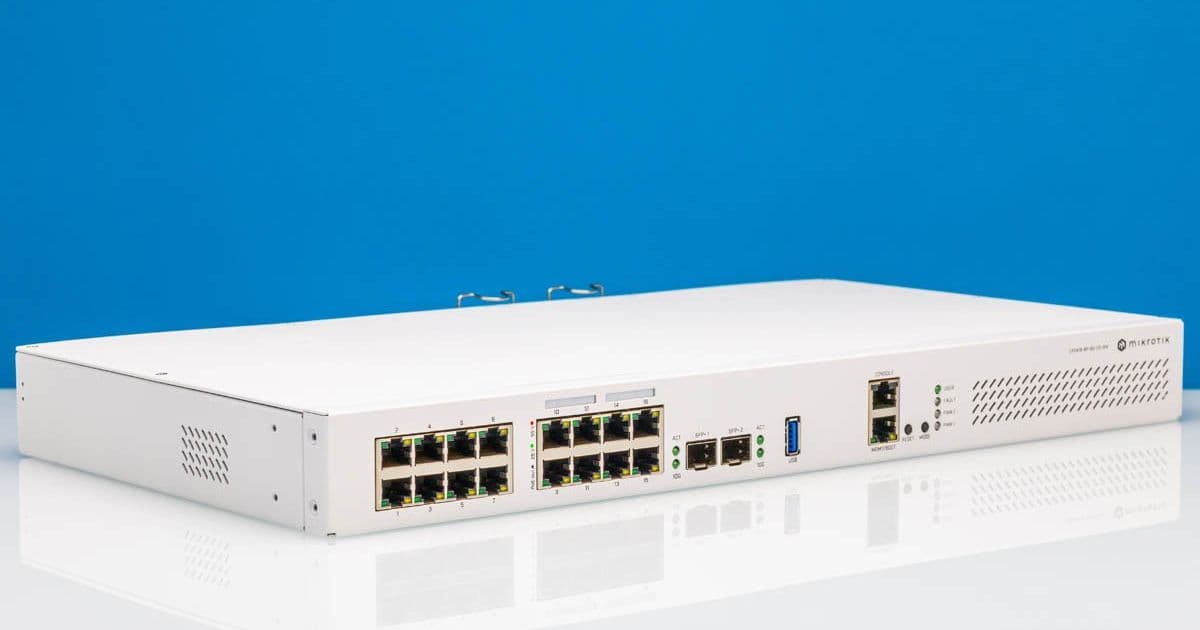
MikroTik's CRS418-8P-8G-2S+RM combines a 16-port 1GbE switch with two 10G SFP+ ports, PoE+ capabilities, and a Qualcomm Arm CPU for routing—all in a 1U rackmount form factor.
The MikroTik CRS418-8P-8G-2S+RM represents an interesting convergence of switching, routing, and power delivery capabilities in a single 1U rackmount device. At its core, it's a 16-port 1GbE switch with two SFP+ 10G ports, but what makes it particularly noteworthy is the integration of a Qualcomm Arm CPU alongside the Marvell Prestera switch chip, combined with PoE+ support across eight ports.
Hardware Overview
The switch chassis follows MikroTik's familiar white metal rackmount design. The front panel houses sixteen 1GbE ports divided into two groups: the first eight are standard Ethernet ports, while the next eight support PoE+ with a total power budget of 150W. This configuration reflects the current market bifurcation where PoE switches are increasingly designed for either higher-power devices like WiFi 7 access points and lighting systems, or lower-power devices like security cameras.
Two SFP+ ports provide 10Gbps connectivity, positioned alongside the 1GbE ports on the switch fabric itself rather than being offloaded to a separate management processor. This design choice impacts performance characteristics that we'll explore later. The device also includes a USB port for configuration and storage, a console port, and a dedicated management port.
Power and Cooling
The rear panel features dual AC power inputs feeding internal power supplies, with wire retention clips to secure the power cables. Four fan vents and active cooling suggest the device can generate significant heat under load, which is confirmed when examining the internal layout. The side panels include ventilation openings that serve a clear purpose once you see the internal thermal design.
Internal Architecture
Opening the switch reveals the architectural decisions that enable its all-in-one functionality. The Marvell Prestera switch chip handles the Layer 2 switching operations, while the Qualcomm Arm CPU provides routing capabilities and overall system management. This separation of duties is common in enterprise networking equipment but relatively uncommon in devices at this price point.
The PoE+ implementation uses dedicated power delivery hardware capable of delivering up to 30W per port across the eight powered ports. Testing with professional tools like the Fluke LinkIQ-Duo and MicroScanner PoE confirmed proper PoE+ operation, with both devices reporting expected power levels and detection sequences.
Performance Characteristics
Where this device becomes particularly interesting is in its performance behavior under different load conditions. The presence of both a high-performance switch chip and a general-purpose Arm CPU creates some unique characteristics:
- Switching performance: The Marvell Prestera chip provides wire-speed switching for all 16x1GbE ports and the two SFP+ ports
- Routing performance: Limited by the Qualcomm CPU, making it suitable for reasonable but not super-fast connections
- PoE delivery: Consistent 150W budget across powered ports, sufficient for most enterprise access points and cameras
- Management overhead: The Arm CPU handles routing, DHCP, firewall, and other network services
During testing, we discovered an interesting performance quirk that emerged specifically because of this high-end hardware configuration. When pushing both switching and routing workloads simultaneously, the system exhibited behavior that wouldn't be present in simpler switch designs.
Market Position and Alternatives
MikroTik also offers the CRS418-8P-8G-2S+5axQ2axQ-RM variant, which adds 4x4 MIMO WiFi 6 capabilities to the same switching and routing foundation. For many users, this WiFi-enabled version may be the better choice, as it provides a complete all-in-one solution. The core switching and routing capabilities remain nearly identical between the two models, with the WiFi version simply adding wireless connectivity.
The 1GbE port limitation may disappoint some users, especially given the proliferation of 2.5GbE devices. However, for typical PoE use cases like security cameras (where 100Mbps is often sufficient) and many access points, 1GbE remains adequate. The 2.5GbE market segment is growing, but 1GbE PoE switches still represent the bulk of deployments for powered devices.
Practical Considerations
For deployment scenarios, the CRS418-8P-8G-2S+RM works best as a core switch in small to medium-sized networks where routing capabilities are needed but 10G performance isn't critical for internal traffic. The PoE+ capability makes it particularly suitable for powering enterprise wireless infrastructure or security camera systems.
The rackmount form factor and active cooling mean it's designed for controlled environments rather than dusty or harsh conditions. The dual power supplies provide redundancy for critical deployments, while the management port allows for out-of-band access even when the main switching fabric is under heavy load.
At approximately $400-500 depending on the retailer, the device sits in a competitive position against other managed PoE switches with routing capabilities. The inclusion of 10G ports and the Qualcomm CPU adds significant value compared to simpler PoE switches, though users needing higher routing throughput might need to look at more expensive options with dedicated routing hardware.
The MikroTik CRS418-8P-8G-2S+RM successfully bridges the gap between simple unmanaged PoE switches and more expensive chassis-based solutions, offering a compelling balance of features, performance, and price for network administrators looking to consolidate switching and routing functions while providing power to connected devices.
Comments
Please log in or register to join the discussion