Seven MIT faculty members and twelve alumni have been elected to the National Academy of Engineering for 2026, representing groundbreaking work across multiple engineering disciplines.
Seven MIT faculty members and twelve alumni have been elected to the National Academy of Engineering (NAE) for 2026, marking one of the highest professional honors in the engineering field. The recognition highlights MIT's continued leadership in engineering research, education, and innovation across diverse disciplines.
Seven MIT Faculty Members Elected
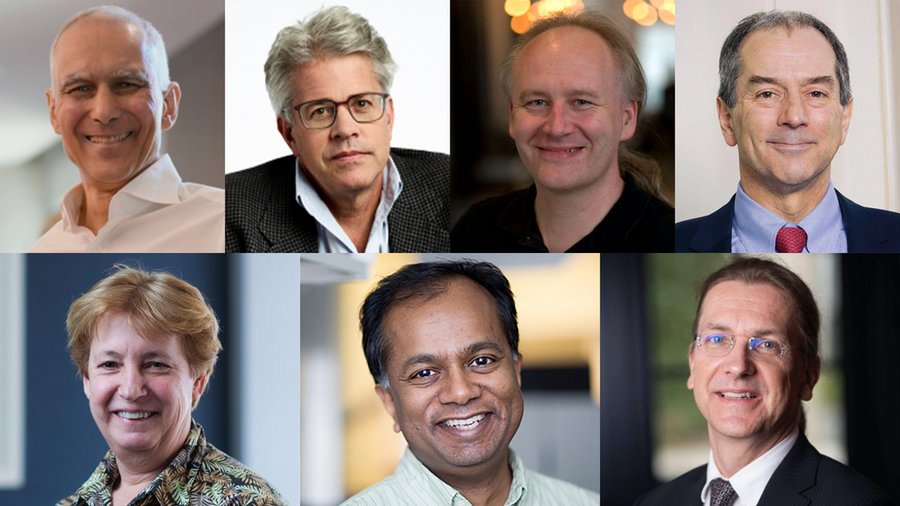
The seven MIT faculty members elected to the NAE represent a broad spectrum of engineering excellence:
Moungi Gabriel Bawendi, the Lester Wolfe Professor of Chemistry, was honored for his pioneering work on semiconductor quantum dots. His research has enabled significant advances in displays, photovoltaics, and biological imaging applications. Quantum dots, which are nanoscale semiconductor particles, have revolutionized how we think about color displays and solar energy harvesting.
Charles Harvey, a professor in Civil and Environmental Engineering, received recognition for his contributions to hydrogeology, particularly regarding groundwater arsenic contamination. His work has been crucial in understanding how arsenic moves through groundwater systems and the health consequences for millions of people worldwide who rely on contaminated water sources.
Piotr Indyk, the Thomas D. and Virginia W. Cabot Professor in Electrical Engineering and Computer Science, was honored for his contributions to approximate nearest neighbor search algorithms and streaming algorithms for massive data processing. His work addresses fundamental challenges in handling the enormous datasets that modern computing systems must process efficiently.
John Henry Lienhard, the Abdul Latif Jameel Professor of Water and Mechanical Engineering, was recognized for advances in desalination technology. As water scarcity becomes an increasingly critical global issue, his innovations in making seawater and brackish water potable have significant implications for water security worldwide.
Ram Sasisekharan, the Alfred H. Caspary Professor of Biological Physics and Physics, received the honor for discovering the U.S. heparin contaminant in 2008 and creating clinical antibodies for Zika, dengue, SARS-CoV-2, and other diseases. His work bridges engineering and medicine, demonstrating how engineering approaches can solve critical healthcare challenges.
Frances Ross, the TDK Professor in Materials Science and Engineering, was honored for her development of ultra-high vacuum and liquid-cell transmission electron microscopies. These techniques have been widely adopted for materials research and semiconductor technology development, enabling scientists to observe materials at unprecedented resolution.
Zoltán Sandor Spakovszky, the T. Wilson (1953) Professor in Aeronautics, was recognized for his contributions to aeroengine aerodynamic and aerostructural stability and acoustics. His rigorous discoveries have advanced the field of aeronautics, contributing to more efficient and quieter aircraft engines.
Twelve MIT Alumni Also Honored
In addition to the faculty members, twelve MIT alumni were elected to the NAE, demonstrating the lasting impact of MIT's engineering education:
- Anne Hammons Aunins PhD '91
- Lars James Blackmore PhD '07
- John-Paul Clarke '91, SM '92, SCD '97
- Michael Fardis SM '77, SM '78, PhD '79
- David Hays PhD '98
- Stephen Thomas Kent '76, EE '78, ENG '78, PhD '81
- Randal D. Koster SM '85, SCD '88
- Fred Mannering PhD '83
- Peyman Milanfar SM '91, EE '93, ENG '93, PhD '93
- Amnon Shashua PhD '93
- Michael Paul Thien SCD '88
- Terry A. Winograd PhD '70
Significance of the Honor
Membership in the National Academy of Engineering is among the highest professional distinctions for engineers. The NAE recognizes individuals who have made outstanding contributions to "engineering research, practice, or education," and to "the pioneering of new and developing fields of technology, making major advancements in traditional fields of engineering, or developing/implementing innovative approaches to engineering education."
Paula T. Hammond, dean of the School of Engineering and Institute Professor in the Department of Chemical Engineering, praised the honorees: "Each of the MIT faculty and alumni elected to the National Academy of Engineering has made extraordinary contributions to their fields through research, education, and innovation. They represent the breadth of excellence we have here at MIT. This honor reflects the impact of their work, and I'm proud to celebrate their achievement and offer my warmest congratulations."
The 2026 class includes 130 new members and 28 international members, with MIT's 19 total honorees (seven faculty and twelve alumni) representing a significant portion of this prestigious group. This recognition underscores MIT's position as a global leader in engineering education and research, with impact spanning from fundamental scientific discoveries to practical technological innovations that address critical global challenges.

The breadth of disciplines represented by MIT's honorees—from chemistry and materials science to aeronautics and computer science—demonstrates the interdisciplinary nature of modern engineering challenges and the comprehensive approach MIT takes to addressing them. Whether developing new materials at the nanoscale, creating algorithms to process massive datasets, or engineering solutions to global water scarcity, these researchers exemplify the innovative spirit that drives engineering forward.
This recognition continues a strong tradition of MIT representation in the NAE, with similar honors announced in previous years (see related articles for 2025, 2024, and 2023 honorees). The consistent presence of MIT researchers and alumni among the nation's top engineering honors reflects the Institute's enduring commitment to excellence in engineering education and research.
Comments
Please log in or register to join the discussion