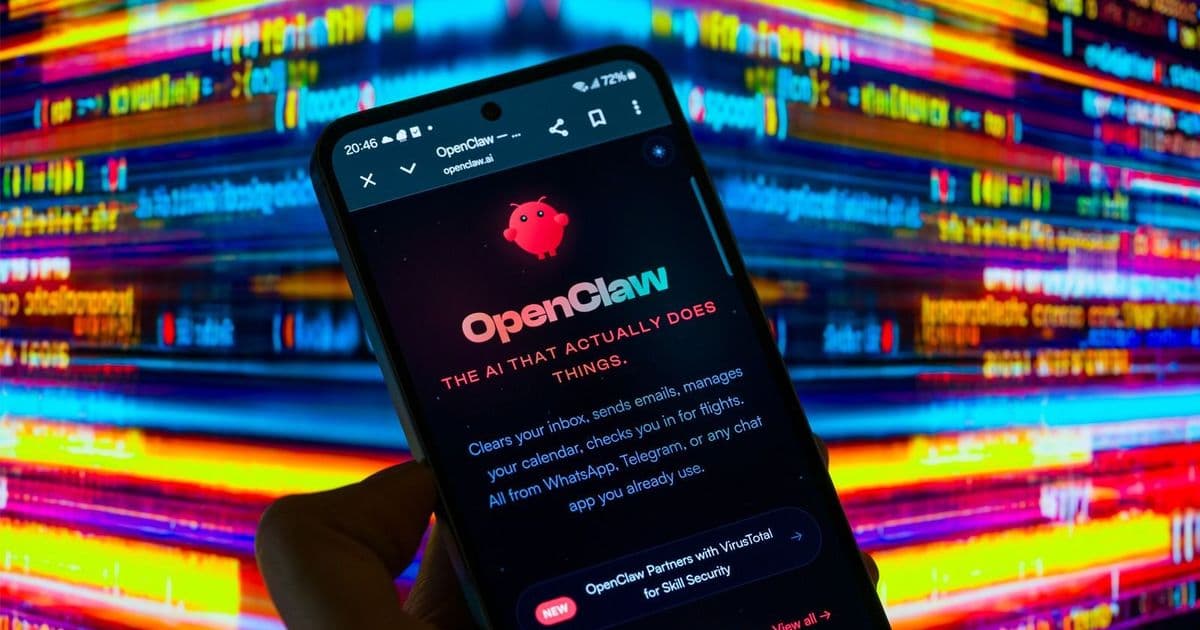
OpenAI has hired Peter Steinberger, creator of the popular OpenClaw AI assistant, to spearhead development of advanced AI agents. While OpenClaw will remain open source through an independent foundation, Steinberger's expertise in creating accessible, multi-platform AI tools positions OpenAI to strengthen its competitive stance against rivals like Anthropic and Google.
OpenAI has made a strategic acquisition by hiring Peter Steinberger, the creator of OpenClaw, a viral AI assistant tool that gained significant traction in early 2025. The move signals OpenAI's intensified focus on developing sophisticated AI agents capable of handling real-world tasks and personal assistance functions.
Steinberger, described by OpenAI CEO Sam Altman as a "genius" with "amazing ideas about the future of very smart agents," will lead the development of next-generation personal agents at OpenAI. His expertise in creating accessible AI tools that integrate seamlessly with everyday applications positions him as a key asset in OpenAI's competitive strategy against rivals like Anthropic and Google's Gemini.
OpenClaw's Rise to Prominence
OpenClaw emerged as a standout AI assistant tool in January 2025, capturing attention in AI circles when users created Moltbook, a dedicated social media platform for AI agents to interact. The tool, originally launched in November 2024, allowed users to create custom AI smart assistants that could integrate with calendars, email accounts, and communicate through popular chat platforms like Telegram and WhatsApp.
What made OpenClaw particularly appealing was its user-friendly design and extensive compatibility. The tool worked with over 50 external services, could fill forms, execute scripts, and operated without requiring a dedicated app. Companion applications for macOS, iOS, and Android added features like camera access and audio recording capabilities, making it a versatile solution for users seeking AI assistance across multiple platforms.
By early February 2025, OpenClaw had generated 1.5 million agents, with monthly operational costs reaching $20,000. The tool's viral success and practical functionality made Steinberger an attractive target for major AI companies looking to strengthen their agentic AI capabilities.
Anthropic's Missed Opportunity
The acquisition also highlights a significant strategic misstep by Anthropic. OpenClaw was originally called ClawdBot, inspired by Anthropic's Claude model. Steinberger even recommended users connect Claude Opus 4.5 to ClawdBot, demonstrating the tool's initial synergy with Anthropic's technology.
However, rather than capitalizing on Steinberger's innovation and the tool's viral success, Anthropic took a different approach. The company threatened legal action over trademark issues, forcing Steinberger to rename the tool first to MoltBot, then to OpenClaw. This aggressive stance likely cost Anthropic the opportunity to integrate Steinberger's expertise and the tool's growing user base into their ecosystem.
Security Concerns and Integration Challenges
Despite its popularity, OpenClaw faced significant security challenges that raised concerns among experts. The deep integration capabilities that made the tool attractive also created potential vulnerabilities. Security researchers warned that without robust authentication measures, OpenClaw could expose private conversations, enable identity theft, and potentially grant near-complete access to users' digital lives depending on the connected applications and services.
These security considerations will likely influence how OpenAI approaches the integration of OpenClaw's technology and Steinberger's expertise. The company will need to balance the tool's accessibility and functionality with the security requirements necessary for handling sensitive personal and professional data.
OpenAI's Strategic Positioning
The acquisition comes at a critical time for OpenAI as it faces increasing competition in the AI assistant market. While ChatGPT maintains the largest user base and strongest mindshare, competitors like Google's Gemini are rapidly gaining ground. OpenAI's recent initiatives, including the launch of Sora 2 for AI-driven social media, have not achieved the desired impact, with interest in some products declining after initial launches.
The company's financial position has also become more precarious, with advertising in ChatGPT receiving mixed reactions from users. In this context, hiring Steinberger represents a calculated move to strengthen OpenAI's capabilities in agentic AI development without the time and resource investment required to build such expertise internally.
OpenClaw's Future as Open Source
In a notable decision, OpenAI has committed to maintaining OpenClaw as an independent open-source foundation. This approach allows the tool to continue serving its existing user base while potentially benefiting from OpenAI's resources and Steinberger's continued involvement. The foundation structure also enables community contributions and forks, ensuring the tool's development continues independently of OpenAI's commercial interests.
The arrangement raises questions about Steinberger's time allocation between his work at OpenAI and his commitment to the OpenClaw foundation. However, the open-source nature of the project means that community developers can continue advancing the tool even if Steinberger's primary focus shifts to OpenAI's internal projects.
Steinberger's Vision for Accessible AI
Steinberger's approach to AI development emphasizes accessibility and practical utility. His goal of creating agents so simple "even [his] mum can use [them]" reflects a user-centric philosophy that could influence OpenAI's product development strategy. This focus on ease of use and broad accessibility could help OpenAI differentiate its offerings in an increasingly crowded AI assistant market.
His experience building tools that work across multiple platforms and integrate with various services provides valuable insights for developing AI agents that can operate effectively in diverse real-world environments. This practical, user-focused approach could prove particularly valuable as AI agents move beyond simple chatbot interactions to handle more complex, multi-step tasks.
Competitive Implications
The acquisition has significant implications for the broader AI assistant market. OpenAI gains not just Steinberger's technical expertise but also his understanding of user needs and preferences in AI assistant tools. This knowledge could accelerate OpenAI's development of competitive features and help the company better position its products against offerings from Anthropic, Google, and other competitors.
For Anthropic, the missed opportunity serves as a cautionary tale about the importance of nurturing innovation within their ecosystem rather than pursuing aggressive legal strategies. The company's decision to threaten legal action rather than collaborate or acquire the tool likely strengthened OpenAI's competitive position while weakening Anthropic's.
Technical and Market Impact
Steinberger's expertise in creating tools that work across multiple platforms and integrate with various services provides valuable insights for developing AI agents that can operate effectively in diverse real-world environments. His experience with OpenClaw's viral growth and user adoption patterns could inform OpenAI's strategies for scaling new AI products and features.
The acquisition also highlights the growing importance of agentic AI in the competitive landscape. As AI assistants evolve from simple conversational tools to sophisticated agents capable of handling complex tasks, companies are increasingly seeking talent with experience in building practical, user-friendly AI solutions.
Looking Ahead
The success of this acquisition will depend largely on how effectively OpenAI integrates Steinberger's expertise and vision into its existing development efforts. While the company certainly has the technical talent to develop sophisticated AI agents, Steinberger's unique combination of technical skill, user-centric design philosophy, and experience with viral product growth could provide valuable perspectives that complement OpenAI's existing capabilities.
As AI agents become increasingly central to the competitive dynamics in the AI industry, OpenAI's investment in Steinberger and the continued development of OpenClaw through an open-source foundation positions the company to strengthen its offerings in this critical area. The coming months will reveal how effectively Steinberger's expertise translates into competitive advantages for OpenAI in the rapidly evolving AI assistant market.

Comments
Please log in or register to join the discussion