A new MIT study reveals how Rett syndrome mutations compromise brain blood vessel integrity through microRNA dysregulation, pointing to potential therapeutic targets.
MIT researchers have uncovered how genetic mutations that cause Rett syndrome compromise the structural integrity of developing brain blood vessels, creating leaks that may contribute to the disorder's neurological symptoms.
The study, published in Molecular Psychiatry, traces the vascular defects to overexpression of a specific microRNA called miRNA-126-3p. By showing that reducing this microRNA's levels can help restore vessel integrity, the research points toward potential new treatment approaches for Rett syndrome.
Rett syndrome is a severe developmental disorder affecting both brain and body, caused by mutations in the MECP2 gene. While the gene is widely expressed throughout the body, the first symptoms typically don't appear until affected children—mostly girls—reach 2-3 years of age. This timing is significant because it coincides with a critical period in brain blood vessel development.
To investigate how Rett syndrome mutations affect vascular development, lead author Tatsuya Osaki and senior author Mriganka Sur created advanced human tissue cultures that model vessel formation. Using induced pluripotent stem cells donated by Rett syndrome patients, they generated endothelial cells—the building blocks of blood vessels—and embedded them in gel with fibroblast cells. These components self-assembled into networks of tubes that the researchers connected to microfluidics systems to provide circulation.
Osaki created two sets of cultures: one harboring the R306C mutation and another with the R168X mutation, both common variants that affect the MECP2 gene differently. For each mutated culture, he created genetically identical control cultures without the mutations using CRISPR gene editing.
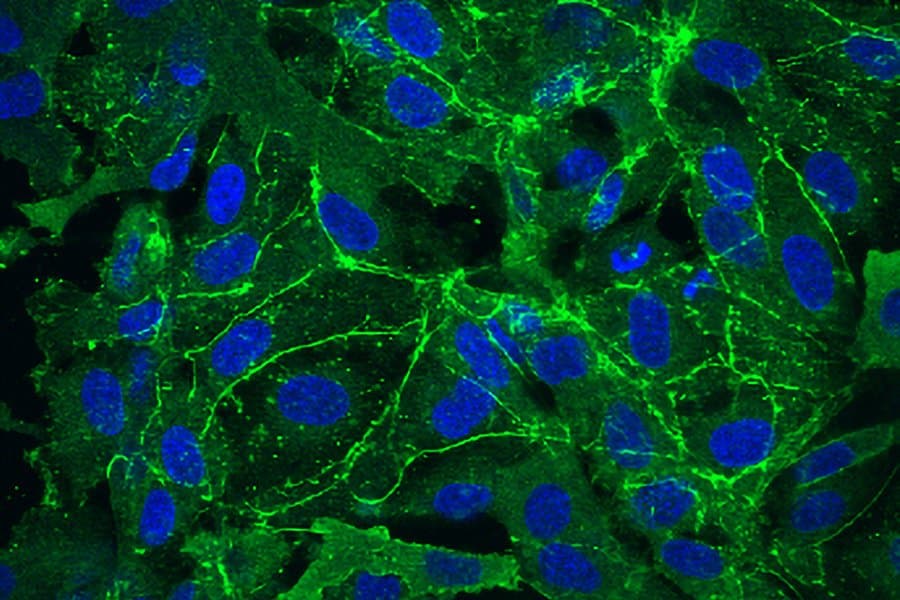
When examining the vessels, the researchers found that both mutations led to reduced expression of a protein called ZO-1, which is critical for forming tight seals between endothelial cells in blood vessels. The ZO-1 protein also didn't localize properly to cell junctions in the mutated vessels. These defects made the Rett-mutation vessels significantly more leaky than the controls.
The team created even more sophisticated models by adding astrocyte cells to better simulate the blood-brain barrier, which tightly regulates what can enter or exit blood vessels and the brain. Problems with the blood-brain barrier are suspected to contribute to various neurodegenerative diseases, including Alzheimer's and Huntington's.
To understand how the vascular problems might affect neural function, the researchers exposed neurons to medium from their Rett vasculature cultures. The nerve cells showed reduced electrical activity, suggesting that secretions from the compromised endothelial cells may disrupt neuronal function.
Identifying the molecular culprit, the researchers focused on microRNAs as potential mediators between the MECP2 mutations and the observed vascular defects. Since MECP2 normally functions to repress gene expression, they expected that when it's compromised, many genes would be overexpressed. However, ZO-1 was downregulated, indicating another regulatory mechanism was at work.
By profiling microRNAs in the Rett cultures and controls, the team discovered that miRNA-126-3p was overexpressed. Further RNA sequencing revealed additional molecular pathways involved in maintaining vascular integrity that were dysregulated in the Rett cultures.
To test whether miRNA-126-3p was indeed responsible for the vascular defects, the researchers treated the Rett-mutation cultures with an antisense molecule that reduces miRNA-126-3p levels. This treatment increased ZO-1 expression and partially restored endothelial cell barrier function, reducing leakiness. It also helped restore the molecular pathways to healthier states.
Interestingly, there is already a drug called miRisten that inhibits miR-126 and is undergoing clinical testing for leukemia. Osaki and Sur plan to test this drug in mice modeling Rett syndrome to see if it provides therapeutic benefits.
The finding that two distinct Rett-causing mutations both lead to upregulation of the same microRNA and subsequent vascular problems suggests that vascular dysfunction is a central feature of the disease. This insight could open new avenues for treatment beyond approaches targeting the brain directly.
The research team included Zhengpeng Wan, Koji Haratani, Ylliah Jin, Marco Campisi, and David Barbie, with funding from the National Institutes of Health, a MURI grant, The Freedom Together Foundation, and the Simons Center for the Social Brain.
The study represents a significant advance in understanding Rett syndrome's complex pathology, demonstrating how genetic mutations can have cascading effects on vascular development that may contribute to the disorder's neurological manifestations.
Comments
Please log in or register to join the discussion