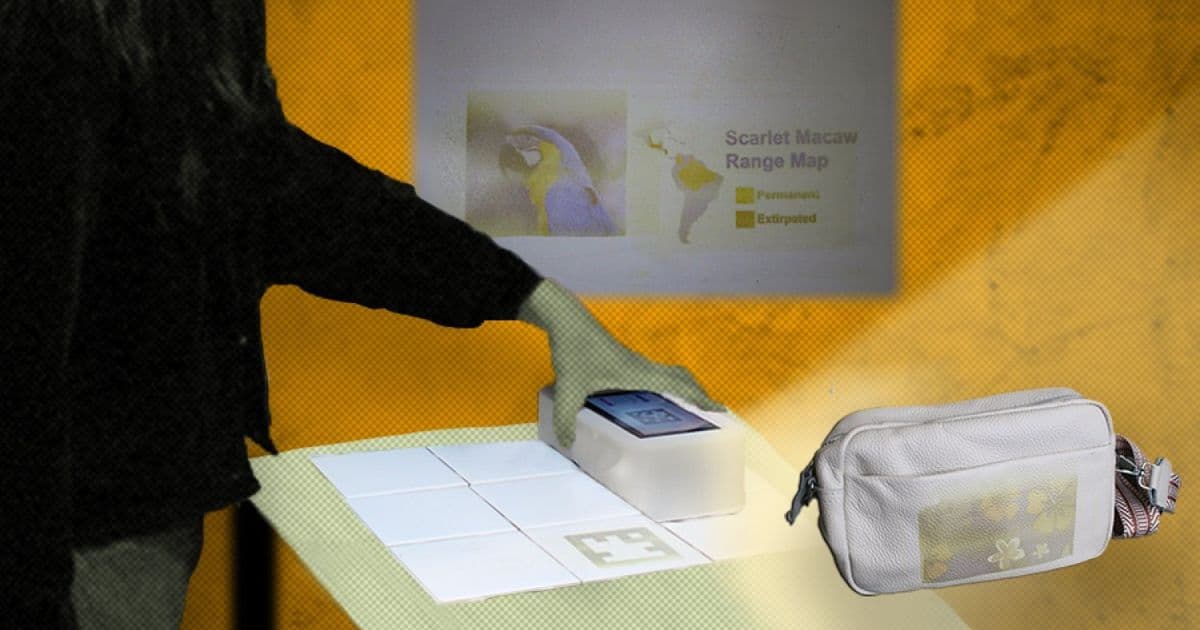
A new MIT CSAIL device combines LCD and LED technology to stamp high-resolution designs onto photochromic-coated surfaces, letting users reprogram the appearance of clothes, walls, and more with a portable printer-like tool.
Imagine being able to change the design on your shirt, bag, or even your kitchen counter whenever you want. That's the promise of ChromoLCD, a new device from MIT's Computer Science and Artificial Intelligence Laboratory (CSAIL) that lets users "reprogram" the appearance of everyday objects with high-resolution imagery.
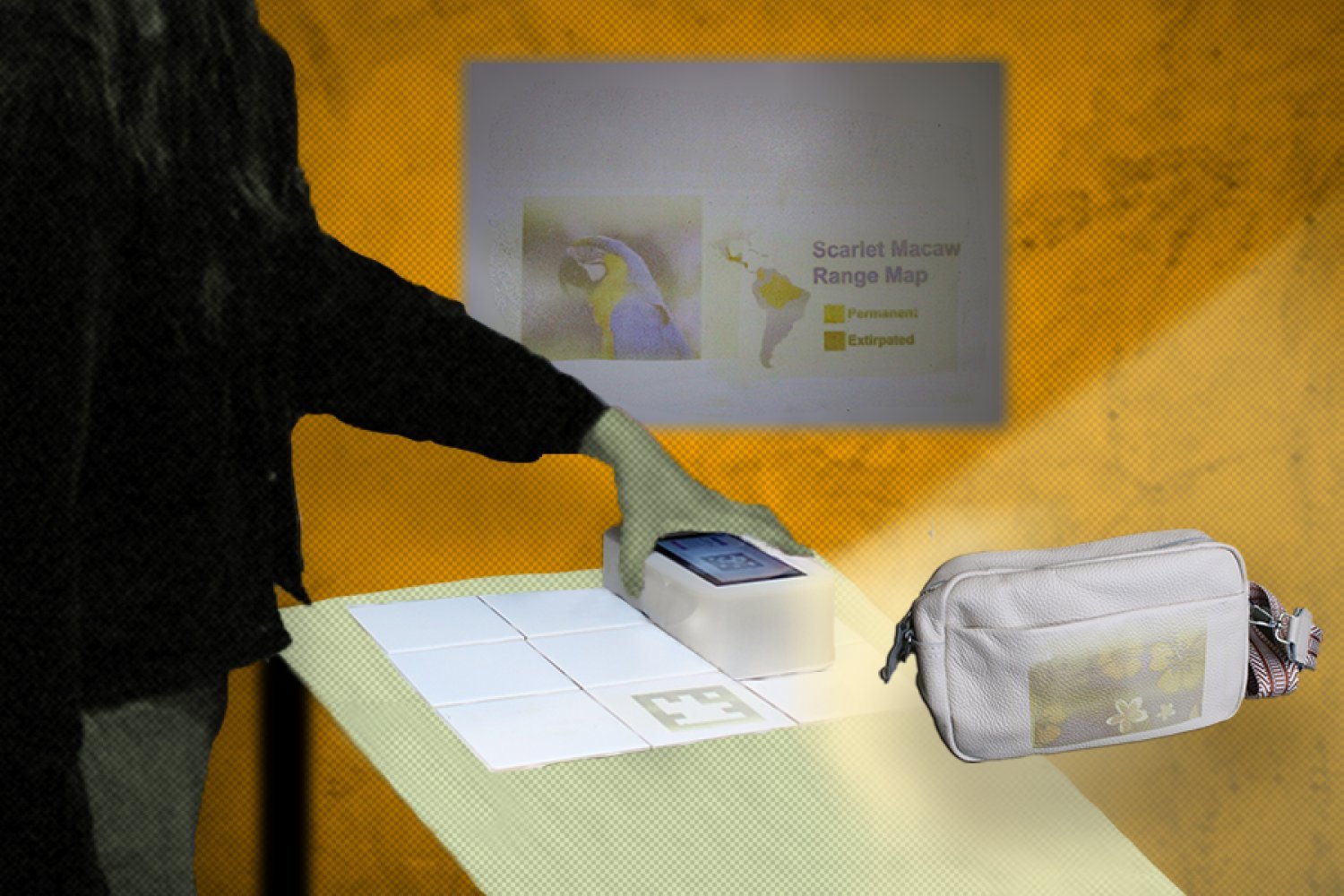
The portable tool, about the size of a small printer, combines the sharpness of liquid-crystal displays (LCDs) with the precision lighting of LEDs to stamp clear, colorful designs onto items coated with photochromic dye. This special ink transforms into different colors when exposed to intense light, allowing for temporary but vivid customization of personal accessories, home decor, and office items.
How It Works
At its core, ChromoLCD is a tower of carefully calibrated components. The device houses a computer chip, a backlight made up of bright ultraviolet (UV) and red, green, and blue (RGB) LEDs, and an LCD panel—all contained within a white shell topped with a display screen.
Here's the process: First, users upload an image to the device via Bluetooth or USB port and select their design from ChromoLCD's display menu. After placing the device on a photochromic-coated surface, the system produces a black-and-white video that outlines the brightness of particular pixels in the selected image. For example, a picture of a parrot will have some areas that are darker than others, such as the shadows cast under its wing.
The UV light then darkens (or saturates) the dye on the object, followed by the RGB lights that brighten it up and color in each pixel. The entire process takes about 15 minutes, after which users have a personalized, high-resolution design on their item. Want to change it? Simply program a new design onto the object.
From Concept to Reality
The technology builds on earlier work from the same team. They previously developed "PhotoChromeleon," which used a projector to activate photochromic ink, but the system wasn't portable. To address this limitation, they created "PortaChrome," an LED-based tool for reprogramming lower-resolution imagery on the go. ChromoLCD represents the best of both worlds: portability combined with high-resolution capabilities.
"We see ChromoLCD as a bridge between consumers and photochromic dyes," says Yunyi Zhu, an MIT electrical engineering and computer science PhD student and co-lead author on the paper presenting this work. "It's basically a stamp, and it's very easy to use. There are no alignment requirements, no 3D object texture creation. You just upload the image you'd like to put on your bag, place it on there, and then you'd have a personalized accessory."
Real-World Applications
The team has demonstrated ChromoLCD's versatility across multiple applications. They've used it to add colorful drawings of fish and flowers to handbags, embed augmented reality (AR) tags on kitchen counters that link to cooking tutorials, and reprogram whiteboards to display high-resolution reference images.
Beyond these examples, the technology opens up intriguing possibilities. A wall in your office could show family pictures when you miss them, or a doormat could display a customized greeting for each guest. The researchers envision turning the world into a personal canvas where surfaces can be dynamically updated based on need or mood.
Technical Innovation
What makes ChromoLCD particularly noteworthy is its approach to using LCD technology. Rather than treating monochromatic LCD panels as mere display endpoints, the team reframes them as wavelength-selective fabrication tools. This expands how we think about reprogrammable surface appearance, enabling high-resolution, reconfigurable graphics to be embedded directly into physical environments without the need for stationary projection enclosures.
Narges Pourjafarian, a postdoc at Northeastern University who wasn't involved in the paper, notes that ChromoLCD is more than just a resolution upgrade over prior MIT projects. "It reframes monochromatic LCD panels as wavelength-selective fabrication tools, rather than merely display endpoints. This approach expands how we think about reprogrammable surface appearance, enabling high-resolution, reconfigurable graphics to be embedded directly into physical environments without the need for stationary projection enclosures."
Future Directions
The research team, which includes MIT undergraduates Qingyuan Li (co-lead author), Katherine Yan, Alex Luchianov, and Eden Hen; Harvard University graduate student Emily Guan; and MIT Associate Professor Stefanie Mueller, is already looking ahead. They're developing a wall-roller shaped reprogrammer for larger surfaces and exploring swiping and ironing motions for different applications.
One particularly interesting direction involves implementing this technology into robots to help them communicate with humans and other machines. For example, a Roomba vacuum could tell its robotic counterparts that it cleaned specific areas of a large floor by stamping a clearly displayed, high-resolution message on the ground.
The team is also considering how artificial intelligence could streamline the creative process. Currently, users still need to upload or create images for their designs. With advancements in AI texture generation, future versions might allow users to simply point a phone camera at an object and request transformations—like turning a cup into a medieval-style tankard.
Accessibility and Impact
Importantly, the researchers note that these components are fairly easy to purchase, meaning enthusiasts could potentially build their own ChromoLCD at home. This accessibility could democratize the ability to transform often-overlooked items into interactive displays that users can modify as they please.
The work will be presented at the ACM International Conference on Tangible, Embedded, and Embodied Interaction, marking another step in the evolution of human-computer interaction where the physical and digital worlds become increasingly intertwined.
As we move toward a future where our surroundings can be dynamically reprogrammed, tools like ChromoLCD represent a fascinating convergence of materials science, optics, and user interface design—turning everyday objects into canvases for personal expression and practical information display.
Comments
Please log in or register to join the discussion