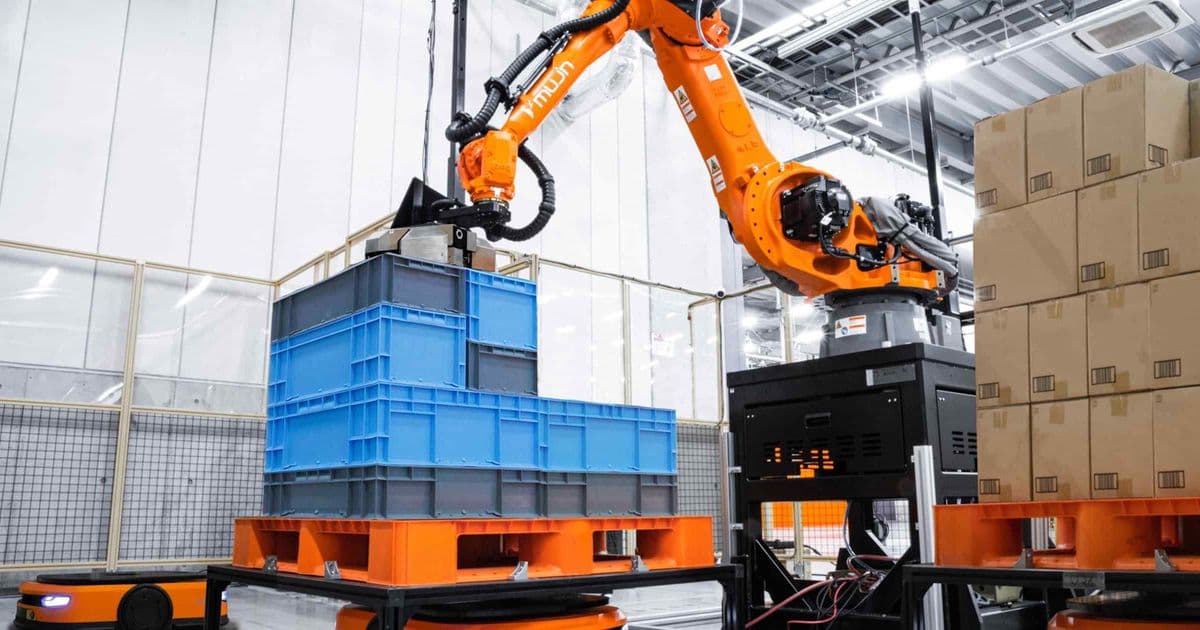
Robotics automation specialist Mujin secured the highest startup funding in Japan during 2025, signaling investor confidence in physical AI applications transforming manufacturing and logistics.

Tokyo-based robotics software firm Mujin emerged as Japan's top-funded startup in 2025, according to Nikkei Asia's annual rankings. The company develops proprietary control systems enabling industrial robots to perform complex warehouse and manufacturing tasks autonomously, positioning it at the forefront of Japan's physical AI revolution.
Mujin's achievement underscores a strategic shift in Japan's technology investment landscape. The 2025 rankings revealed concentrated funding in three sectors: artificial intelligence (representing 34% of total startup investment), autonomous driving systems (28%), and entertainment technologies (19%). This distribution highlights Japan's focused approach to commercializing next-generation automation technologies.
Industrial applications drove Mujin's funding dominance. The company's platform enables robots to handle irregular objects and adapt to dynamic environments without pre-programming, addressing critical labor shortages in logistics and manufacturing. Major partners include automotive suppliers and e-commerce fulfillment centers where Mujin's technology reportedly reduces operational costs by up to 40% while increasing processing speed by 60%.
Market analysts attribute this funding pattern to Japan's urgent productivity needs. With manufacturing output declining 3.2% year-over-year and logistics operators facing 15% vacancy rates, robotic automation presents measurable ROI. Investment in industrial AI startups grew 78% year-over-year in Japan during 2025, significantly outpacing the broader startup sector's 22% growth.
The funding milestone signals maturation in robotics commercialization. Unlike previous cycles focused on mechanical innovation, Mujin's software-centric approach demonstrates investor confidence in scalable automation solutions. Competitors in the warehouse robotics space like Rapyuta Robotics and Preferred Networks secured positions in the top 15, confirming sector-wide momentum.
Financial implications extend beyond Mujin's operations. Japan's robotics market is projected to reach ¥4.2 trillion ($28.6B) by 2028, with software components representing the fastest-growing segment at 31% CAGR. Mujin's funding success establishes valuation benchmarks for similar ventures, potentially accelerating IPO timelines across the industrial automation sector.
Strategic partnerships will likely follow this funding wave. Traditional manufacturers including Toyota and Fanuc increasingly collaborate with agile software developers to modernize production lines. Mujin's technology integration with legacy industrial systems positions it advantageously for such alliances, potentially reshaping Japan's manufacturing supply chains within 24-36 months.
Comments
Please log in or register to join the discussion