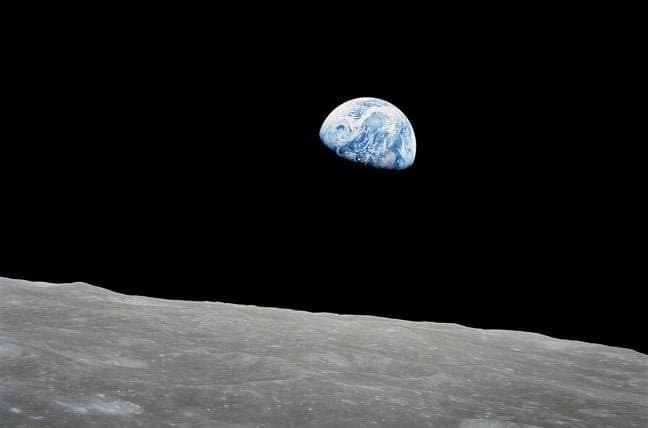
NASA Administrator Jared Isaacman announces smartphones will accompany Crew-12 and Artemis II astronauts, challenging decades-old spaceflight protocols to enable real-time sharing of mission moments.
NASA is breaking with decades of tradition by allowing smartphones aboard upcoming crewed missions, marking a significant shift in how the space agency approaches technology in orbit. Administrator Jared Isaacman announced that modern smartphones will accompany the Crew-12 and Artemis II astronauts, enabling them to capture and share special moments with their families and the world in real-time.
This decision represents a fundamental challenge to NASA's historically cautious approach to onboard electronics. For years, taking any device into space required extensive testing to ensure it wouldn't interfere with critical systems or pose safety risks. The traditional process involved rigorous evaluation against standards like MIL-STD-461 for electromagnetic compatibility, with wireless capabilities often disabled entirely to prevent interference.
Isaacman's announcement signals a willingness to expedite these processes and qualify modern hardware for spaceflight on compressed timelines. "We challenged long-standing processes and qualified modern hardware for spaceflight on an expedited timeline," he stated on social media, though he didn't elaborate on the specific changes made to accommodate smartphones.
The move comes as NASA faces increasing pressure to modernize its operations and make space exploration more accessible and engaging to the public. Smartphones offer capabilities far beyond what traditional space-rated cameras can provide, including high-resolution video, instant connectivity, and user-friendly interfaces that astronauts can operate without extensive training.
However, the decision raises several technical questions. Smartphones contain multiple radio transmitters and receivers that could potentially interfere with spacecraft systems. The devices also undergo outgassing in the vacuum of space, where materials release trapped gases that could condense on sensitive equipment. NASA's traditional approach has been to either disable wireless functions entirely or use devices specifically designed for space environments.
Interestingly, this isn't the first time smartphones have flown in space. The European Space Agency previously deployed the mobiPV system, which included wrist-mounted smartphones for accessing procedure lists on the go. The AstroPi project has also successfully used Raspberry Pi computers in space, though these devices typically omit wireless connectivity altogether to avoid interference issues.
The timing of this decision is particularly noteworthy given the age of some equipment planned for future missions. The Nikon Z9 camera slated for the Artemis III mission will be nearly a decade old by launch, highlighting how NASA's traditional procurement and certification processes can lag behind consumer technology advances by years.
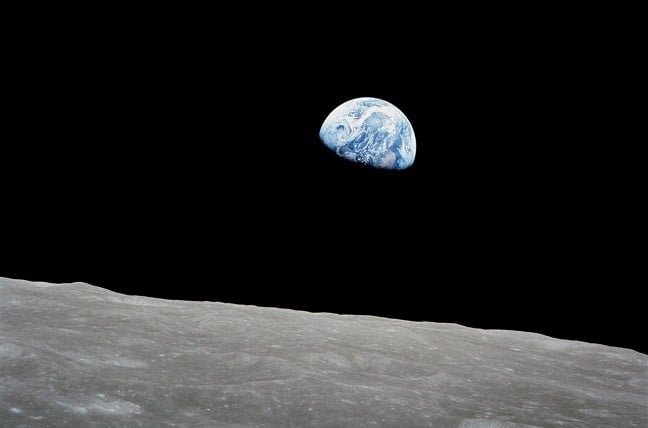
For the Artemis II mission specifically, which will carry astronauts around the Moon, the ability to capture and share high-quality images and video in real-time could significantly enhance public engagement. The mission represents a crucial step in NASA's return to lunar exploration, and smartphones could help bridge the gap between the astronauts' experiences and public understanding of the mission's significance.
The decision also reflects broader changes in how space agencies approach technology adoption. Where once every component required years of testing and certification, there's growing recognition that modern consumer devices often incorporate sophisticated engineering that can meet or exceed space requirements, particularly when used thoughtfully.
Potential concerns remain about how NASA has addressed the traditional limitations. The agency hasn't clarified whether the smartphones will retain their wireless capabilities or if they've developed new methods to mitigate interference risks. Given that the crew "won't be calling on them," as one source noted, it's possible that cellular functions will be disabled while other capabilities remain available.
This policy shift could have far-reaching implications for future missions. As NASA continues to push the boundaries of human space exploration, the ability to rapidly integrate proven commercial technologies could accelerate mission capabilities and reduce costs. It also opens the door for astronauts to document their experiences more authentically, potentially inspiring a new generation of space enthusiasts.
The decision represents a delicate balance between maintaining the rigorous safety standards that have defined NASA's success and embracing the rapid pace of technological innovation. As space exploration enters a new era with commercial partnerships and more frequent missions, such flexibility in technology adoption may become increasingly important.
For now, the Artemis II crew and their successors on Crew-12 will be equipped with tools that their predecessors could only dream of, potentially transforming how we experience space exploration from the ground. The real test will be whether this approach can maintain the safety record that has made NASA's human spaceflight program one of the most successful in history while delivering the benefits of modern technology to those pushing the boundaries of human achievement.
As NASA continues to evolve its processes and embrace new technologies, this decision may well be remembered as a pivotal moment in the agency's history – one where tradition gave way to innovation in service of a greater mission: sharing the wonder of space exploration with the world.
Comments
Please log in or register to join the discussion