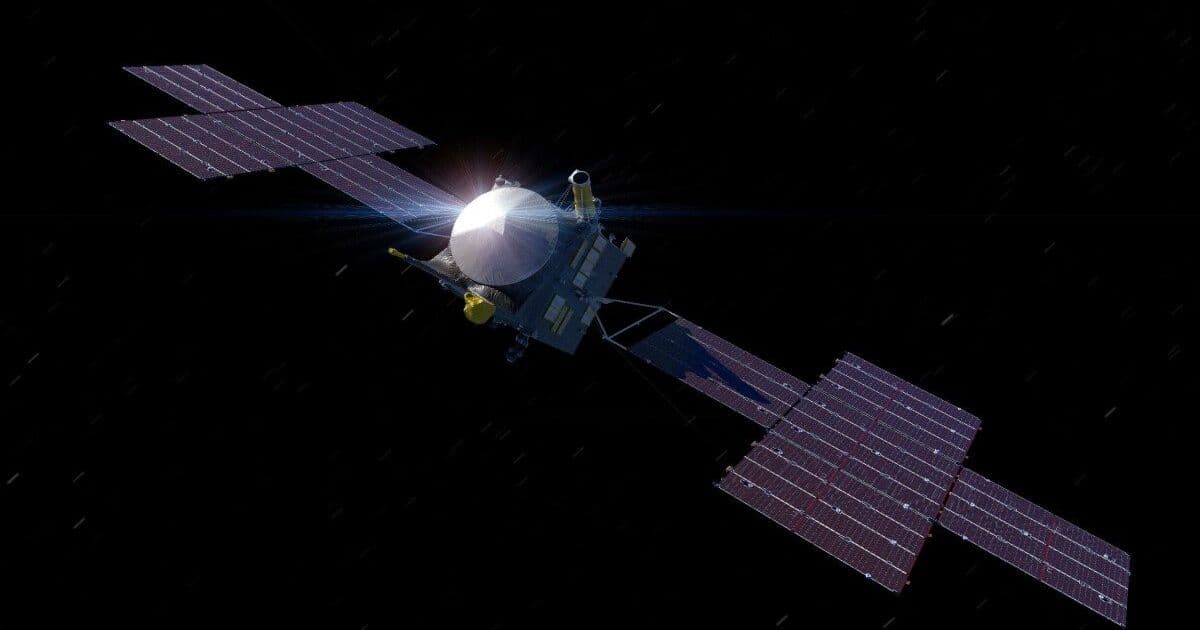
On 15 May 2026 the Psyche probe will skim 2 800 mi above Mars at 12 333 mph, using the planet’s gravity to sharpen its trajectory toward the asteroid Psyche. The flyby also offers a rare chance to calibrate the spacecraft’s instruments and capture bonus science.
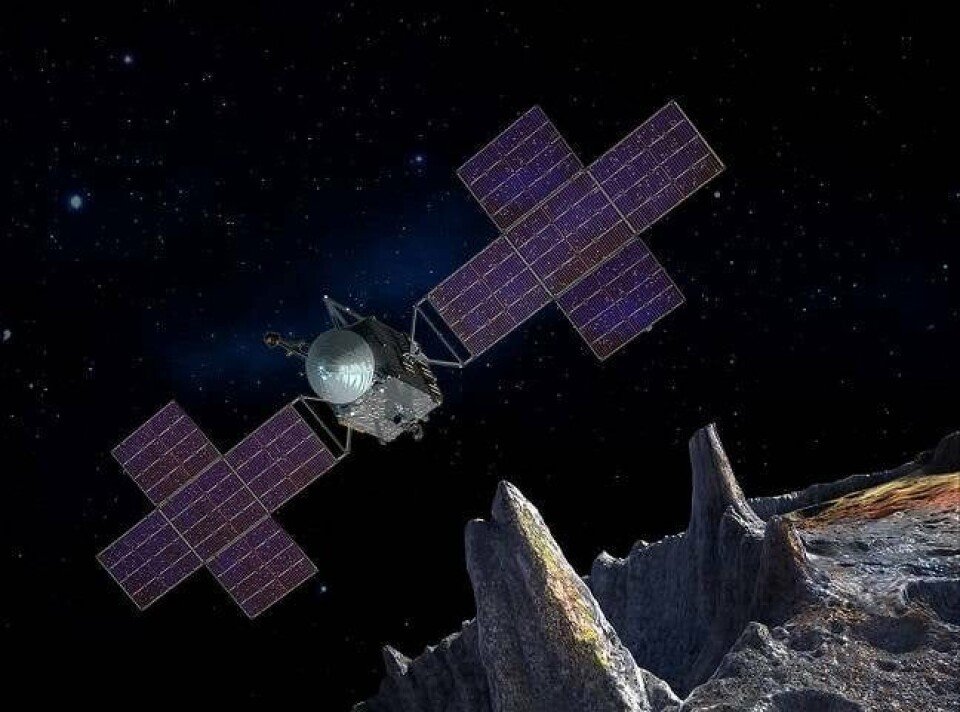
NASA’s Psyche mission, launched on 13 October 2023, is set for a brief but crucial encounter with Mars on 15 May 2026. The spacecraft will pass just 2 800 mi (4 500 km) above the Red Planet’s surface, travelling at roughly 12 333 mph (19 848 km/h). The maneuver is a classic gravity‑assist: Mars’ gravitational pull will bend Psyche’s path, adding speed and redirecting it toward its ultimate target – the metal‑rich asteroid 16 Psyche, slated for arrival in 2029.
Why the flyby matters
Trajectory correction – In February, engineers fired Psyche’s thrusters for twelve hours to fine‑tune the approach corridor. The Mars pass will confirm those adjustments. Once the spacecraft’s radio signal shows the expected Doppler shift, mission controllers will have hard data on the new velocity and trajectory.
Instrument calibration – The spacecraft carries a multispectral imager, a gamma‑ray spectrometer, a magnetometer and other payloads designed for asteroid observations. Mars provides a bright, well‑characterized target far larger than the few‑pixel views available during cruise. As mission planning lead Sarah Bairsto (JPL) explains, “This is our first opportunity in flight to calibrate Psyche’s imager with something bigger than a few pixels.”
Bonus science – While the primary goal is navigation, the flyby will generate thousands of images of the Martian atmosphere and surface. Those data will be archived alongside the mission’s primary science set, offering researchers an unexpected dataset.
The mechanics of a gravity assist
A gravity assist works by letting a spacecraft fall into a planet’s gravity well and then swing around it, exiting on a new trajectory with added heliocentric speed. The key variables are the flyby altitude, the planet’s mass, and the angle of approach. By passing 2 800 mi above Mars, Psyche will gain roughly 0.5 km/s of additional speed—enough to shave months off the cruise to the asteroid.
The technique dates back to the 1970s, most famously used by the Voyager probes during the “Grand Tour” of the outer planets. Modern missions rely on high‑precision navigation software and continuous tracking from Deep Space Network antennas to calculate the exact burn windows and flyby geometry.
What comes next?
After the Mars encounter, Psyche will continue on a trajectory that brings it to the asteroid belt in early 2029. The spacecraft’s suite of instruments will then map the asteroid’s composition, density and magnetic field, testing the hypothesis that Psyche is the exposed core of a protoplanet.
If the Mars flyby proceeds without incident, it will serve as a rehearsal for the final approach: the same navigation principles, the same need for precise thrusting, and the same reliance on real‑time telemetry. Any anomalies detected during the flyby will be addressed well before the asteroid rendezvous, reducing risk for the mission’s most critical phase.
Broader implications
Gravity assists remain a cost‑effective way to reach distant targets without carrying prohibitive amounts of propellant. Psyche’s use of Mars demonstrates that even missions to relatively nearby asteroids can benefit from planetary flybys, a lesson that could shape future small‑body exploration strategies.
For the public, the event offers a spectacular visual: a spacecraft skimming past a world we know intimately, then heading toward a mysterious metal world that could hold clues to planetary formation.
For more details on the Psyche mission, see the official NASA page and the mission’s technical briefings on the Jet Propulsion Laboratory website.
Comments
Please log in or register to join the discussion