
South Korea's Naver leverages its status as Nvidia's largest Korean customer to market sovereign AI cloud solutions to nations wary of US and Chinese technology dependencies.
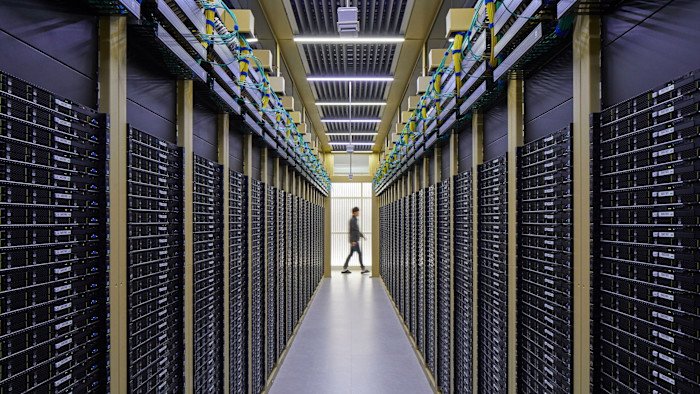
South Korean tech giant Naver is actively marketing its AI cloud infrastructure as a geopolitical alternative for nations hesitant to rely on American or Chinese technology providers. As the largest South Korean purchaser of Nvidia hardware according to company disclosures, Naver has built HyperCLOVA X – its proprietary large language model – on a foundation of approximately 32,000 Nvidia H100 GPUs. This positions them uniquely in the global AI infrastructure race.
The company's pitch hinges on sovereignty concerns. Countries like Vietnam, Singapore, and Saudi Arabia face increasing pressure to choose between US cloud providers (perceived as potential surveillance risks under laws like CLOUD Act) and Chinese alternatives (seen as extensions of state influence). Naver claims its AI Cloud Service offers a neutral third path with infrastructure physically located in South Korea and Singapore, featuring end-to-end encryption and compliance with local data residency laws.
Technically, Naver's offering combines several elements:
- Hardware foundation: Custom AI servers built around Nvidia HGX H100 systems with proprietary liquid cooling solutions
- Software stack: HyperCLOVA X (182B parameter LLM) optimized for Korean, English, and Southeast Asian languages
- Benchmarked performance: Claims 92% accuracy on Korean language tasks versus GPT-4's 84% in internal tests
- Hybrid architecture: On-premise deployment options for sensitive government workloads
Practical implementations already exist with Thailand's government using Naver for public service chatbots and UAE banks piloting financial document analysis. However, significant limitations emerge:
- Scale constraints: Naver's total GPU capacity represents approximately 5% of Microsoft Azure's reported Nvidia inventory
- Regulatory uncertainty: South Korea's own intelligence-sharing agreements with the US create residual sovereignty questions
- Technical gaps: Limited support for specialized AI workloads like drug discovery compared to hyperscalers' full-stack offerings
- Cost structure: Premium pricing for sovereign guarantees may deter cost-sensitive markets
Industry analysts note that while Naver won't displace AWS or Alibaba Cloud globally, it could capture 15-20% market share in Southeast Asia's government sector by 2027. The success hinges on maintaining genuine technological independence – a challenge as US export controls continue restricting advanced chip access to all non-allied nations. For now, Naver represents the most viable sovereign AI alternative outside the US-China duopoly, though its long-term sustainability remains untested under evolving trade restrictions.
Additional technical details available in Naver's AI Infrastructure Whitepaper
Comments
Please log in or register to join the discussion