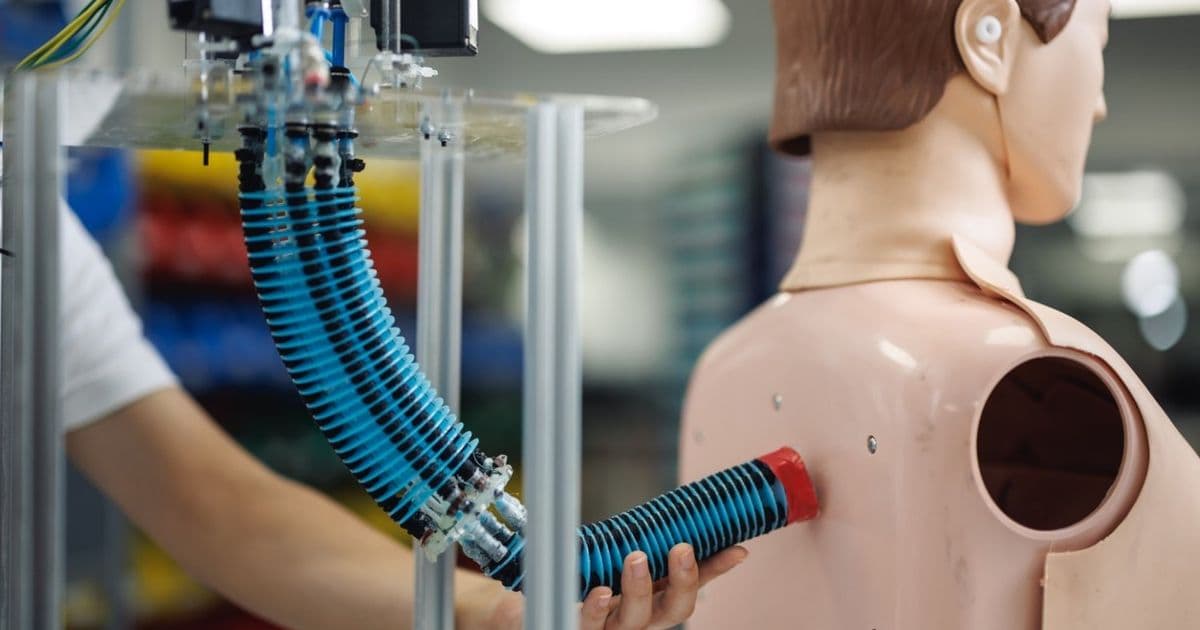
MIT researchers developed an AI control system enabling soft robots to learn foundational movements offline and instantly adapt to changing conditions without retraining, overcoming key limitations in soft robotics control.
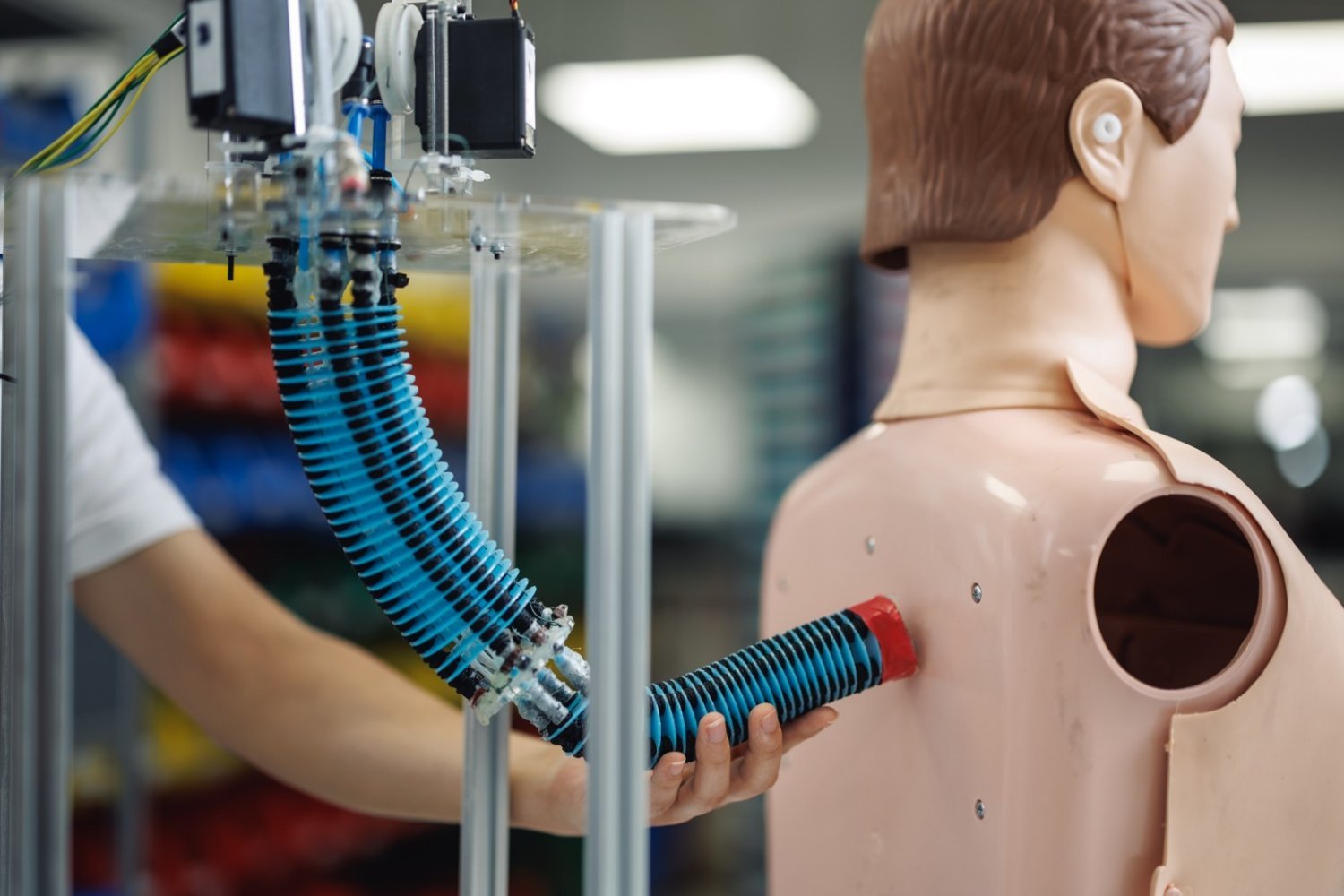
Soft robots' flexibility makes them ideal for delicate tasks like medical procedures and human assistance, but their variable dynamics have historically made them notoriously difficult to control. Traditional approaches forced engineers to choose between adaptability, stability, and task generalization - until now. Researchers from the Singapore-MIT Alliance for Research and Technology (SMART) have created a biologically inspired control system that simultaneously achieves all three capabilities, marking a significant leap toward human-like adaptability in compliant machines.
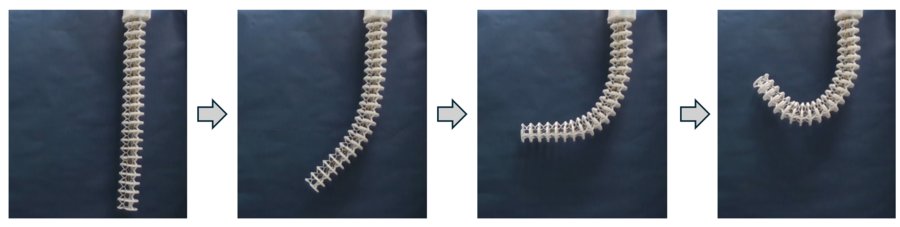
The breakthrough, detailed in Science Advances, mimics neurological processes through dual artificial synapse systems. Structural synapses trained offline provide foundational movement patterns (bending, extending), while plastic synapses dynamically adjust in real-time to disturbances. A stability safeguard maintains smooth operation even during abrupt environmental changes.
"Existing controllers typically sacrificed either adaptability or stability," explains Zhiqiang Tang, co-corresponding author and former SMART researcher. "Our architecture achieves both within one framework while transferring learned skills across tasks."
The system demonstrated remarkable versatility across two distinct soft-arm platforms:
- Disturbance rejection: Maintained 93.8% shape accuracy under variable fan speeds simulating unexpected airflow
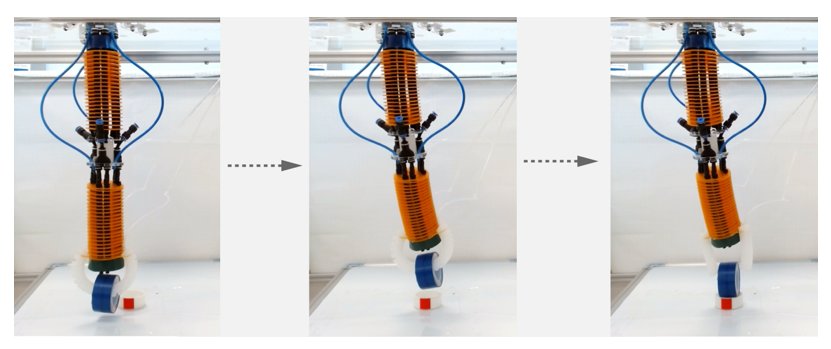
- Payload handling: Manipulated objects weighing 58.5% of its own mass while maintaining precision
- Fault tolerance: Continued stable operation with up to 50% actuator failure
Practical applications span multiple domains. In assistive scenarios, robots could automatically adjust wiping pressure during patient care based on posture changes. Manufacturing robots could compensate for material inconsistencies without reprogramming. Medical devices might adapt to patients' shifting physiological states during rehabilitation.
"This redefines soft robotics from task-specific solutions toward general intelligence," says MIT Professor Daniela Rus, Director of CSAIL. "The structural-plastic duality provides foundational skills while enabling moment-to-moment adaptation - crucial for operating alongside humans."
Current limitations include speed constraints in highly dynamic environments. The team plans extensions to higher-velocity applications and more complex autonomous systems. As soft robots evolve toward human-like adaptability, this neural blueprint marks a pivotal step toward machines that don't just move softly, but think adaptively.
Comments
Please log in or register to join the discussion